Free for everyone
Hand hygiene competency course
The full narrated lecture: the five moments, handrub and handwashing technique, gloves, skin care and scenarios, with 25-question pre- and post-tests. No membership needed.

Clinical education academy
Confident bedside care, one narrated scene at a time.
Practical nursing modules with tests, score tracking and printable study guides. Start with a free preview.
Browse all courses by topic
Pick a topic or a course name to jump straight to it below. Courses are listed A–Z inside every topic.
Patient Safety & Quality
Assessment & Triage
- Adult Core Nursing Assessment
- Adult neurological consciousness assessment
- Adult Structured triage assessment
- Initial Nursing Assessment
- Pediatric age-appropriate consciousness assessment
- Pediatric Assessment Bundle
- Pediatric Fluid Bolus Monitoring
- Pediatric Initial emergency assessment
- Pediatric Nursing Assessment
- Pediatric Structured pediatric triage
Emergency Response
- Adult acute chest pain assessment
- Adult advanced resuscitation team nursing role
- Adult airway intervention assistance
- Adult Basic life support
- Adult cervical spine protection
- Adult decontamination assistance
- Adult Defibrillator operation
- Adult external hemorrhage control
- Adult mass casualty triage
- Adult massive transfusion nursing support
- Adult overdose initial assessment
- Adult poisoning exposure assessment
- Adult rapid sequence intubation preparation
- Adult Sepsis Recognition
- Adult ST elevation recognition and escalation
- Adult stroke recognition
- Adult suicide risk screening
- Adult trauma primary survey
- Adult trauma secondary survey
- Crash Cart and Emergency Response
- Fire Safety and Evacuation
- GUSS Swallowing-Screen Awareness and BE FAST
- Nursing Role During Code Blue and Crash Cart Use
- Pediatric accidental ingestion assessment
- Pediatric adolescent suicide screening
- Pediatric advanced resuscitation team nursing role
- Pediatric Basic life support
- Pediatric cervical spine protection
- Pediatric decontamination assistance
- Pediatric defibrillator operation
- Pediatric external hemorrhage control
- Pediatric febrile seizure assessment
- Pediatric intraosseous access assistance
- Pediatric mass casualty triage
- Pediatric Sepsis Recognition
- Pediatric status epilepticus nursing response
- Pediatric supraventricular tachycardia recognition
- Pediatric trauma primary survey
- Pediatric trauma secondary survey
- Pediatric weight-based emergency equipment selection
Critical Care
- Adult arterial blood gas interpretation
- Adult arterial line monitoring
- Adult central venous pressure monitoring
- Adult endotracheal tube care
- Adult spontaneous awakening assessment
- Adult spontaneous breathing trial monitoring
- Adult ventilator alarm assessment
- Adult ventilator associated infection prevention
- Adult ventilator mode checks
- Pediatric age-appropriate hemodynamic assessment
- Pediatric arterial blood gas interpretation
- Pediatric arterial line monitoring
- Pediatric endotracheal tube cuff assessment
- Pediatric endotracheal tube securement
- Pediatric unplanned extubation prevention
- Pediatric ventilator alarm assessment
- Pediatric ventilator mode checks
- Pediatric weight based ventilation verification
Medication Safety
Clinical Procedures & Sampling
- Adult Blood Culture Collection
- Adult Lactate Sampling Support
- Adult procedural sedation monitoring
- Adult splint application
- Adult twelve-lead ECG acquisition
- Adult wound closure assistance
- Blood and Specimen Sampling
- Blood Transfusion Skills
- IV Cannulation Using Adult DIVA Assessment
- Pediatric Blood Culture Collection
- Pediatric procedural sedation monitoring
- Pediatric splint application
- Pediatric twelve-lead ECG acquisition
- Tubes & Catheter Nursing Care
- Visual Infusion Phlebitis Nursing Care
Infection Prevention
Pain Management
Fundamentals of Care
Care Planning & Communication
Patient & Family Education
Narrated scenes
Calm narration with unobstructed slides and a full transcript.
Pre- and post-tests
Measure what you knew, then what you learned.
Score comparison
See your improvement for every module in one place.
Printable resources
Study guides, key takeaways and test booklets as PDFs.
The modules
All courses →Patient Safety & Quality · 6 courses

17 scenes · pre & post test
5Ps’ Rounding Concept
Purposeful person-centred nursing rounds: position, pain, personal items, toileting and pump safety, with individualized observation, clinical escalation and clear follow-up.
Start free preview →
22 scenes · approximately 10 minutes · pre & post test
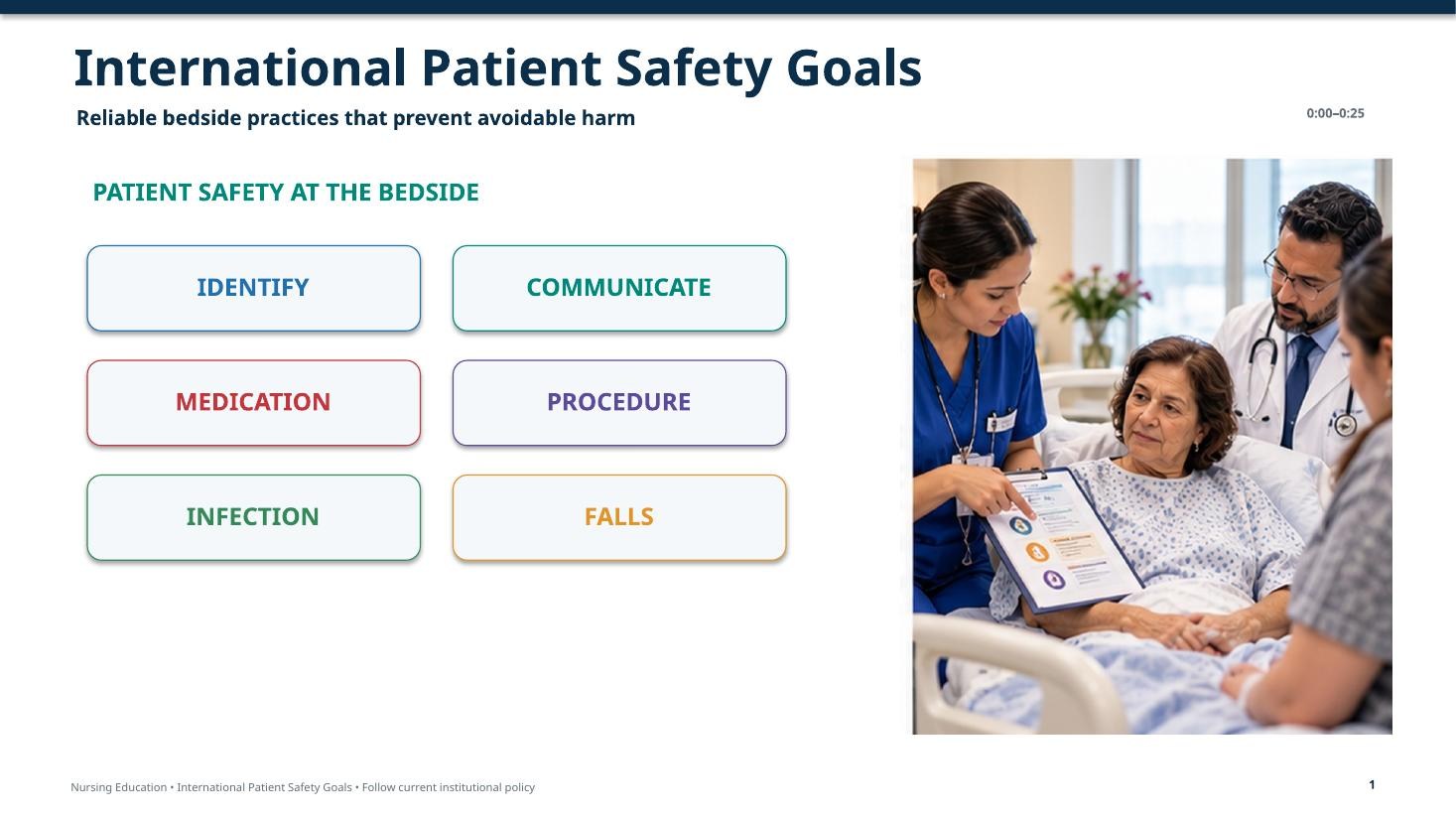
International Patient Safety Goals
Six connected bedside safety goals: patient identification, communication, high-alert medications, safe procedures, infection prevention and falls prevention.
Start free preview →
20 scenes · pre & post test
Patient Care Bundles
Evidence-based bedside care for urinary catheters, central venous lines, and mechanical ventilation, from insertion to daily review and escalation.
Start free preview →

9 scenes · approximately 4 minutes · pre & post test
Pediatric family reunification
Protect an unaccompanied child, maintain tracking and verify a safe handover to the correct caregiver.
Start free preview →

9 scenes · approximately 4 minutes · pre & post test
Pediatric nonaccidental injury recognition
Recognize concerning findings, support the child and obtain prompt specialist assessment.
Start free preview →
9 scenes · approximately 4 minutes · pre & post test
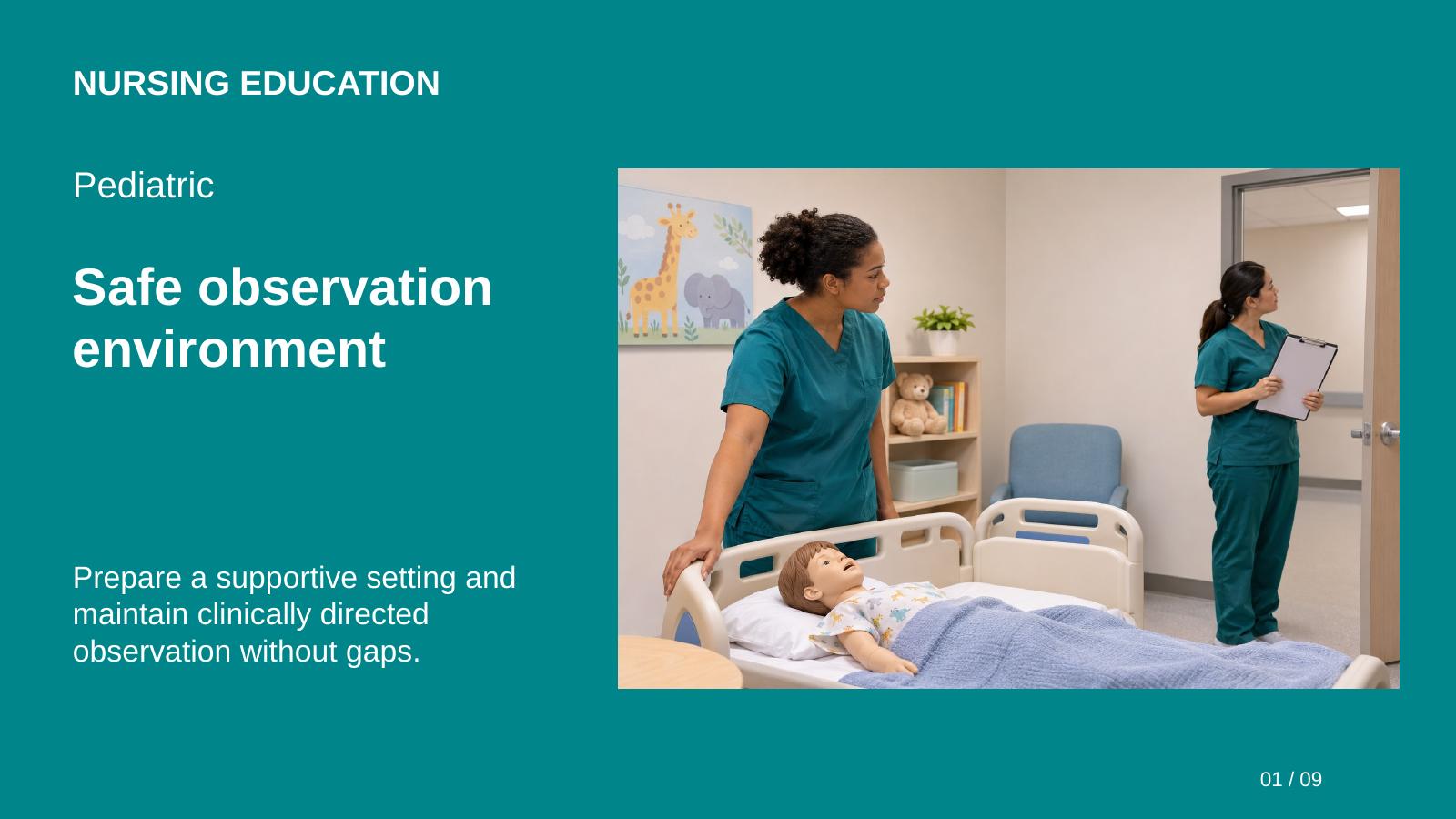
Pediatric safe observation environment setup
Prepare a supportive setting and maintain clinically directed observation without gaps.
Start free preview →
Assessment & Triage · 10 courses

55 scenes · pre & post test
Adult Core Nursing Assessment
One complete clinical program covering respiratory rate, radial pulse, automated blood pressure, tympanic temperature, pulse oximetry and pain assessment, with preparation, safe technique, interpretation, clinical scenarios and supervised practice.
Start free preview →

9 scenes · approximately 4 minutes · pre & post test
Adult neurological consciousness assessment
Assess consciousness systematically, recognize change and communicate neurological findings clearly.
Start free preview →
9 scenes · approximately 4 minutes · pre & post test
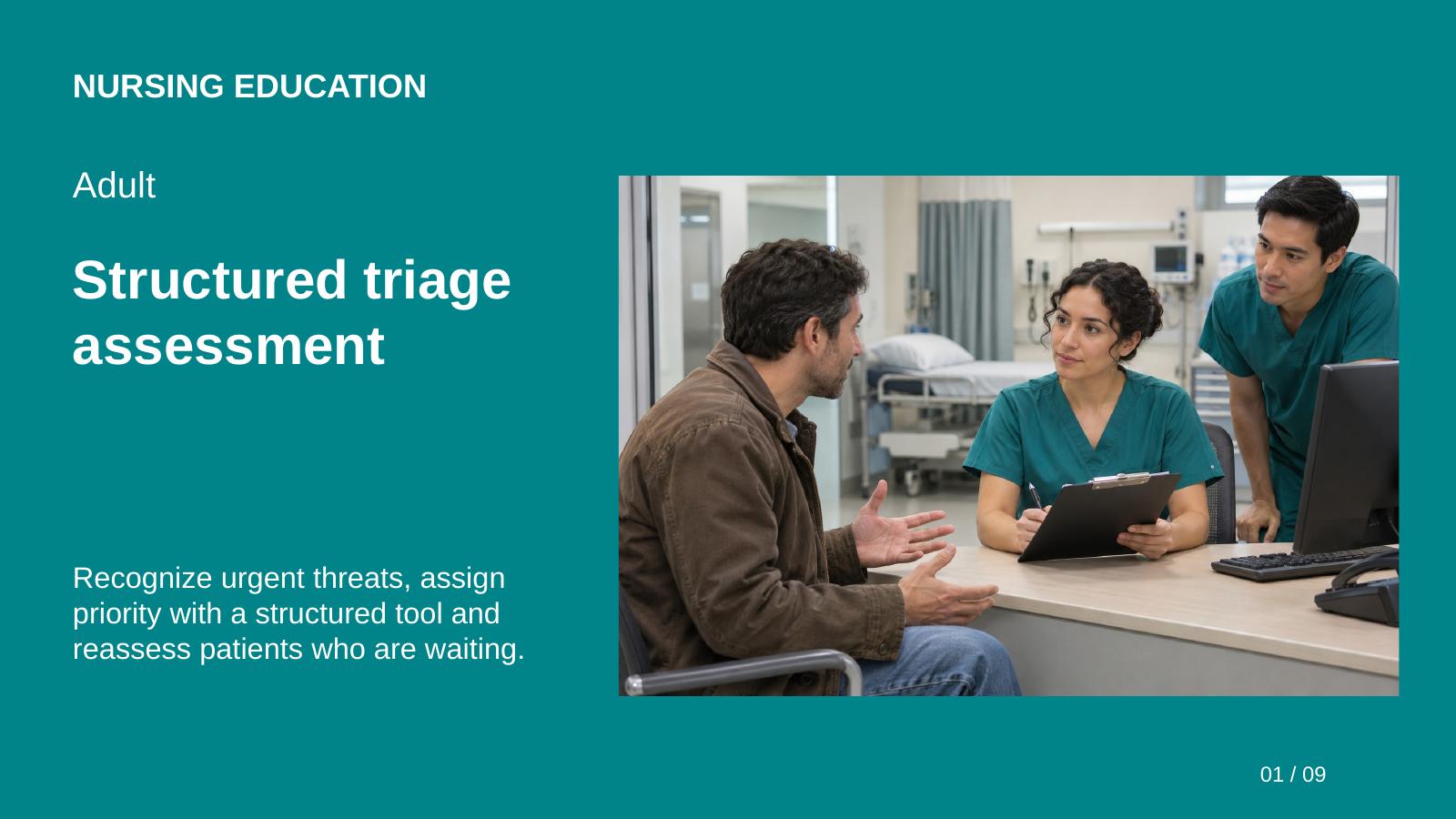
Adult Structured triage assessment
Recognize urgent threats, assign priority with a structured tool and reassess patients who are waiting.
Start free preview →
13 scenes · pre & post test
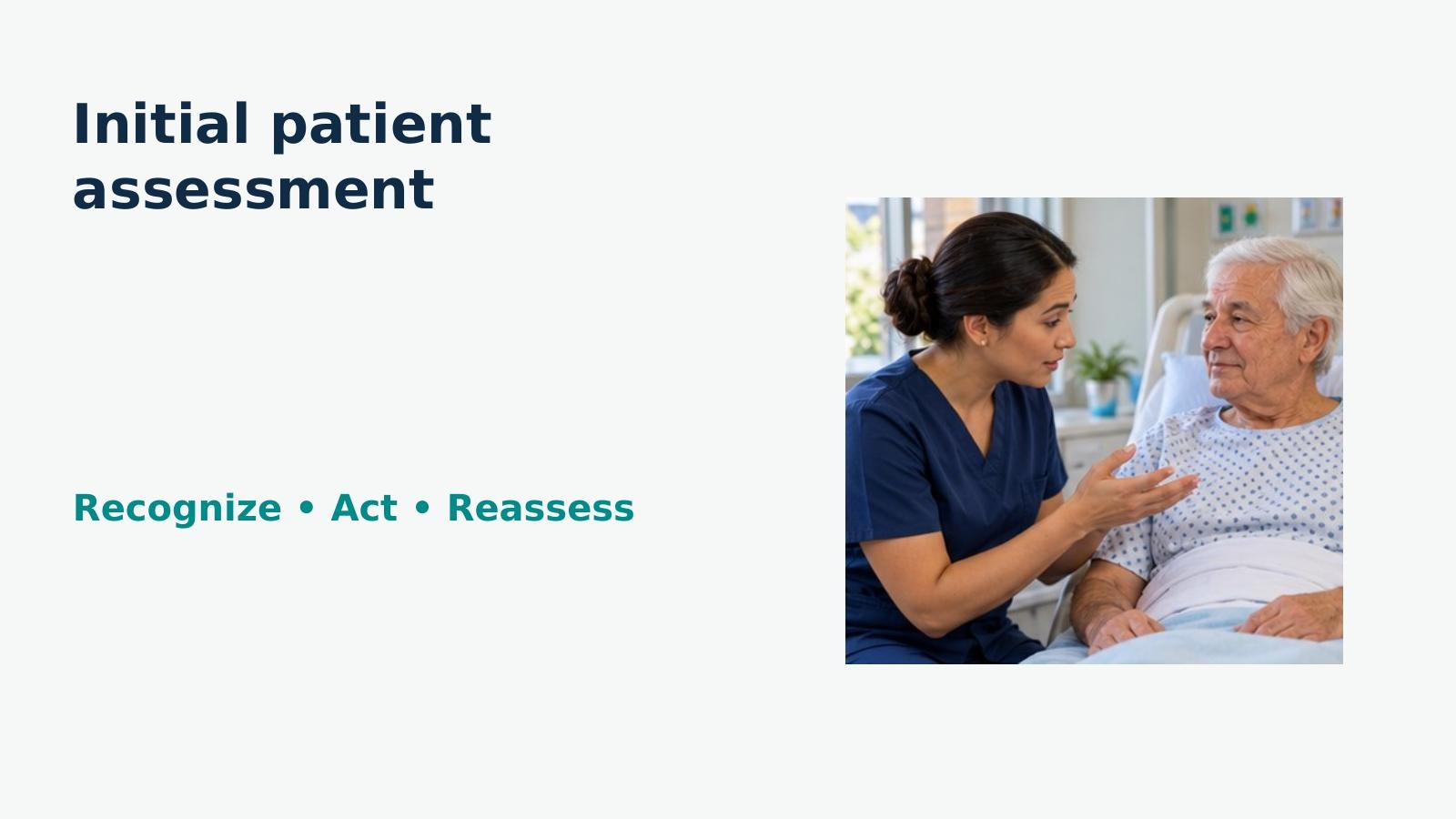
Initial Nursing Assessment
Adult admission assessment and early deterioration recognition: immediate threats first, identity and consent, observation baseline, focused history, daily needs, devices and an individualized monitoring plan.
Start free preview →

9 scenes · approximately 4 minutes · pre & post test
Pediatric age-appropriate consciousness assessment
Assess consciousness systematically, recognize change and communicate neurological findings clearly.
Start free preview →

82 scenes · pre & post test
Pediatric Assessment Bundle
One complete program covering nine pediatric assessment skills: respiratory rate, peripheral pulse, automated blood pressure, axillary temperature, pulse oximetry, pain, deterioration recognition, weight in kilograms and infant recumbent length, with clinical scenarios and supervised practice.
Start free preview →
9 scenes · approximately 4 minutes · pre & post test
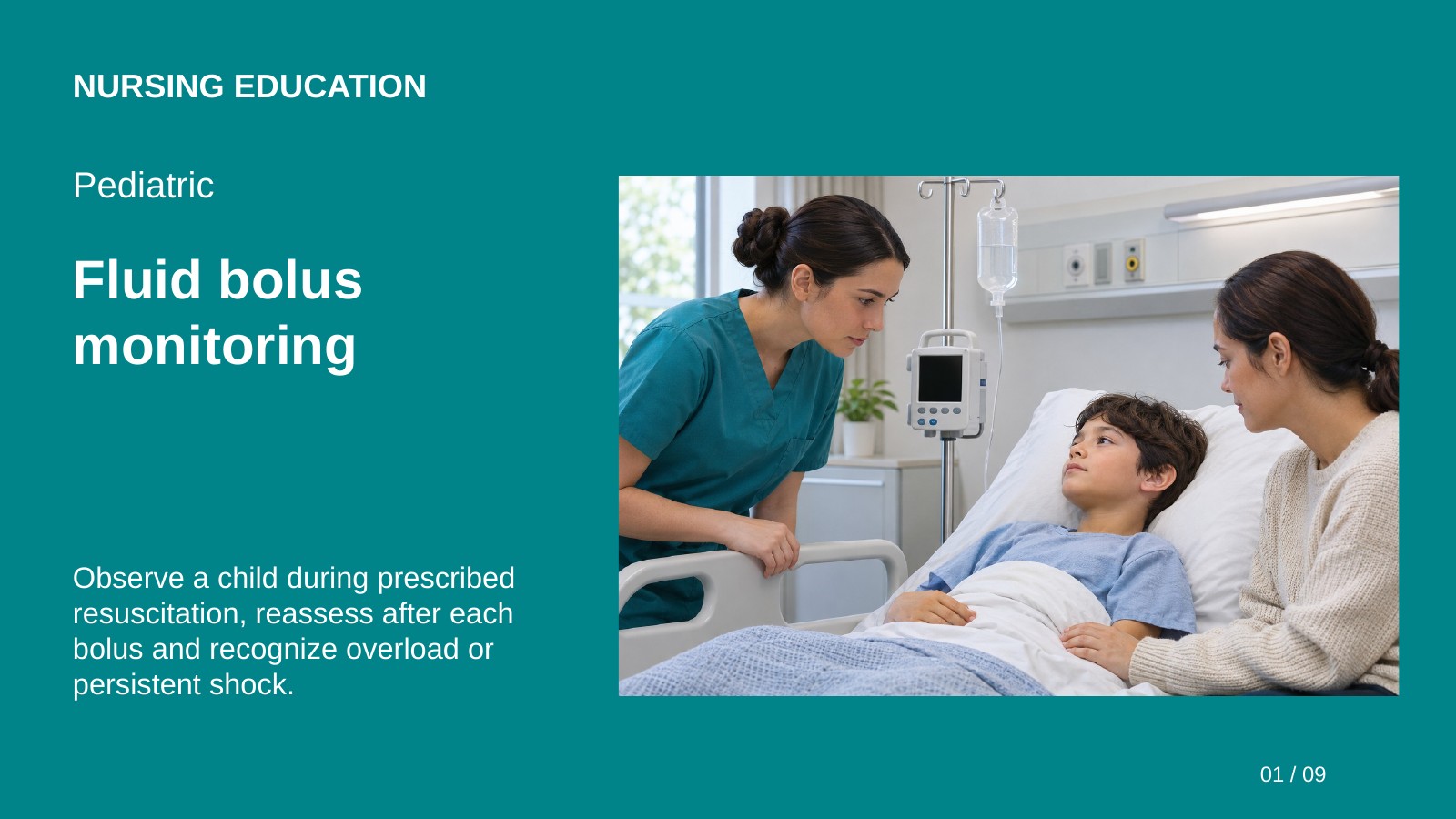
Pediatric Fluid Bolus Monitoring
A fluid bolus requires close observation and reassessment, particularly in children. The clinical team selects the indication, fluid, volume and delivery rate. This lesson focuses on nursing checks, response to treatment and early recognition of overload. It does not provide a universal resuscitation prescription.
Start free preview →
9 scenes · approximately 4 minutes · pre & post test
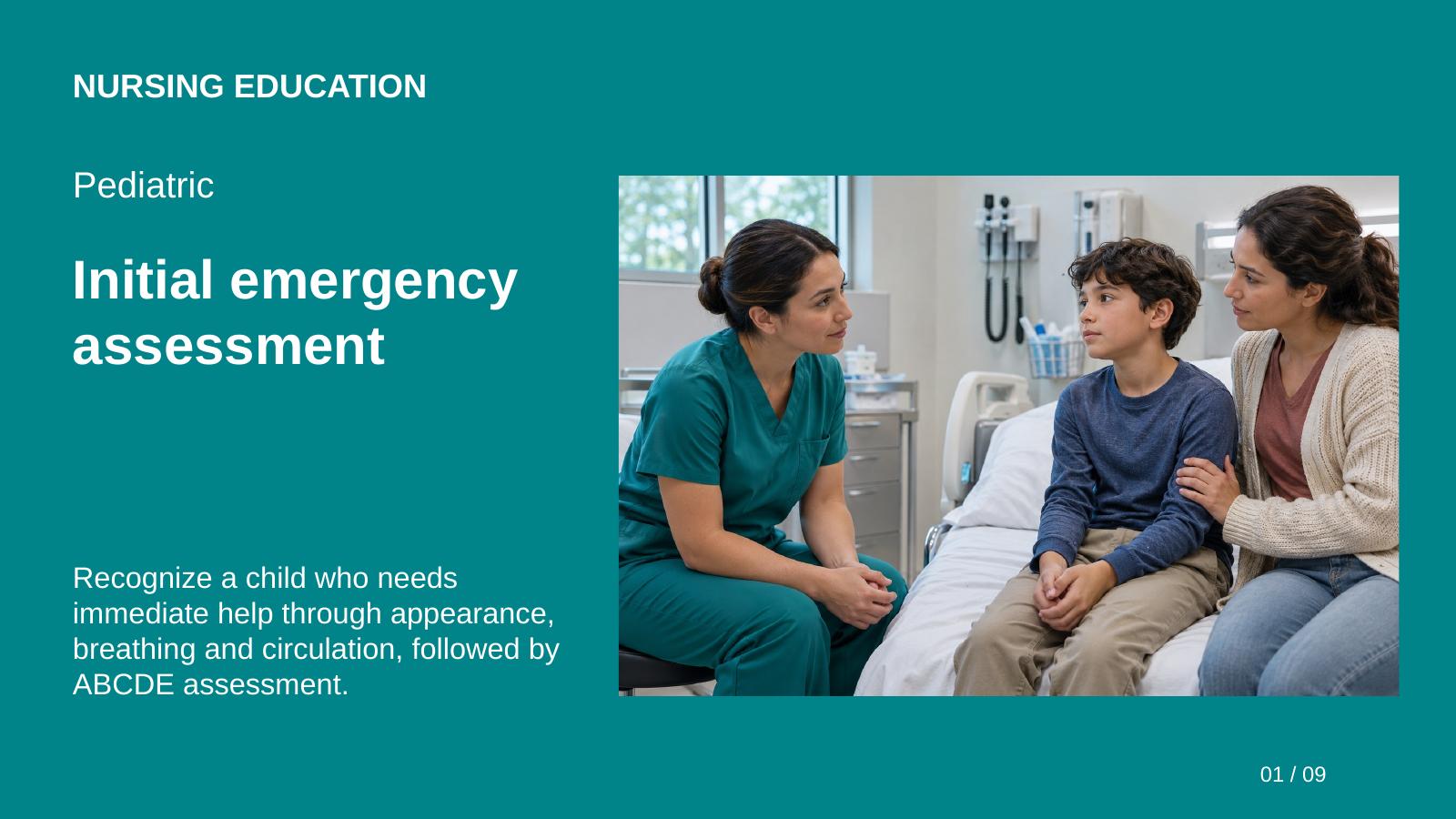
Pediatric Initial emergency assessment
Recognize a child who needs immediate help through appearance, breathing and circulation, followed by ABCDE assessment.
Start free preview →
13 scenes · pre & post test
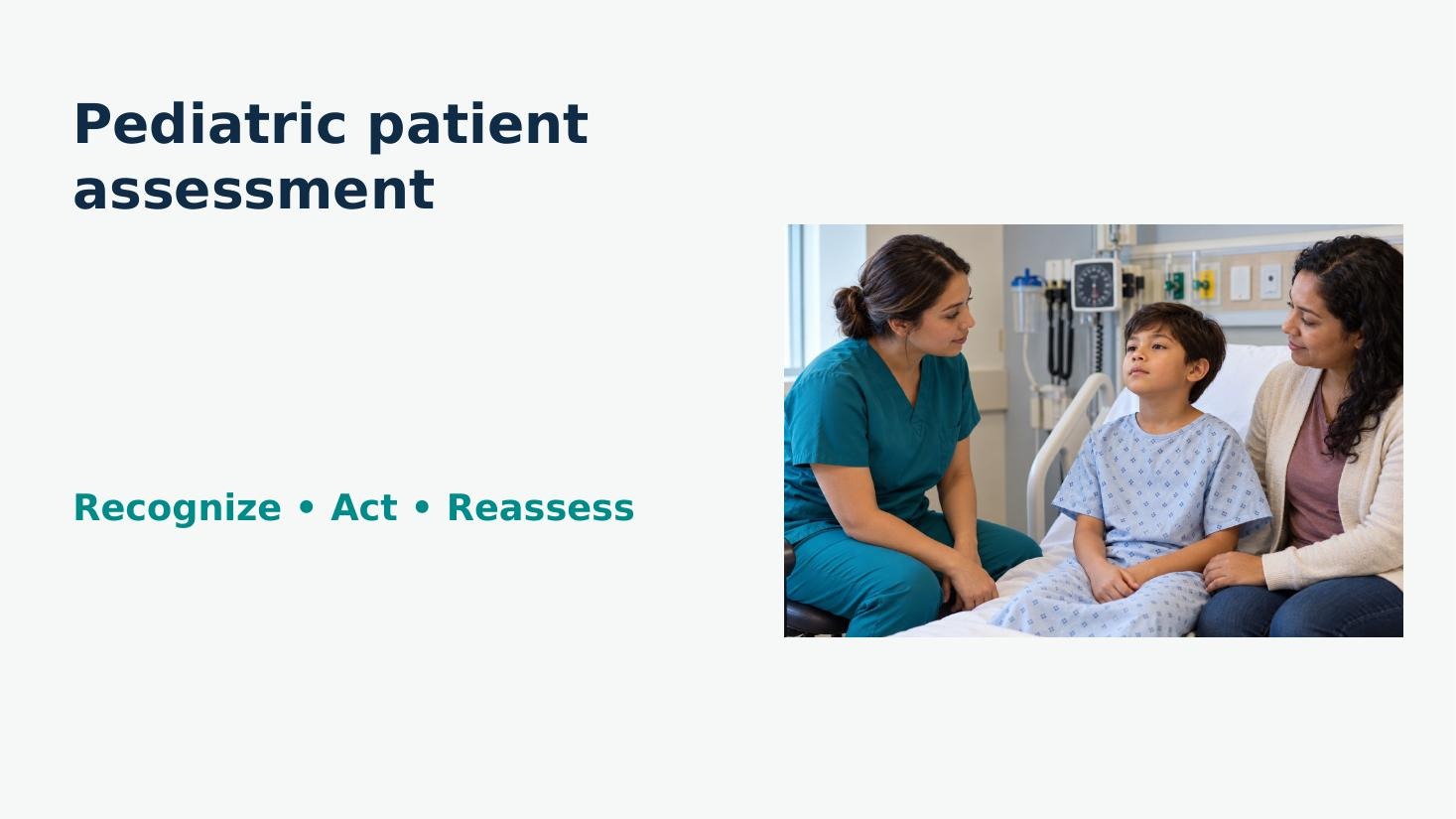
Pediatric Nursing Assessment
Structured assessment of the unwell child using overall appearance, ABCDE, age-appropriate equipment and ranges, child and caregiver input, and pediatric early-warning escalation.
Start free preview →
9 scenes · approximately 4 minutes · pre & post test
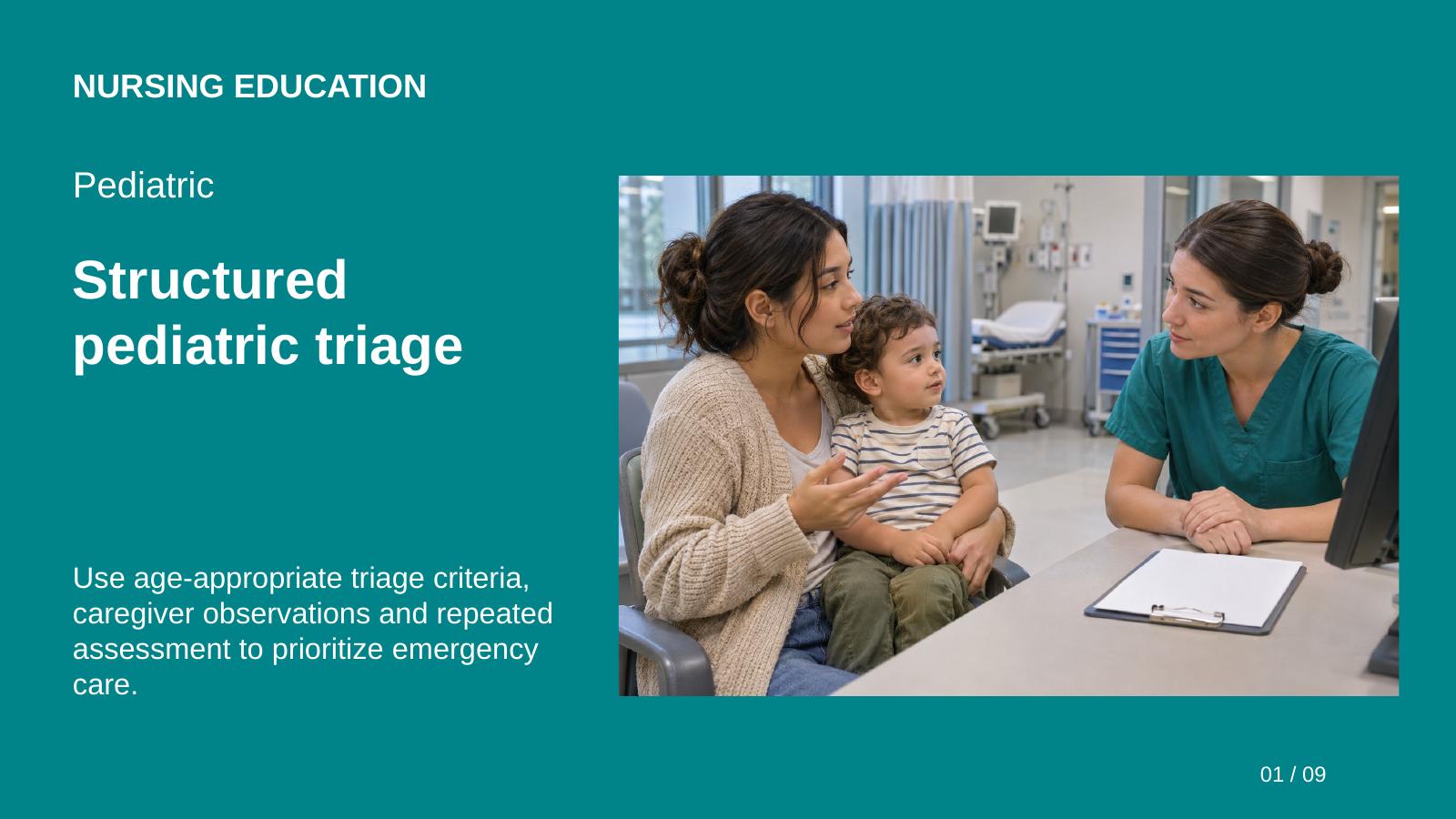
Pediatric Structured pediatric triage
Use age-appropriate triage criteria, caregiver observations and repeated assessment to prioritize emergency care.
Start free preview →
Emergency Response · 40 courses
9 scenes · approximately 4 minutes · pre & post test
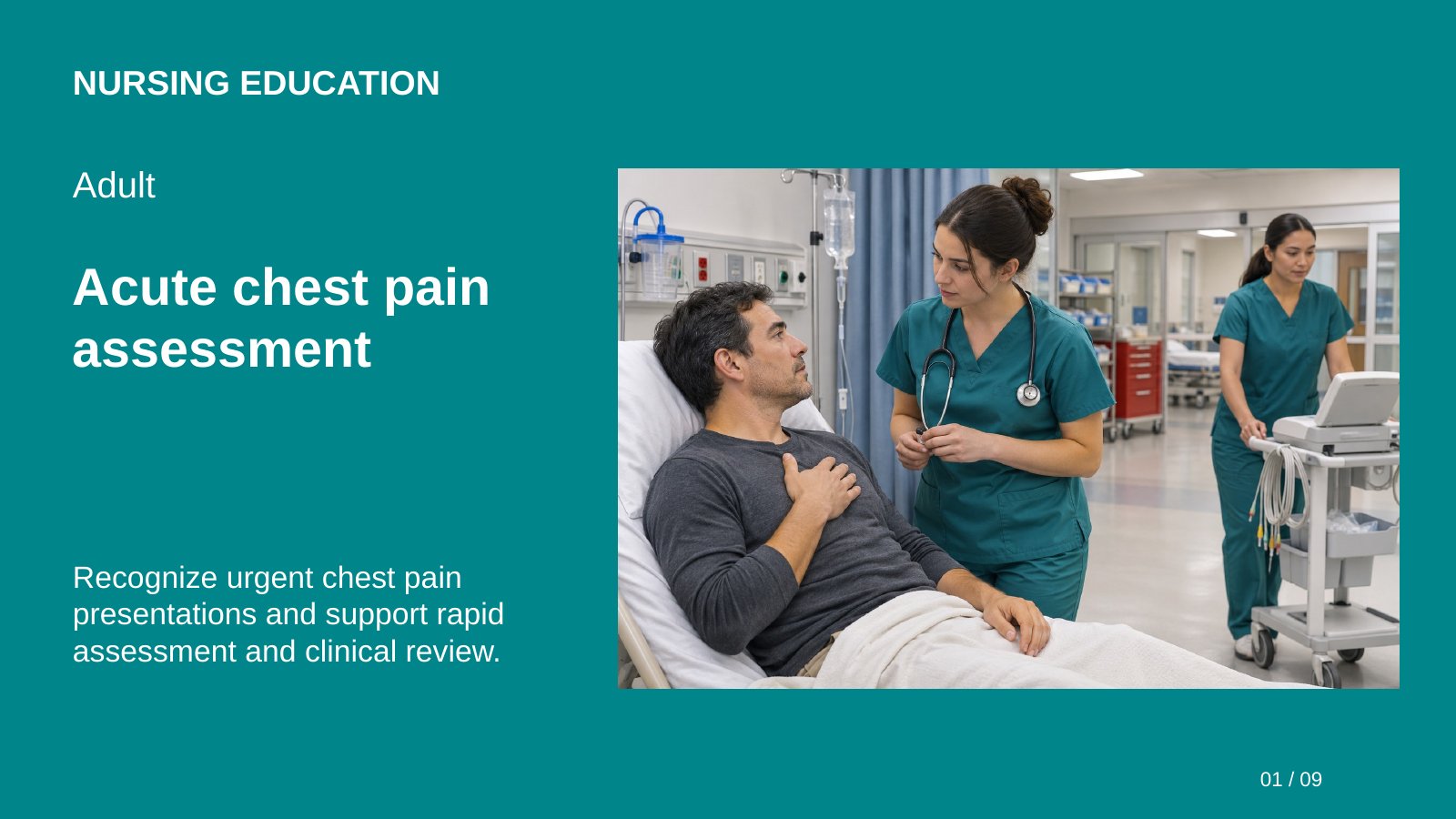
Adult acute chest pain assessment
Recognize urgent chest pain presentations and support rapid assessment and clinical review.
Start free preview →
9 scenes · approximately 4 minutes · pre & post test
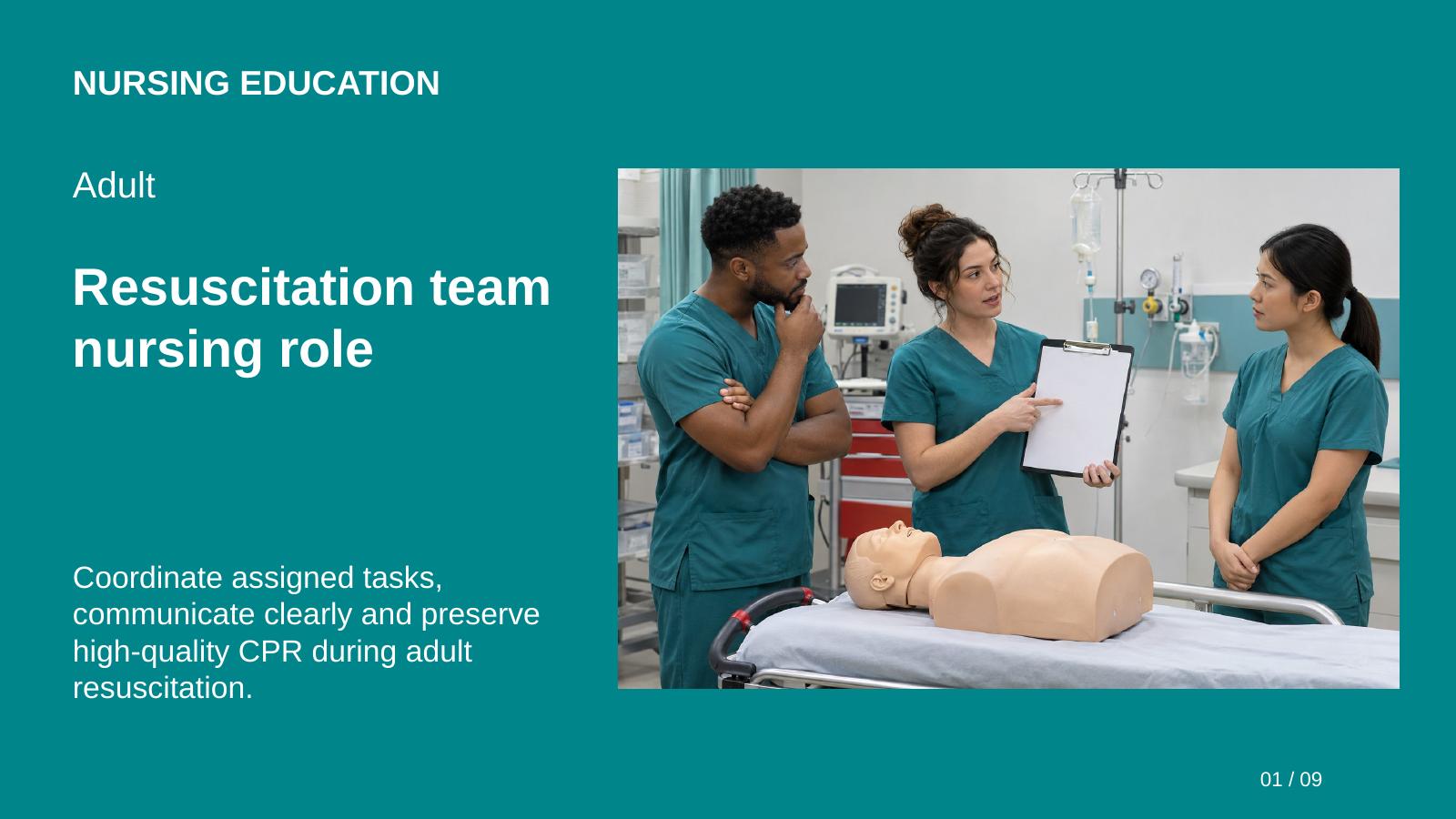
Adult advanced resuscitation team nursing role
Coordinate assigned tasks, communicate clearly and preserve high-quality CPR during adult resuscitation.
Start free preview →
9 scenes · approximately 4 minutes · pre & post test
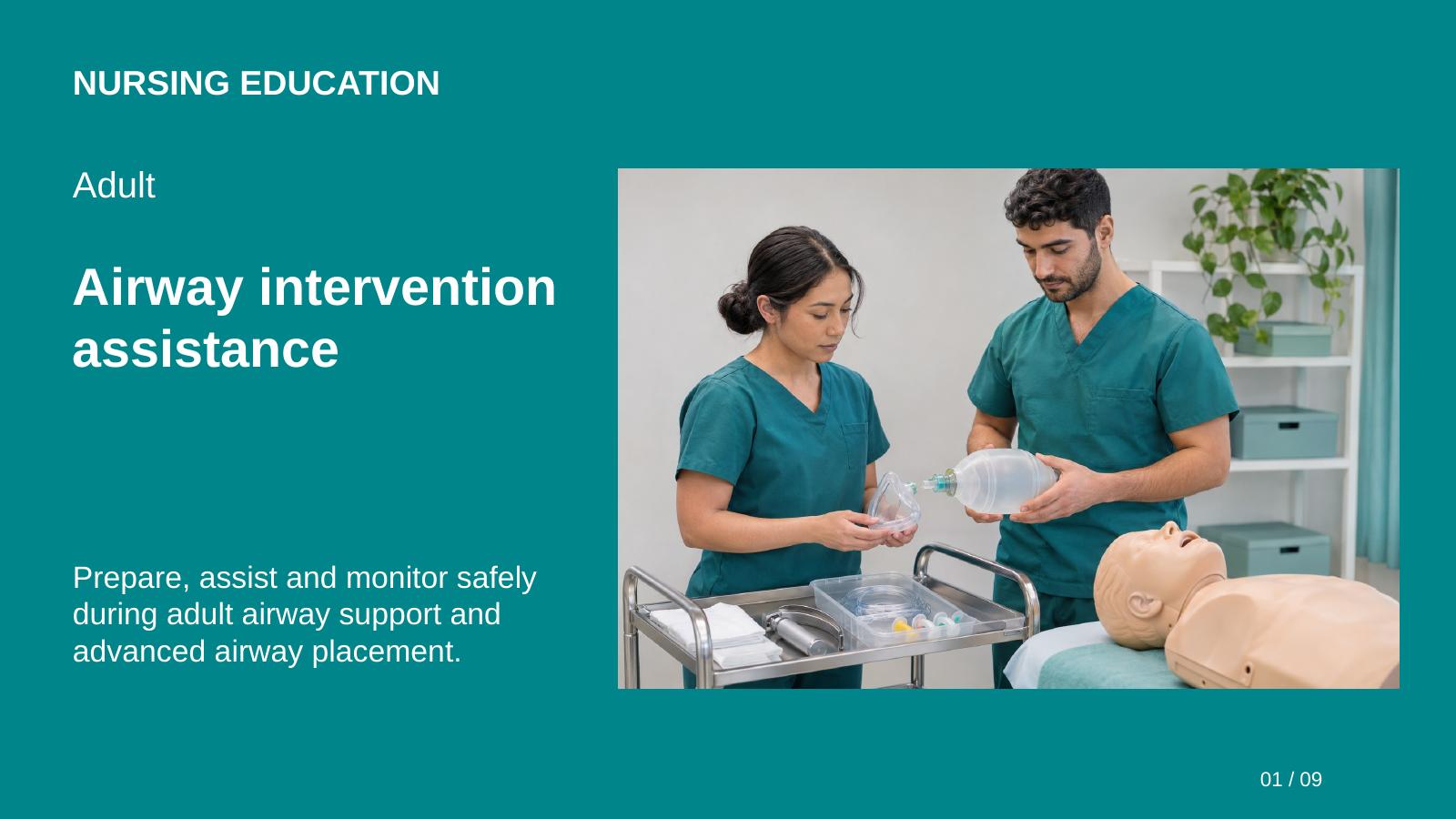
Adult airway intervention assistance
Prepare, assist and monitor safely during adult airway support and advanced airway placement.
Start free preview →
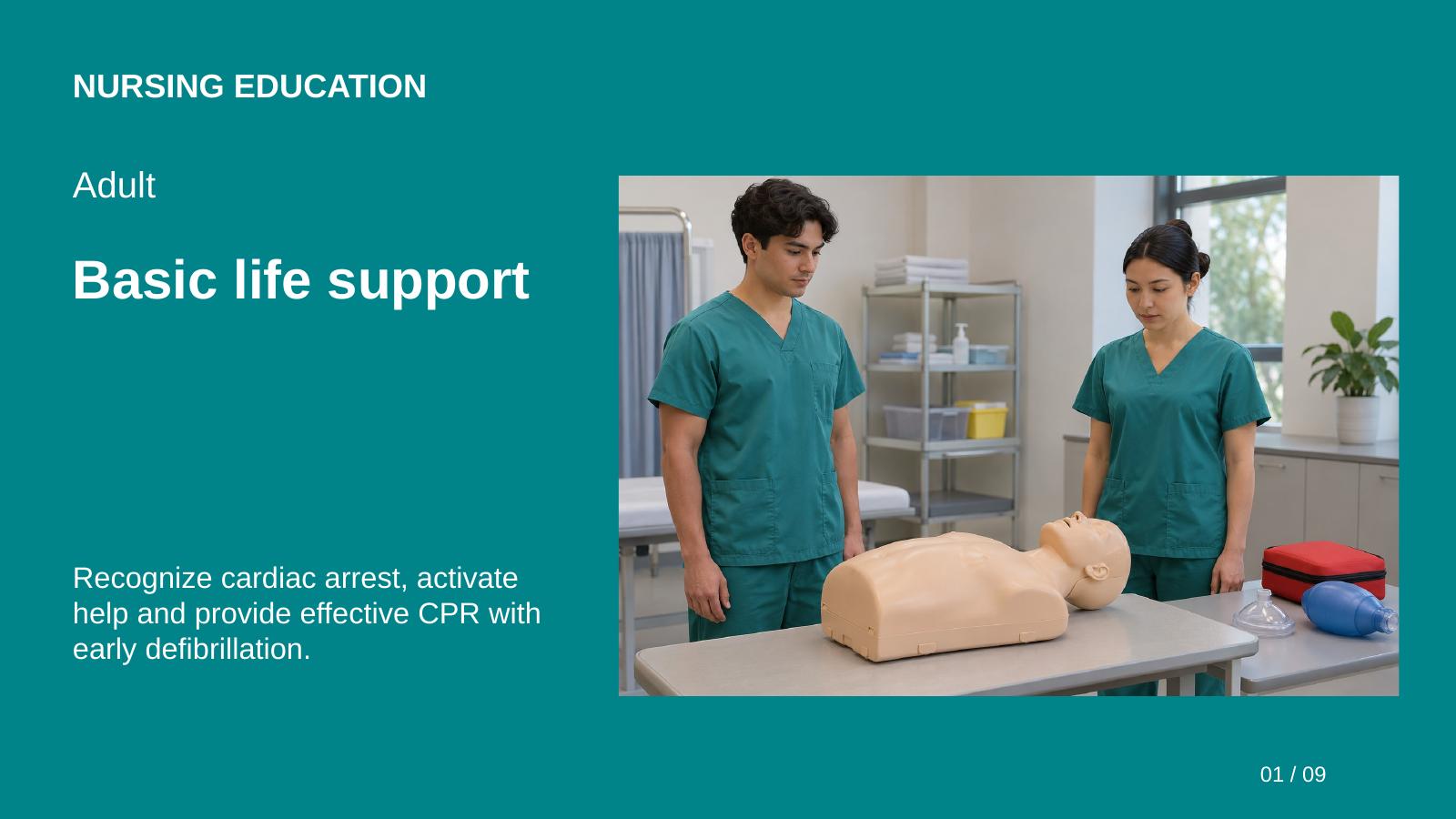
9 scenes · approximately 4 minutes · pre & post test
Adult Basic life support
Recognize cardiac arrest, activate help and provide effective CPR with early defibrillation.
Start free preview →
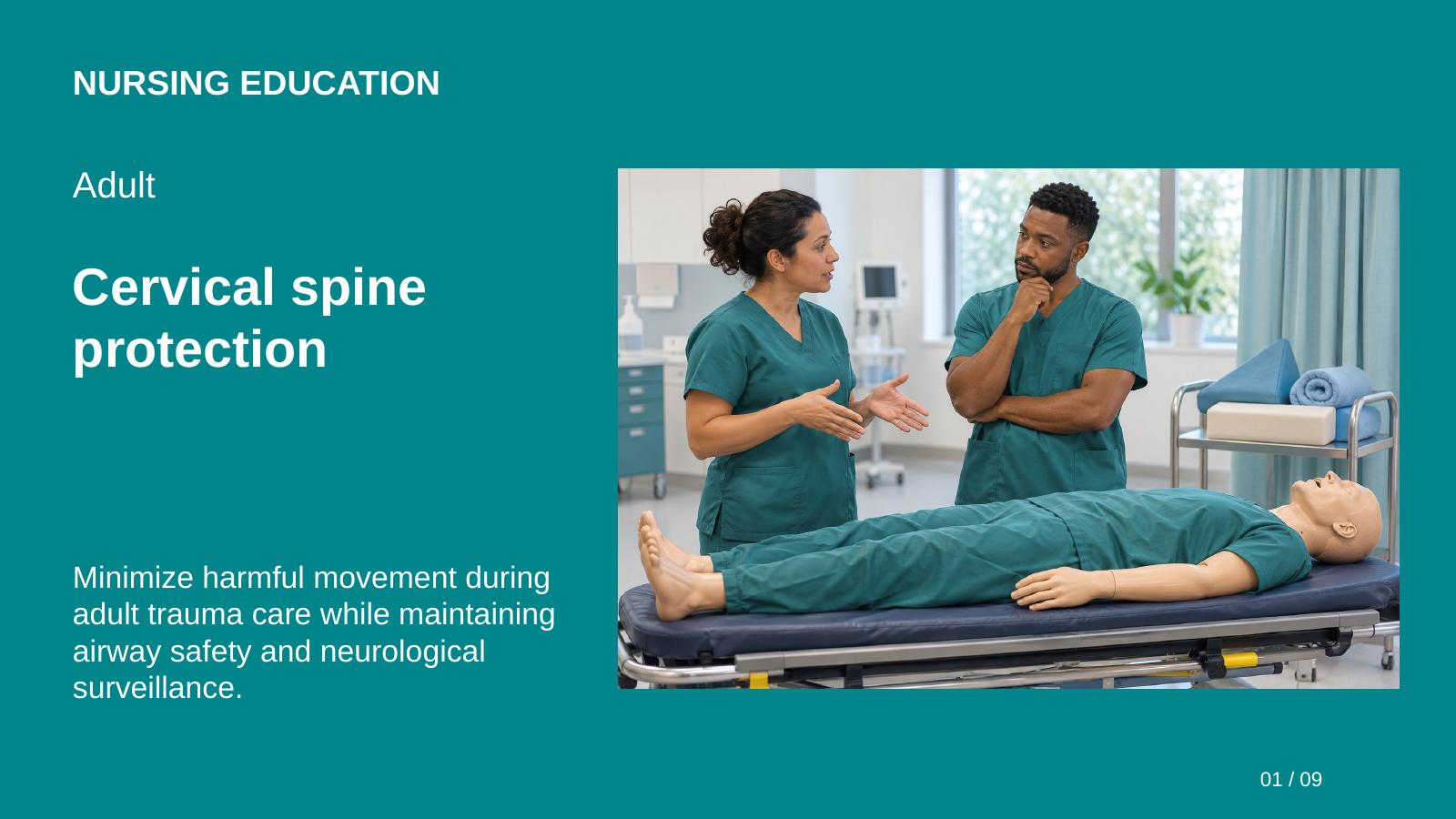
9 scenes · approximately 4 minutes · pre & post test
Adult cervical spine protection
Minimize harmful movement during adult trauma care while maintaining airway safety and neurological surveillance.
Start free preview →
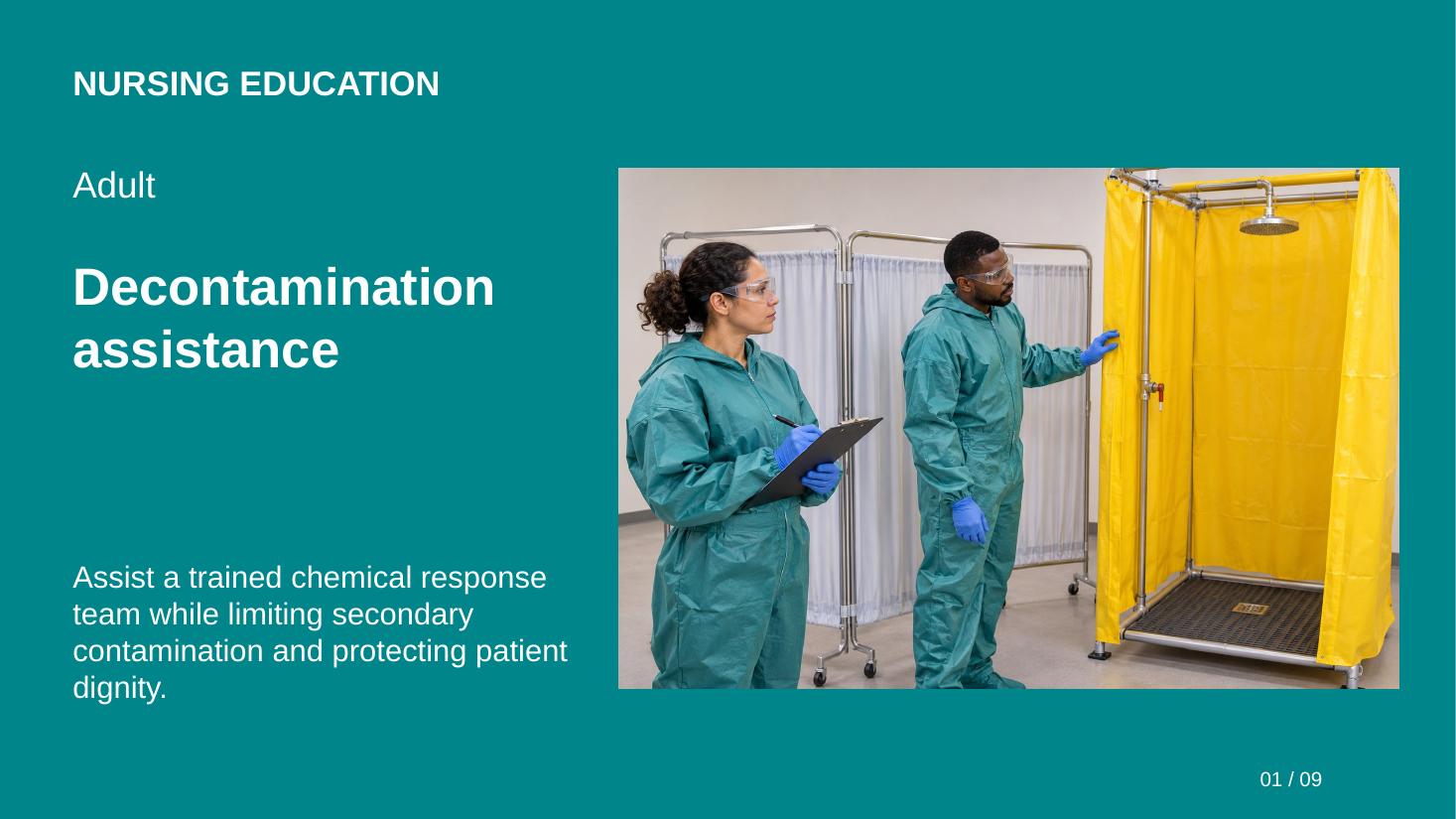
9 scenes · approximately 4 minutes · pre & post test
Adult decontamination assistance
Assist a trained chemical response team while limiting secondary contamination and protecting patient dignity.
Start free preview →
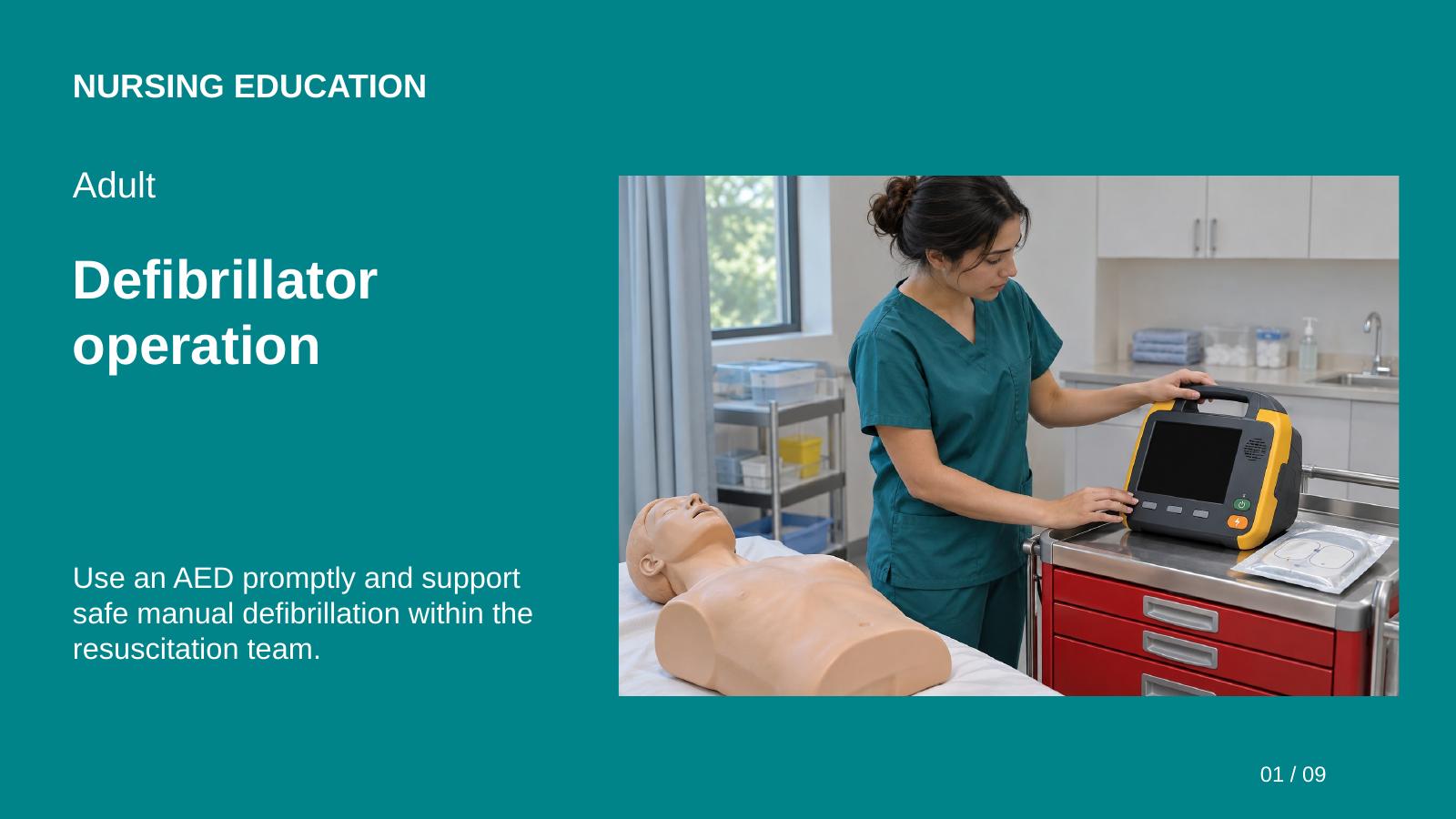
9 scenes · approximately 4 minutes · pre & post test
Adult Defibrillator operation
Use an AED promptly and support safe manual defibrillation within the resuscitation team.
Start free preview →
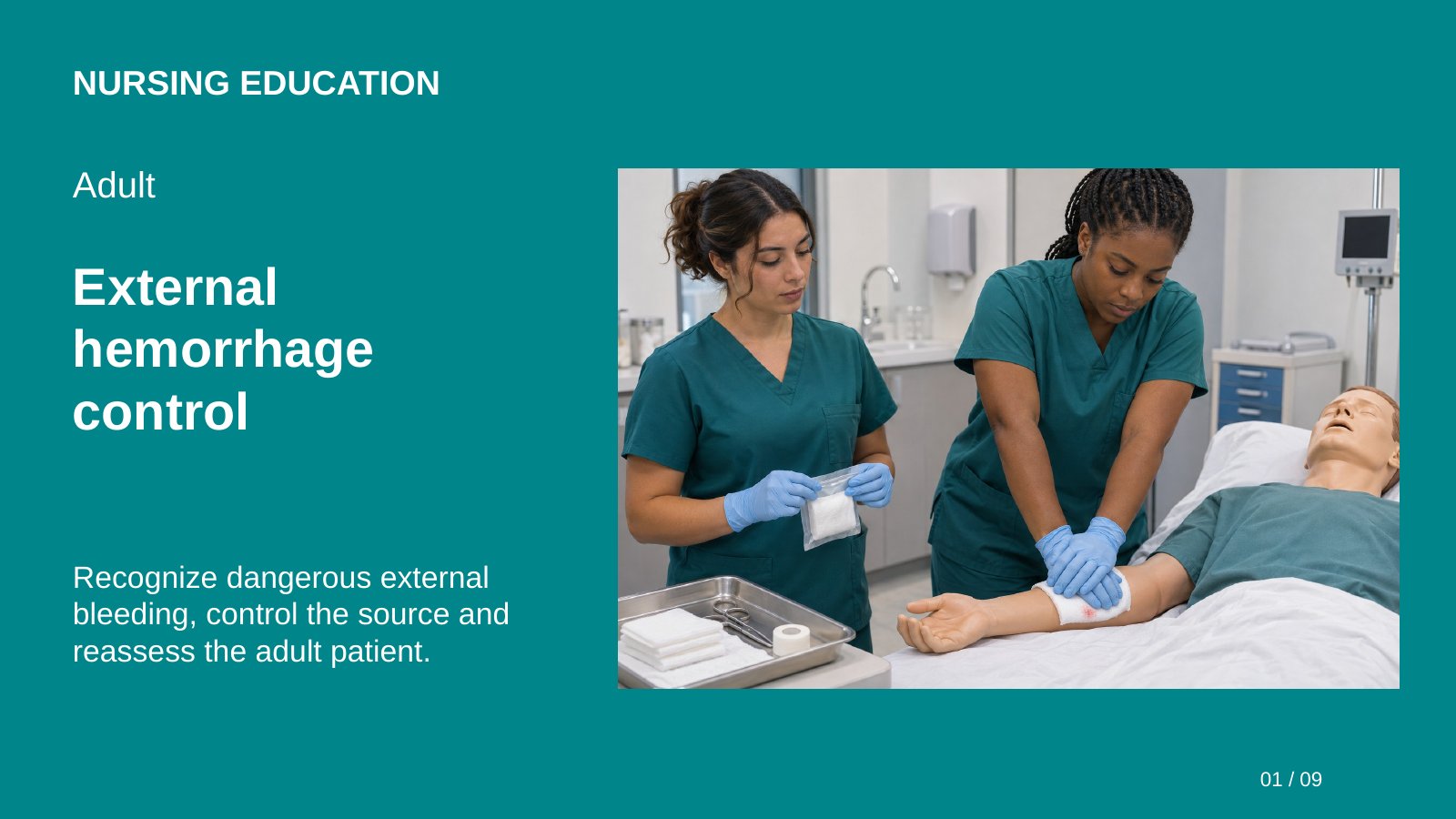
9 scenes · approximately 4 minutes · pre & post test
Adult external hemorrhage control
Recognize dangerous external bleeding, control the source and reassess the adult patient.
Start free preview →
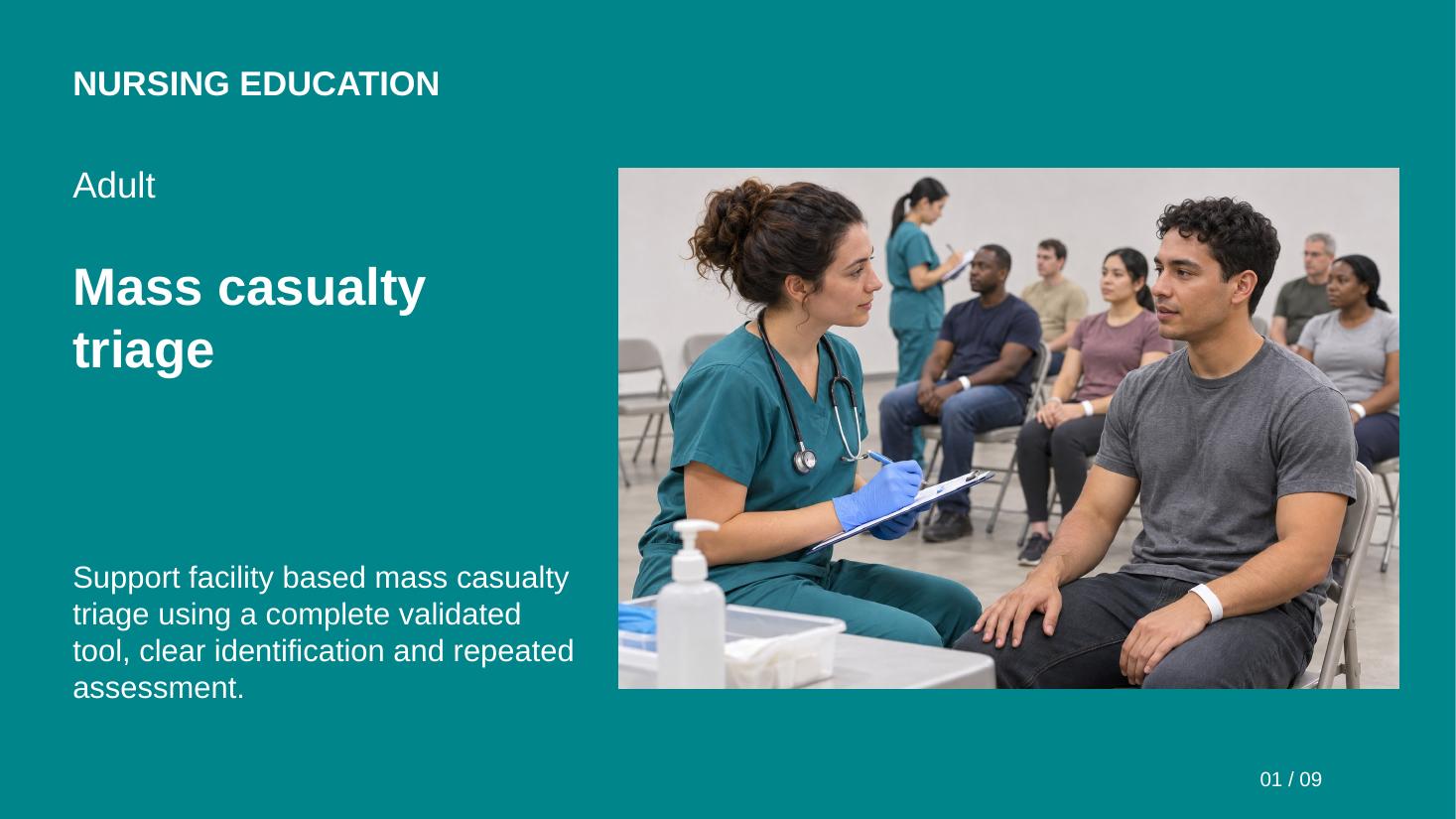
9 scenes · approximately 4 minutes · pre & post test
Adult mass casualty triage
Support facility based mass casualty triage using a complete validated tool, clear identification and repeated assessment.
Start free preview →
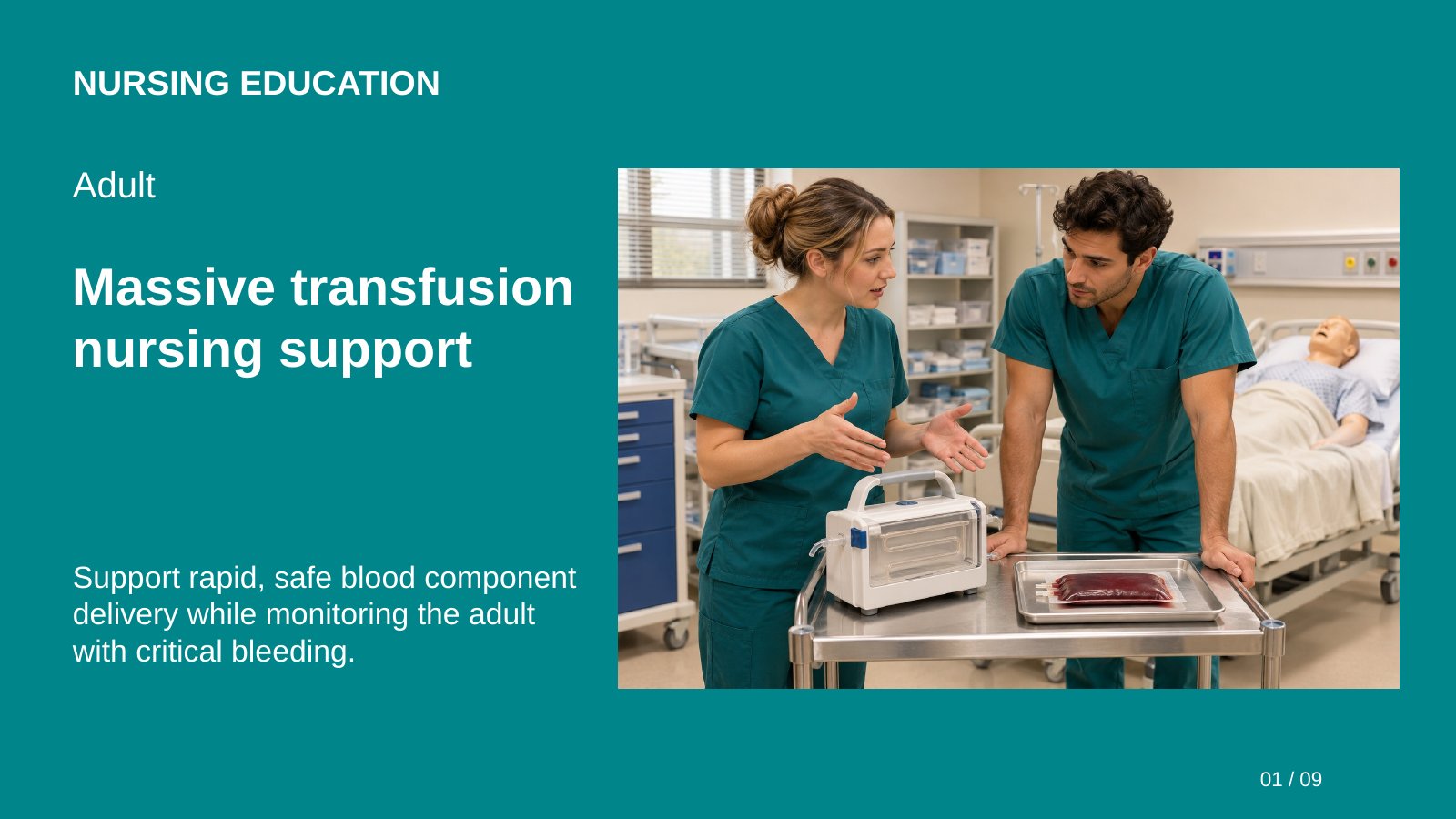
9 scenes · approximately 4 minutes · pre & post test
Adult massive transfusion nursing support
Support rapid, safe blood component delivery while monitoring the adult with critical bleeding.
Start free preview →
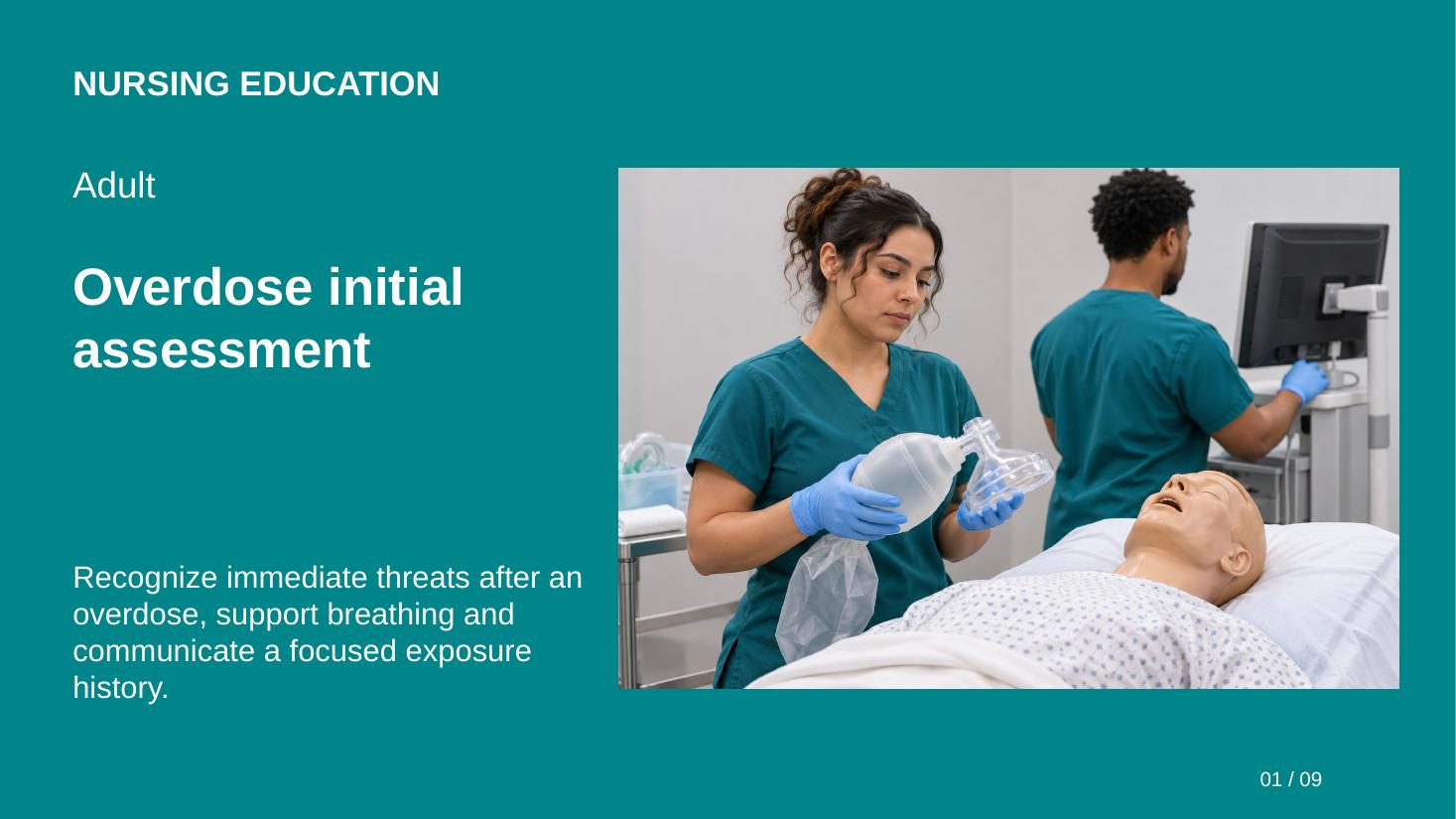
9 scenes · approximately 4 minutes · pre & post test
Adult overdose initial assessment
Recognize immediate threats after an overdose, support breathing and communicate a focused exposure history.
Start free preview →
9 scenes · approximately 4 minutes · pre & post test
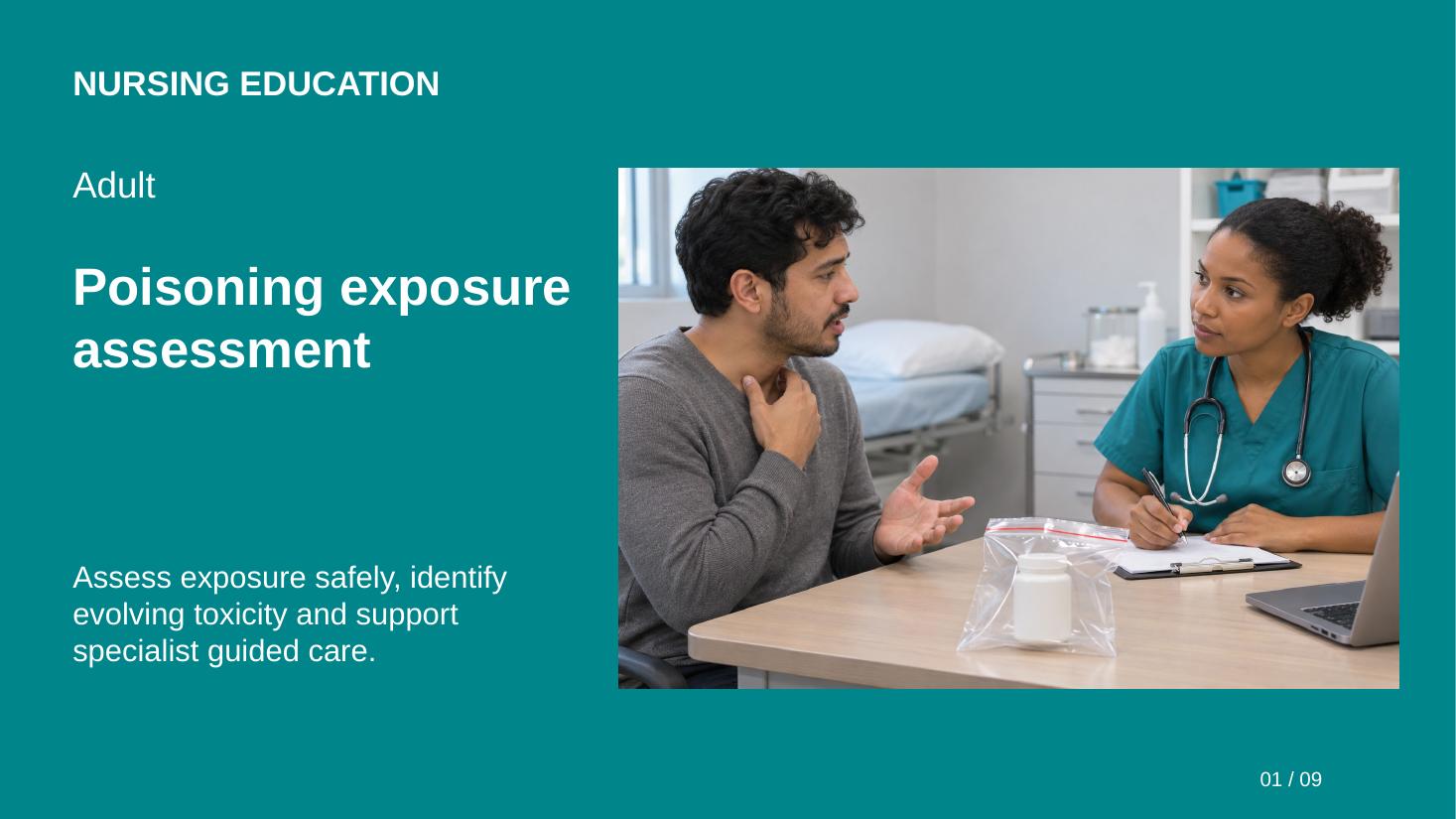
Adult poisoning exposure assessment
Assess exposure safely, identify evolving toxicity and support specialist guided care.
Start free preview →
9 scenes · approximately 4 minutes · pre & post test
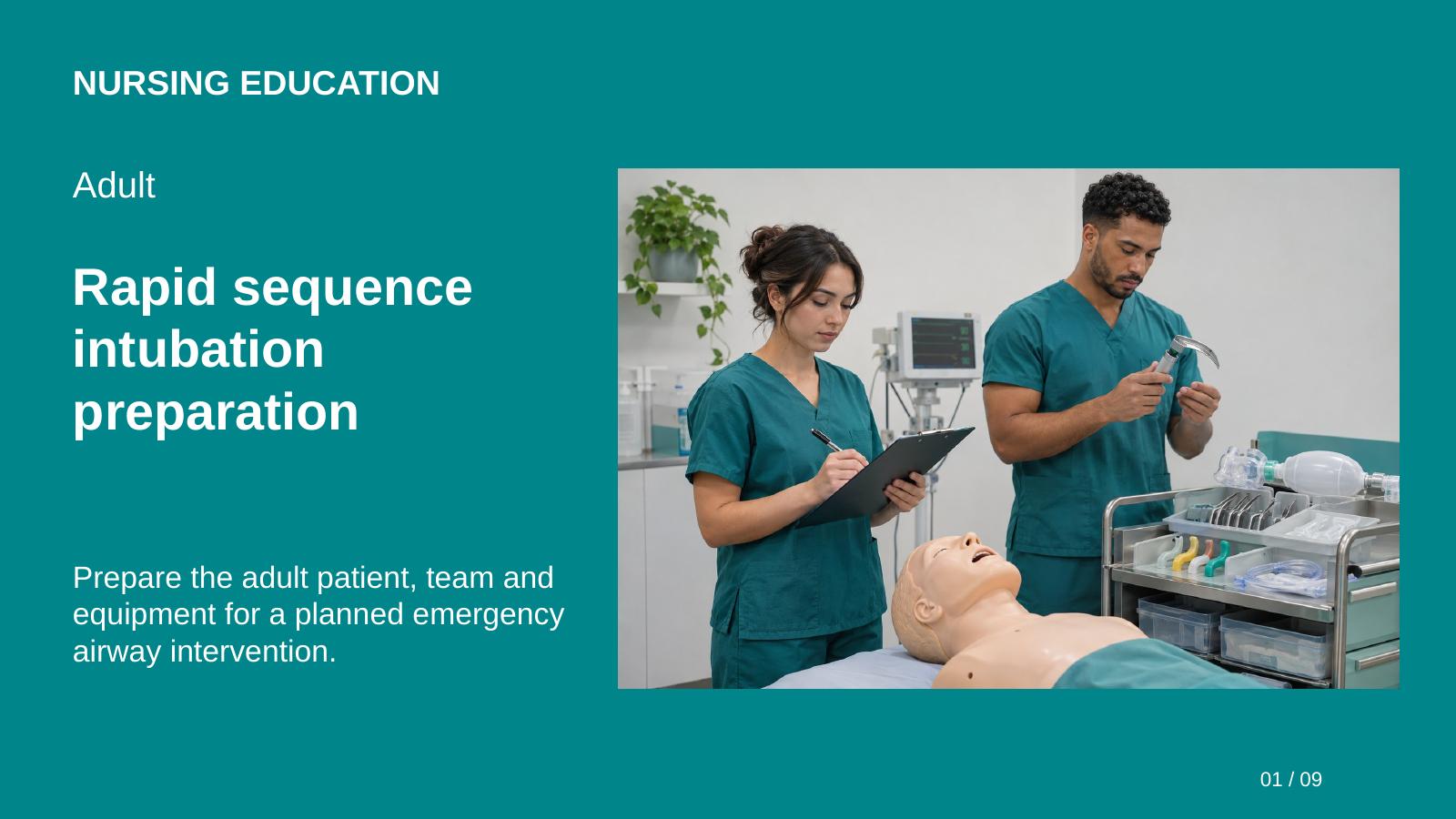
Adult rapid sequence intubation preparation
Prepare the adult patient, team and equipment for a planned emergency airway intervention.
Start free preview →
9 scenes · approximately 4 minutes · pre & post test
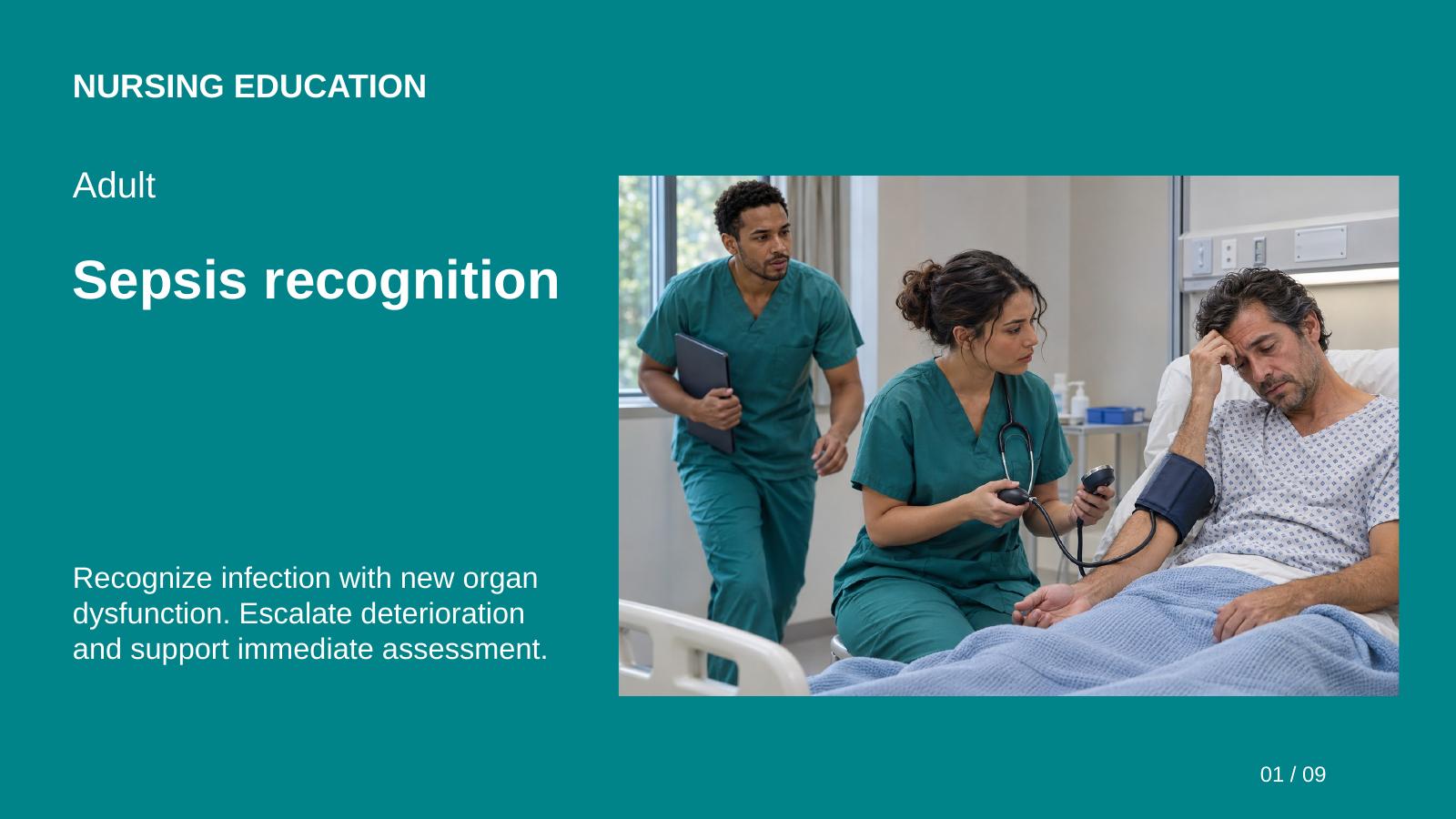
Adult Sepsis Recognition
Sepsis occurs when the response to infection causes life threatening organ dysfunction. Recognition starts with a change in the patient, rather than waiting for a laboratory label. This lesson focuses on nursing assessment, urgent communication and reassessment. Emergency treatment requires a clinical team, with interventions matched to the individual.
Start free preview →

9 scenes · approximately 4 minutes · pre & post test
Adult ST elevation recognition and escalation
Recognize concerning ECG changes and escalate suspected acute coronary occlusion promptly.
Start free preview →
9 scenes · approximately 4 minutes · pre & post test
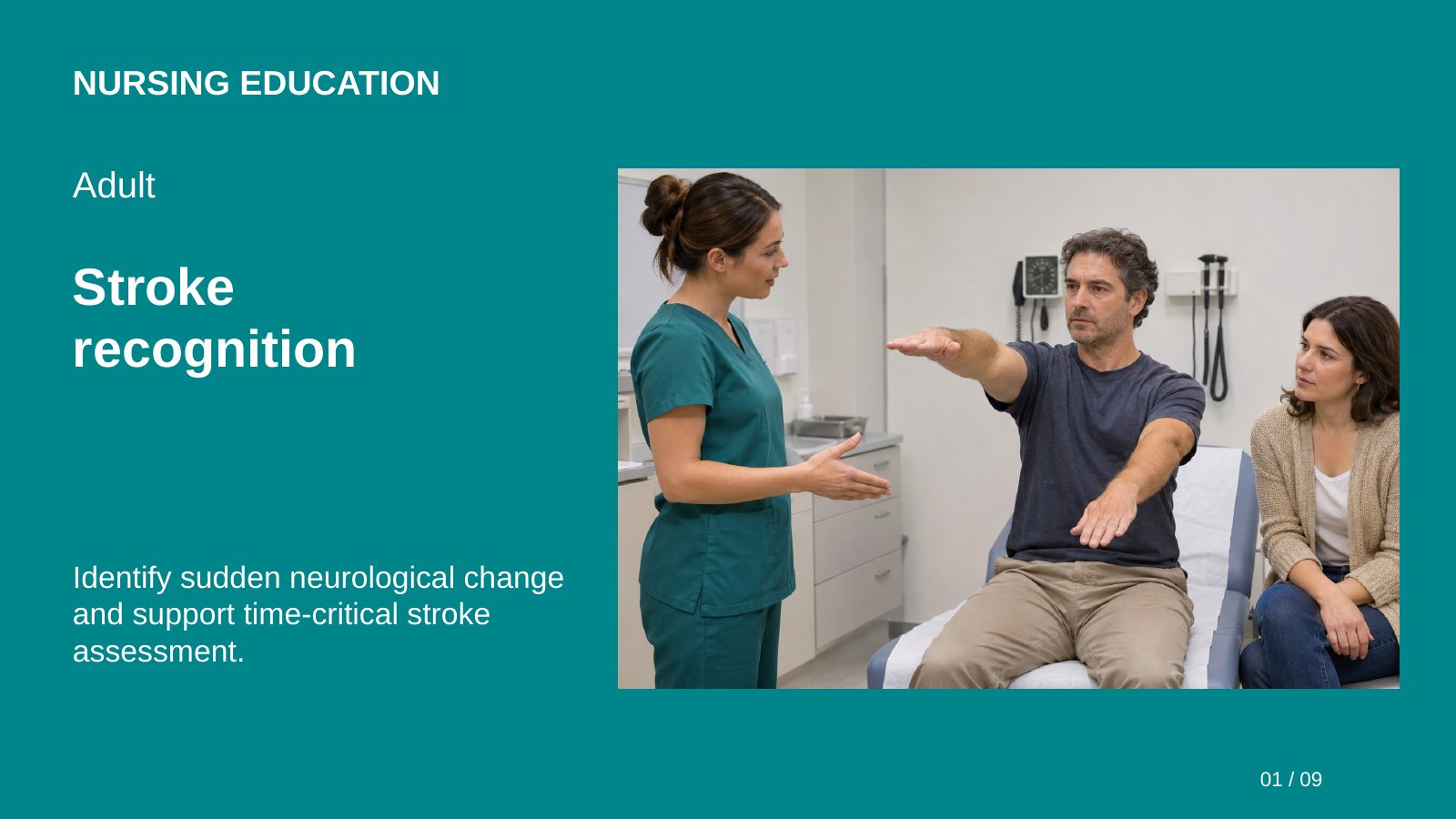
Adult stroke recognition
Identify sudden neurological change and support time-critical stroke assessment.
Start free preview →

9 scenes · approximately 4 minutes · pre & post test
Adult suicide risk screening
Ask with compassion, recognize urgent safety needs and connect screening to clinical assessment.
Start free preview →
9 scenes · approximately 4 minutes · pre & post test
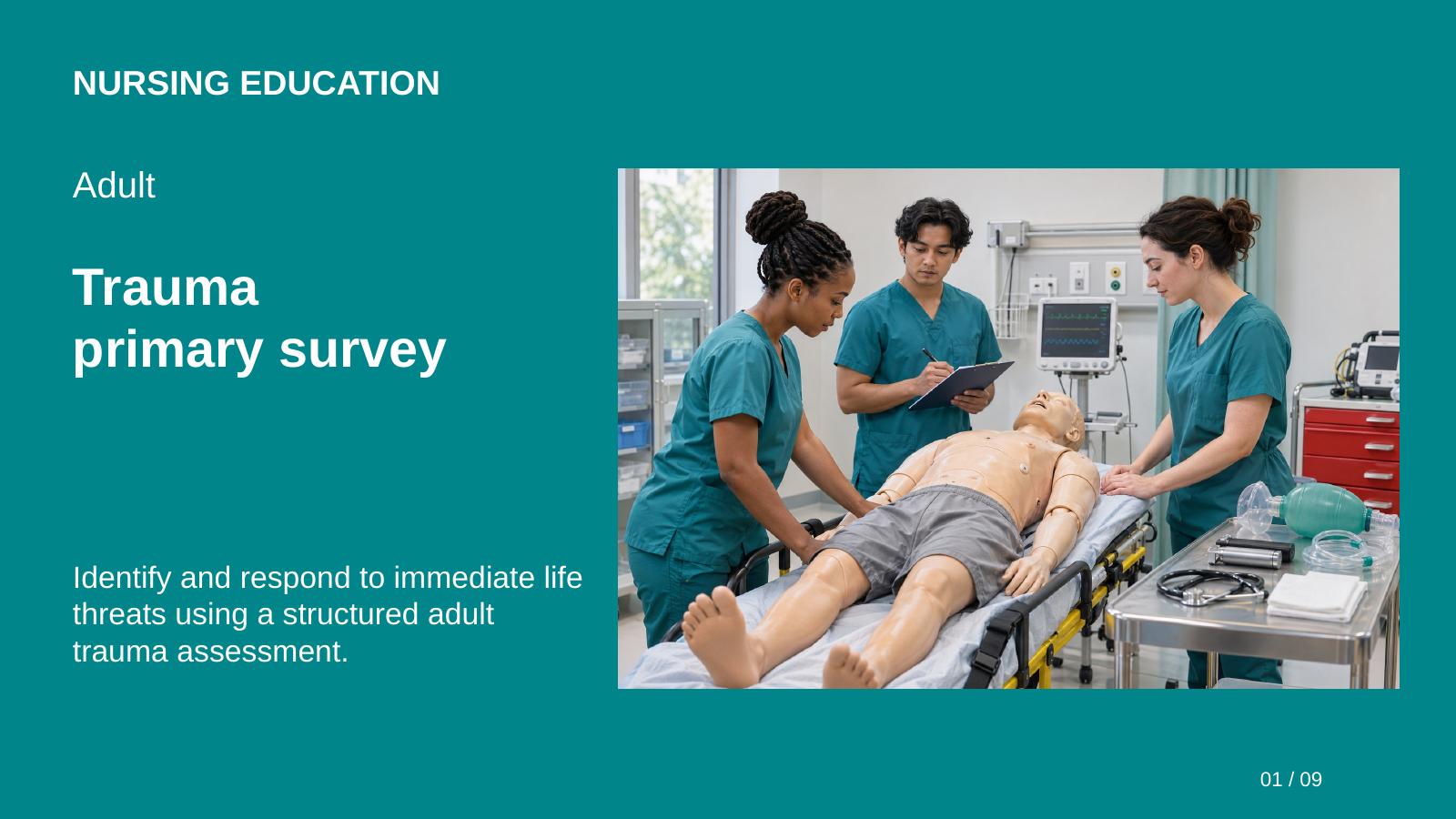
Adult trauma primary survey
Identify and respond to immediate life threats using a structured adult trauma assessment.
Start free preview →
9 scenes · approximately 4 minutes · pre & post test
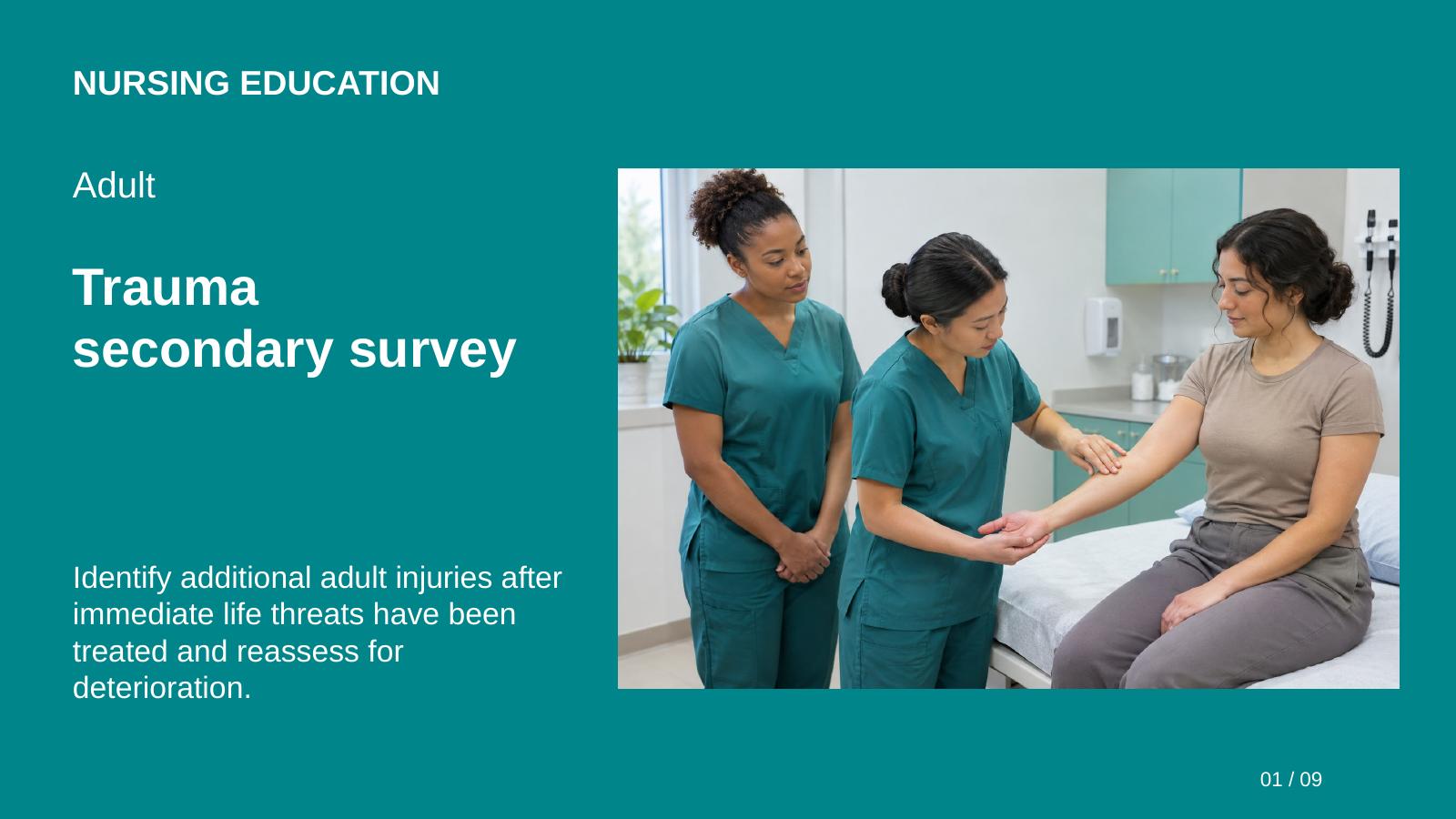
Adult trauma secondary survey
Identify additional adult injuries after immediate life threats have been treated and reassess for deterioration.
Start free preview →
13 scenes · pre & post test
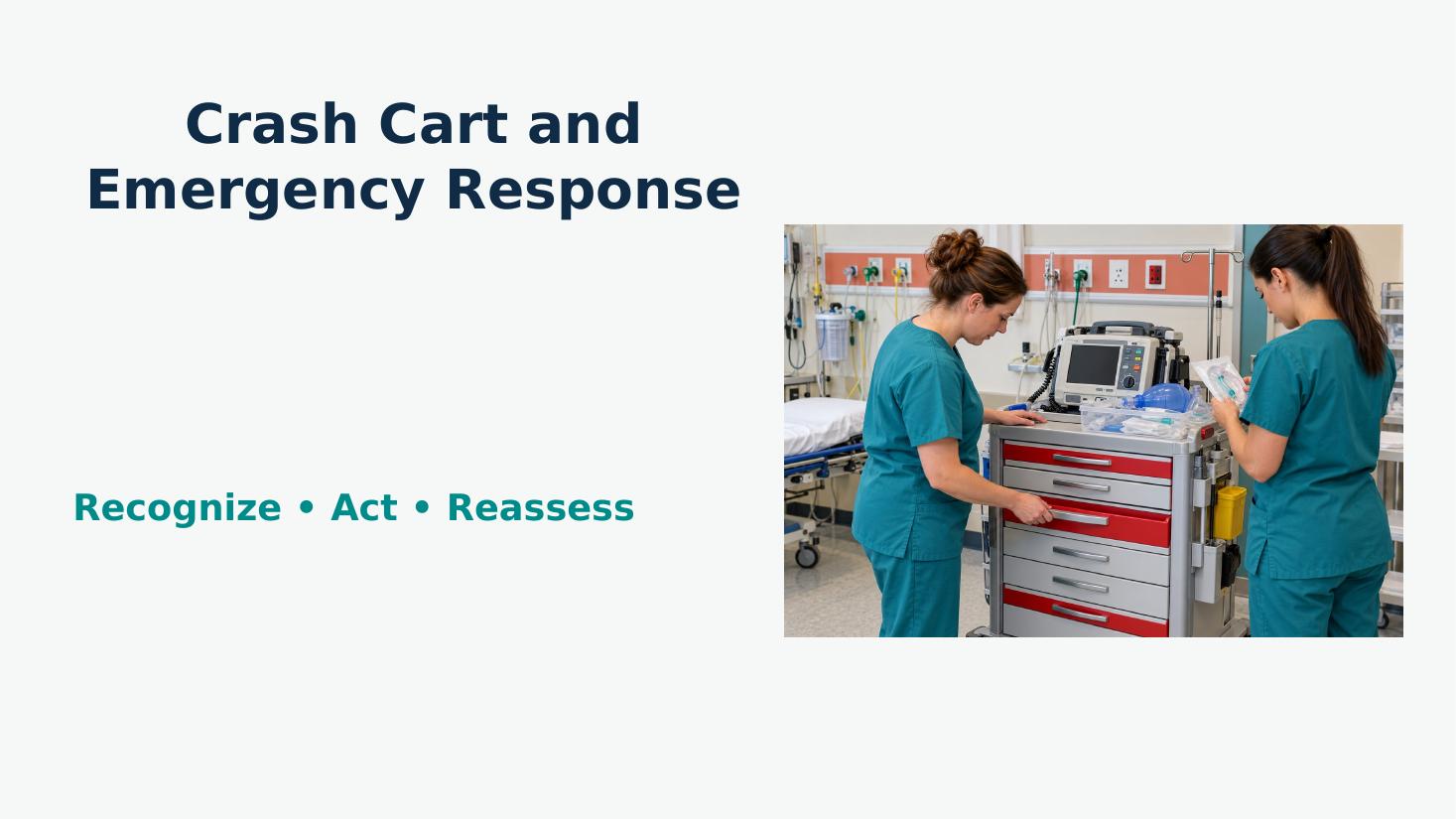
Crash Cart and Emergency Response
Adult emergency readiness and first nursing response: knowing equipment location, systematic crash cart checks, recognizing deterioration and cardiac arrest, high-quality CPR, safe defibrillation, team roles and restoring readiness.
Start free preview →
13 scenes · pre & post test
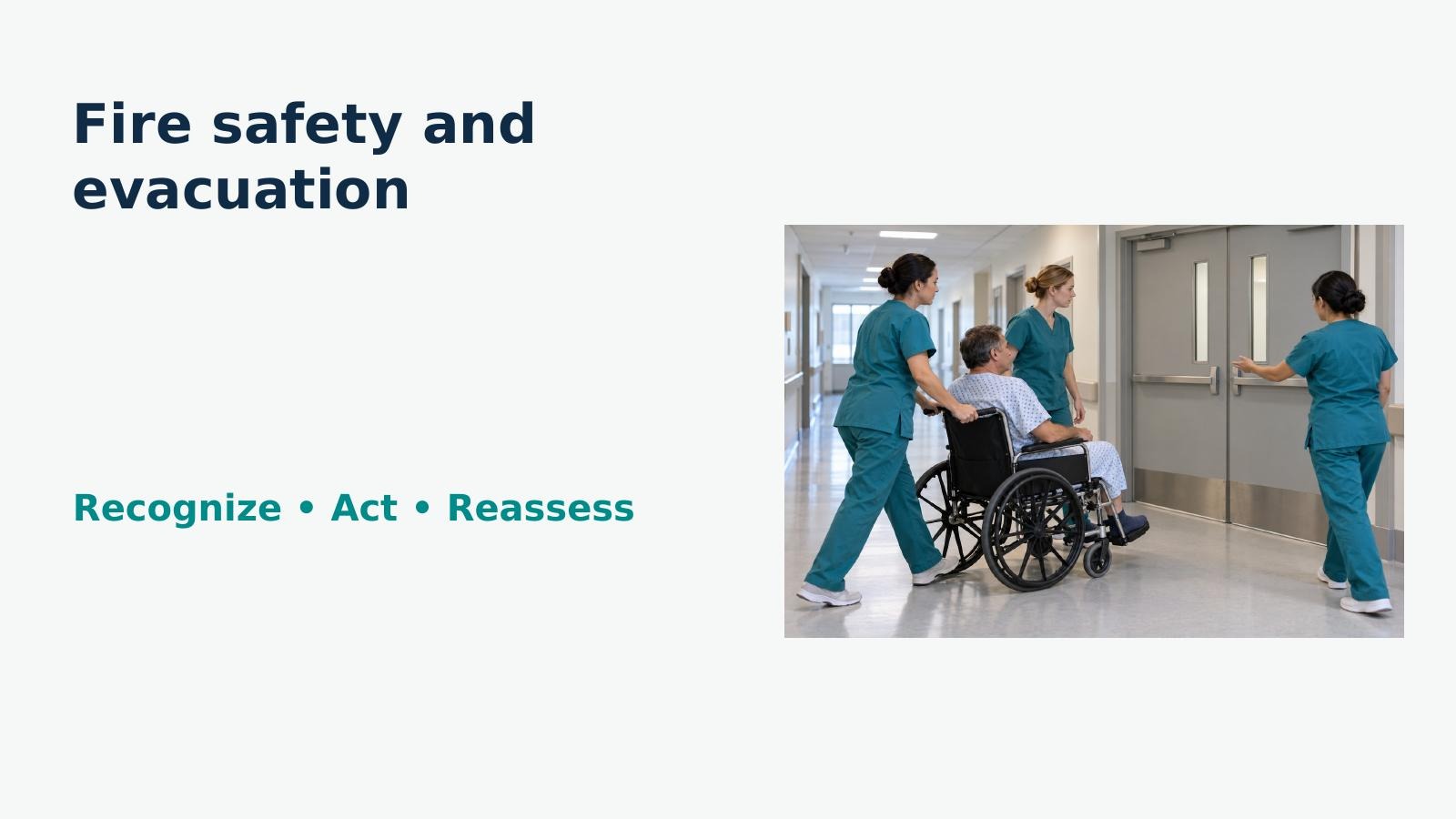
Fire Safety and Evacuation
General healthcare fire response: knowing alarm points and protected routes, raising the alarm, safe rescue, smoke containment, staged horizontal evacuation, matching assistance to dependency, oxygen hazards and accounting for people afterwards.
Start free preview →

13 scenes · pre & post test
GUSS Swallowing-Screen Awareness and BE FAST
Adult stroke recognition and swallowing-screen safety: BE FAST warning signs, last known well, urgent stroke response, withholding oral intake, the Gugging Swallowing Screen sequence and stop rules, and safe follow-up after screening.
Start free preview →
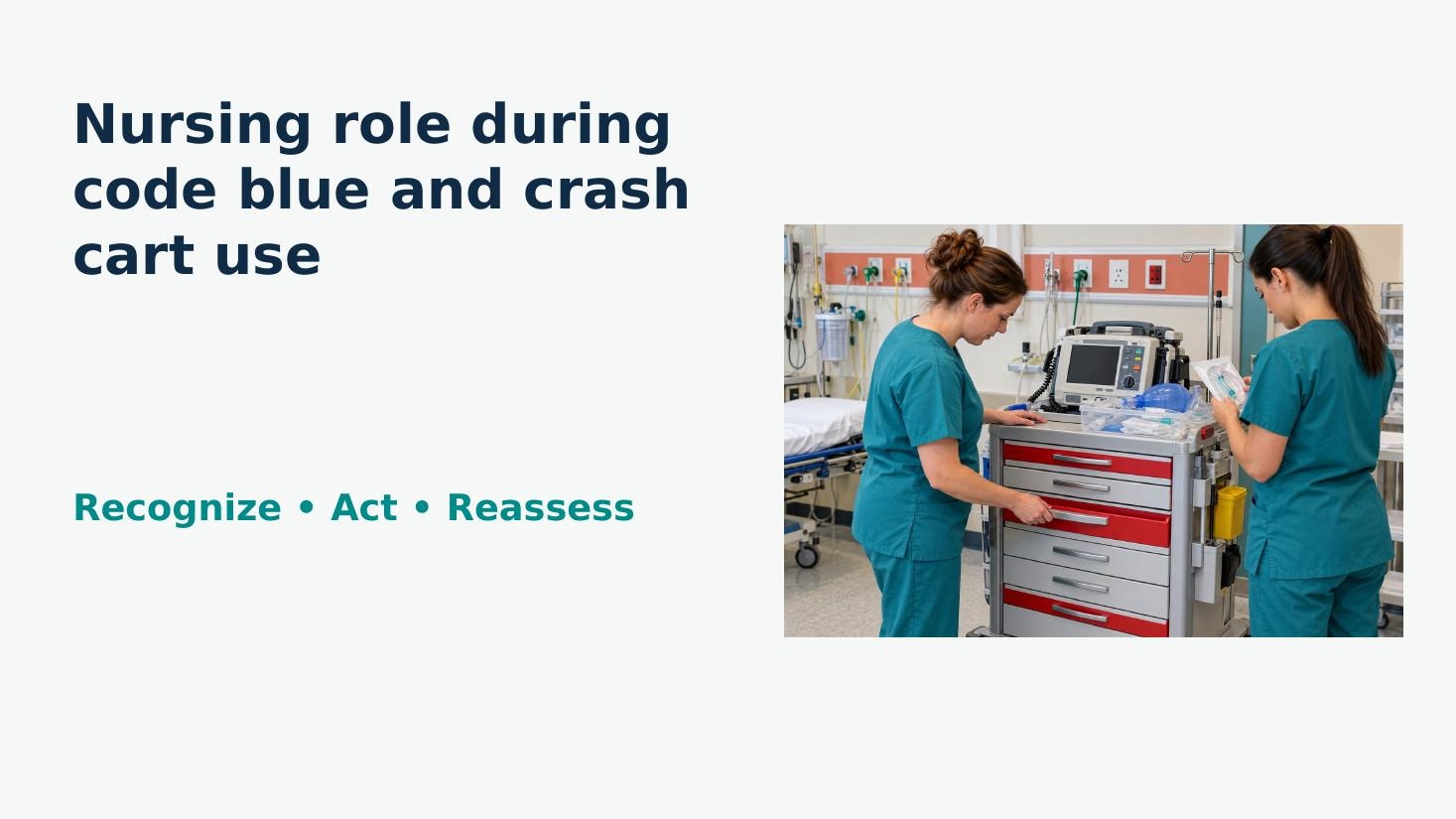
13 scenes · pre & post test
Nursing Role During Code Blue and Crash Cart Use
Adult in-hospital resuscitation teamwork: activating the response, assigning nursing roles, compression quality, airway and defibrillation support, safe emergency medicines, accurate recording, closed-loop communication and post-arrest care.
Start free preview →
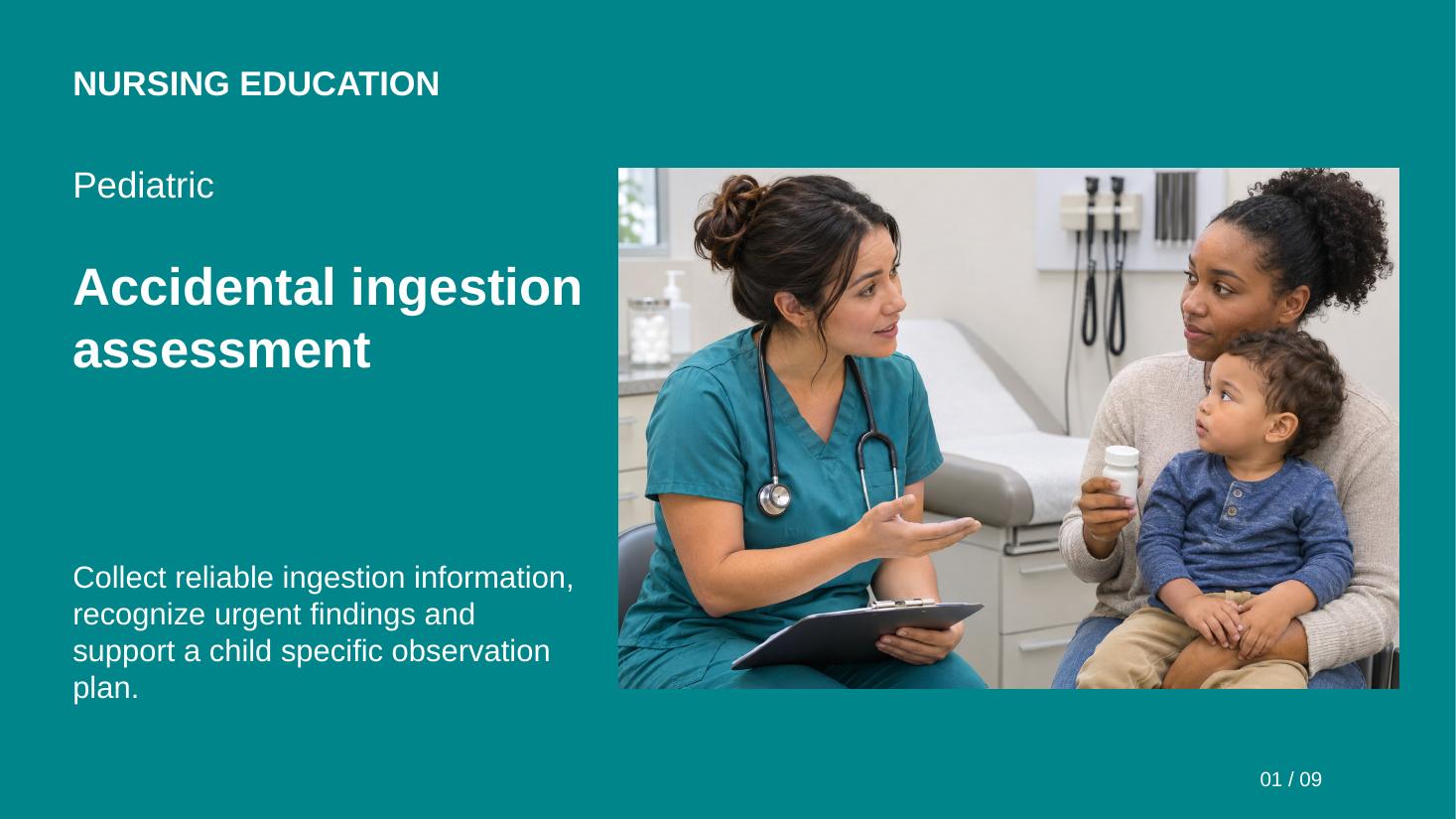
9 scenes · approximately 4 minutes · pre & post test
Pediatric accidental ingestion assessment
Collect reliable ingestion information, recognize urgent findings and support a child specific observation plan.
Start free preview →

9 scenes · approximately 4 minutes · pre & post test
Pediatric adolescent suicide screening
Offer a private supportive screen, recognize urgent concerns and connect the young person to assessment.
Start free preview →
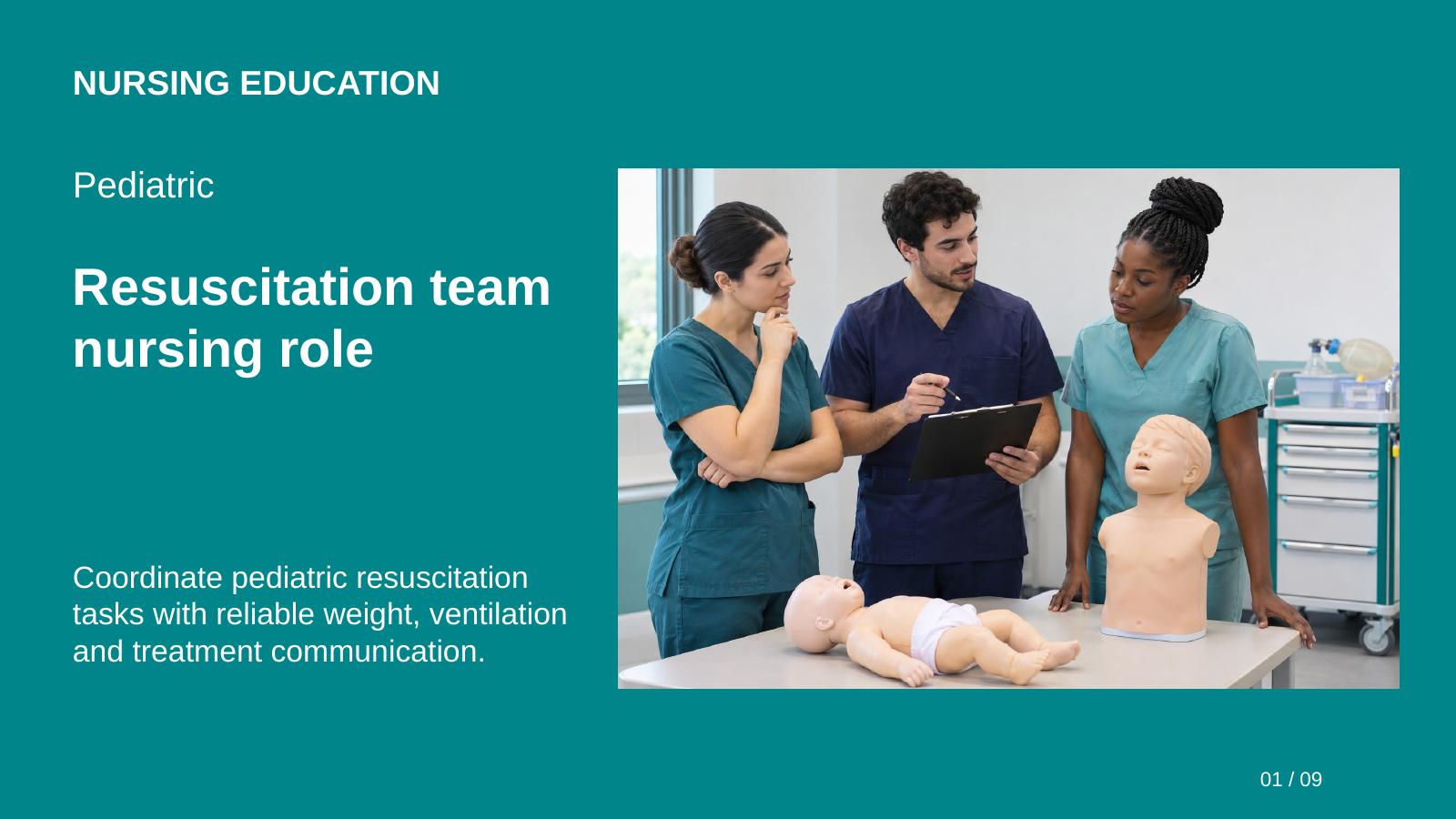
9 scenes · approximately 4 minutes · pre & post test
Pediatric advanced resuscitation team nursing role
Coordinate pediatric resuscitation tasks with reliable weight, ventilation and treatment communication.
Start free preview →
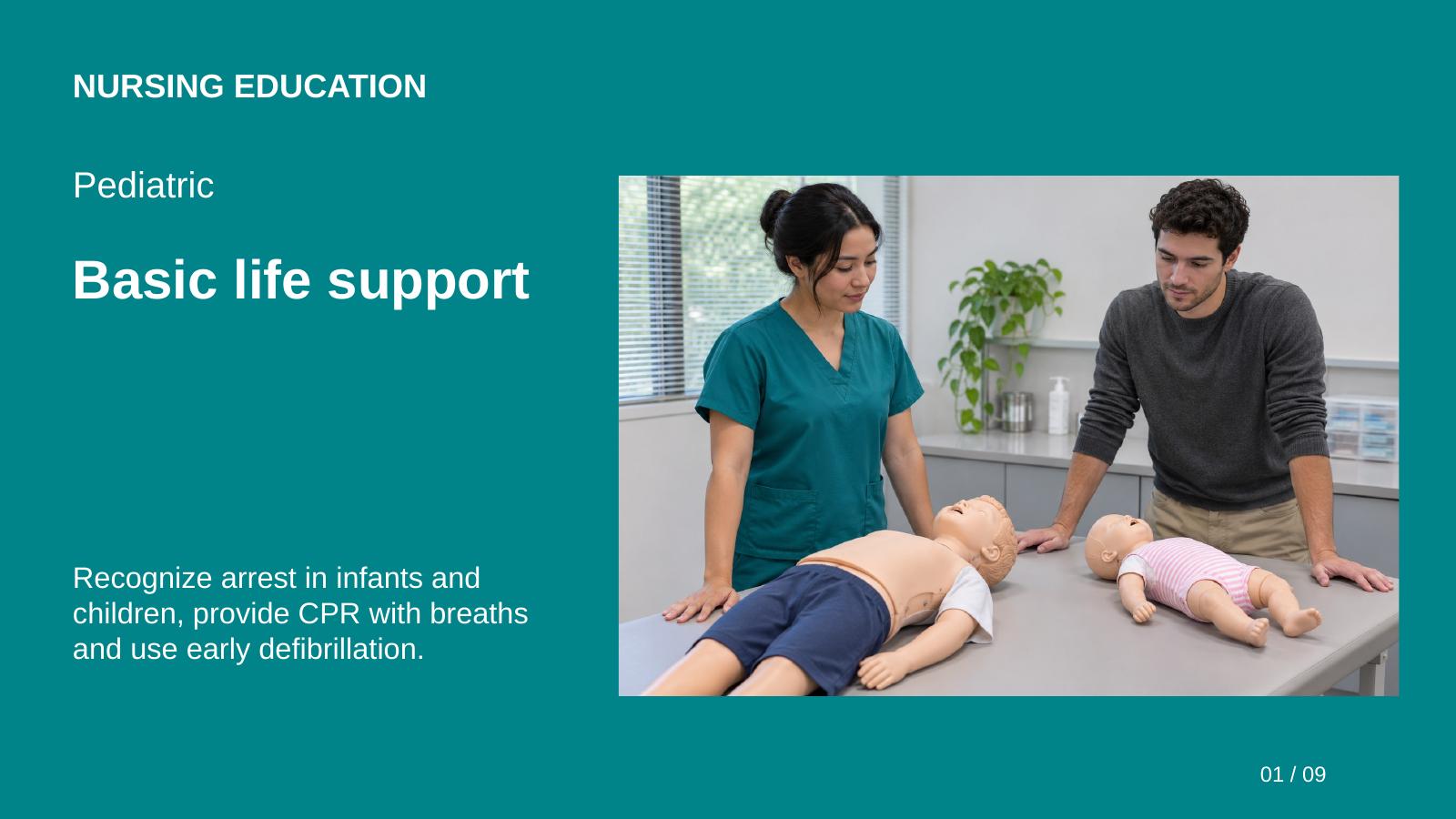
9 scenes · approximately 4 minutes · pre & post test
Pediatric Basic life support
Recognize arrest in infants and children, provide CPR with breaths and use early defibrillation.
Start free preview →
9 scenes · approximately 4 minutes · pre & post test
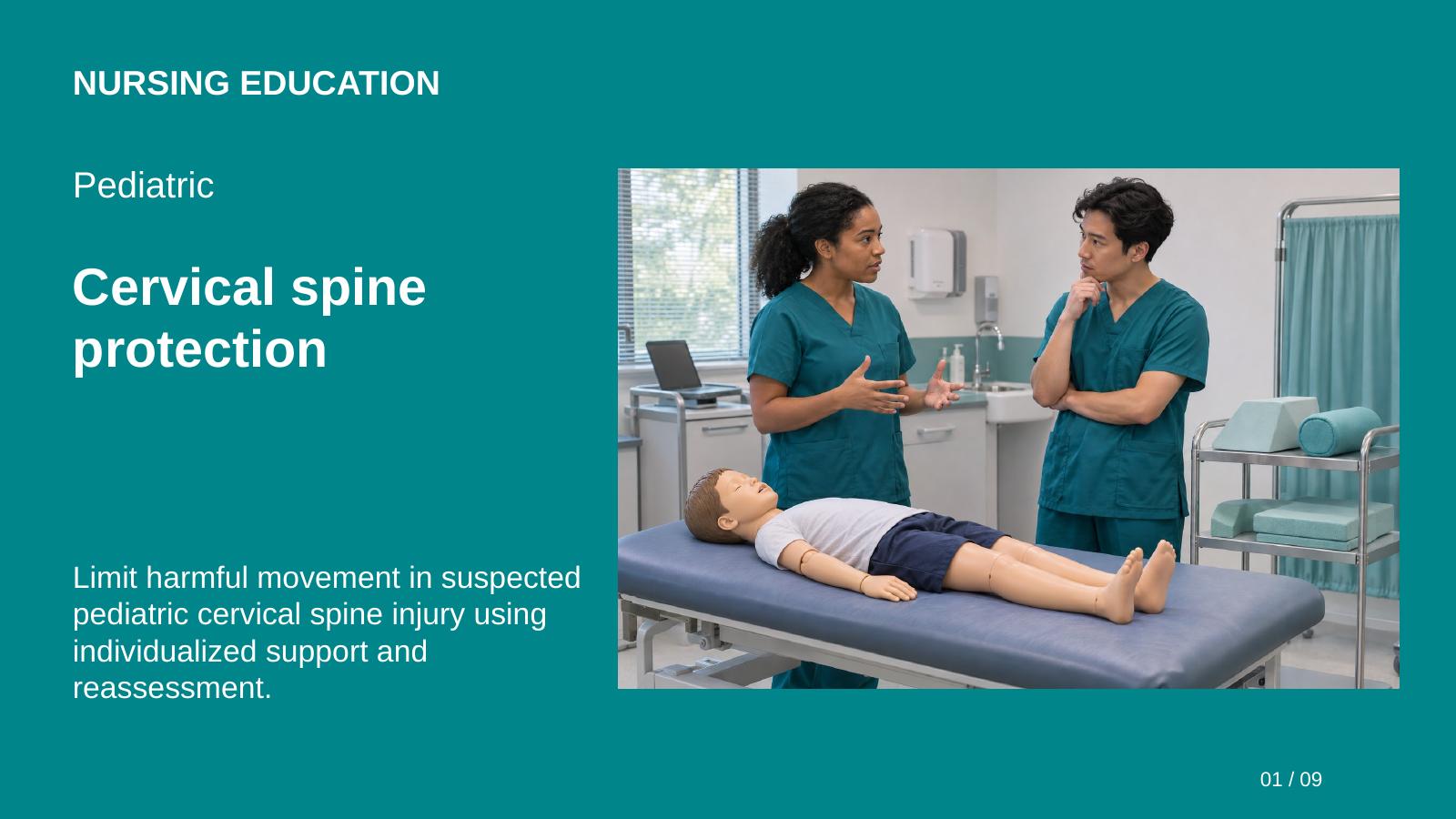
Pediatric cervical spine protection
Limit harmful movement in suspected pediatric cervical spine injury using individualized support and reassessment.
Start free preview →
9 scenes · approximately 4 minutes · pre & post test
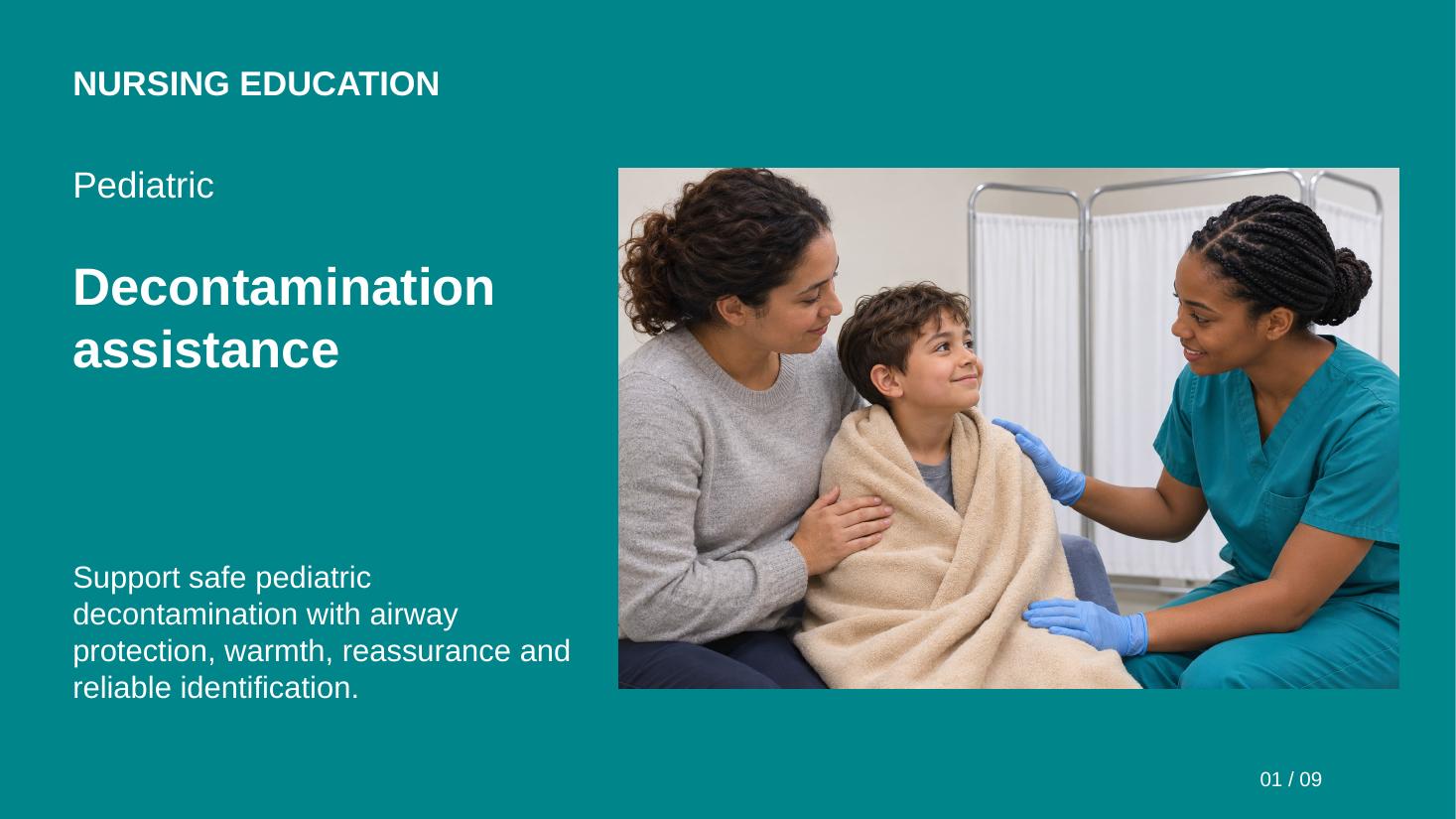
Pediatric decontamination assistance
Support safe pediatric decontamination with airway protection, warmth, reassurance and reliable identification.
Start free preview →
9 scenes · approximately 4 minutes · pre & post test
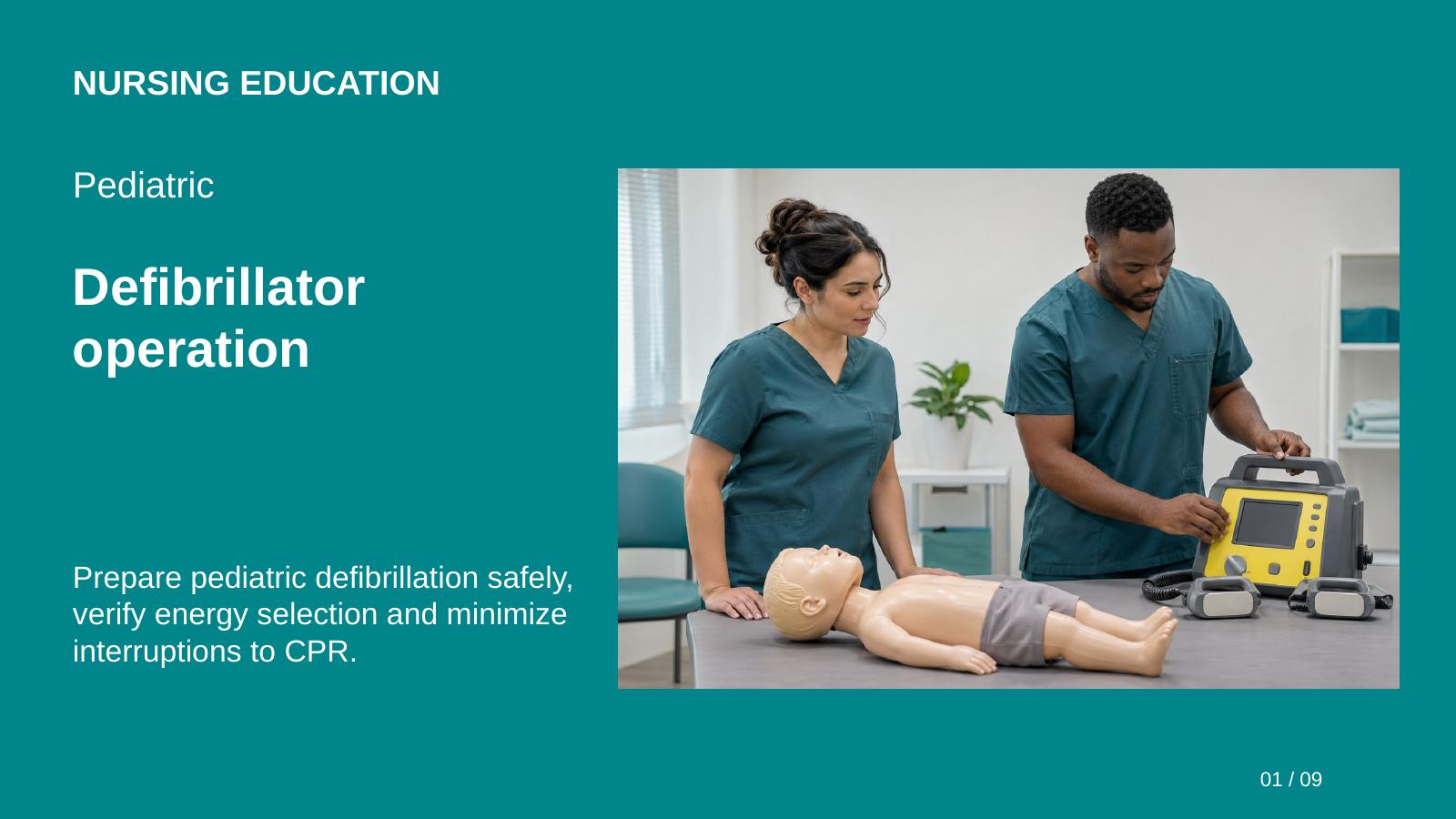
Pediatric defibrillator operation
Prepare pediatric defibrillation safely, verify energy selection and minimize interruptions to CPR.
Start free preview →
9 scenes · approximately 4 minutes · pre & post test
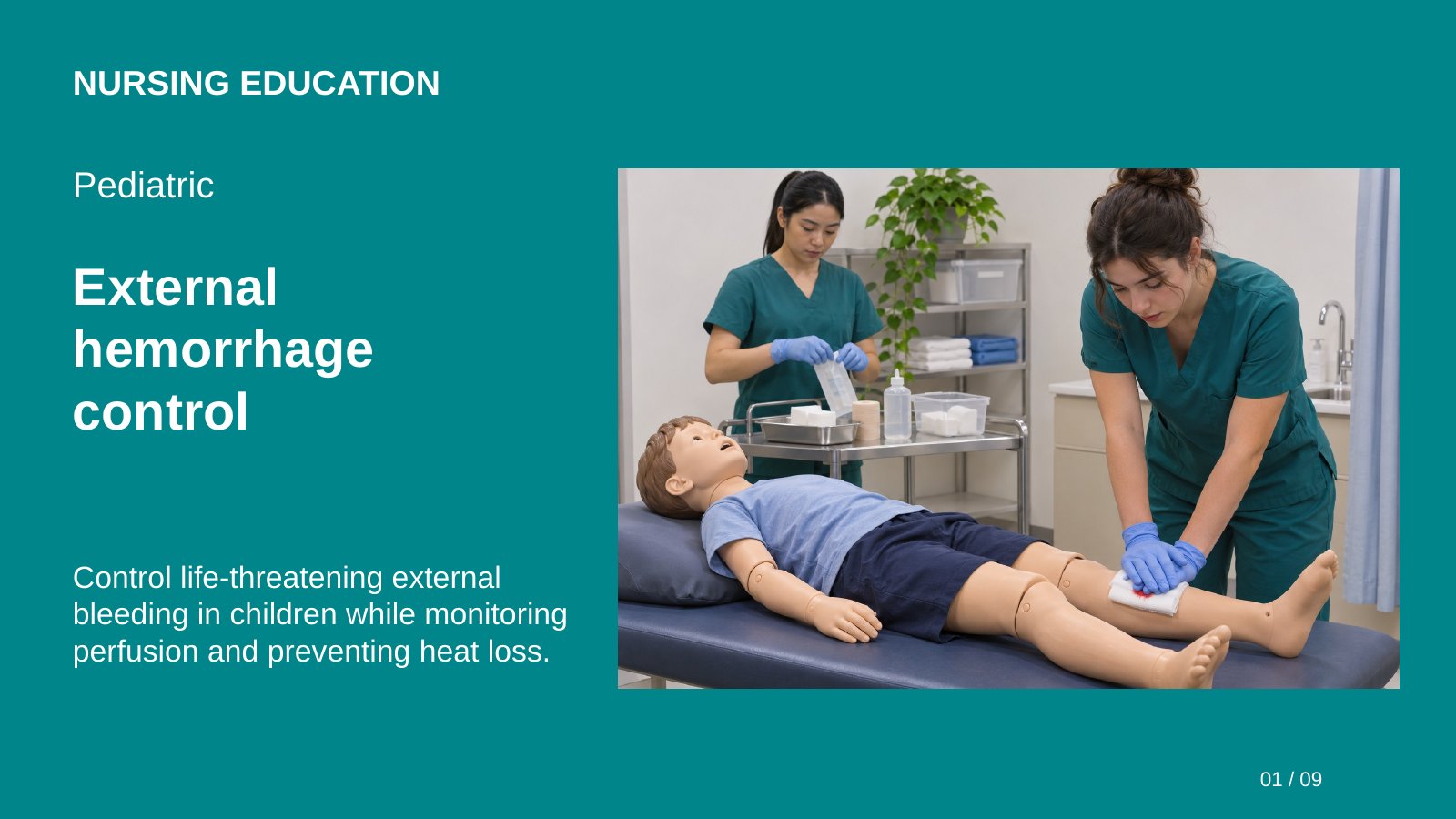
Pediatric external hemorrhage control
Control life-threatening external bleeding in children while monitoring perfusion and preventing heat loss.
Start free preview →
9 scenes · approximately 4 minutes · pre & post test
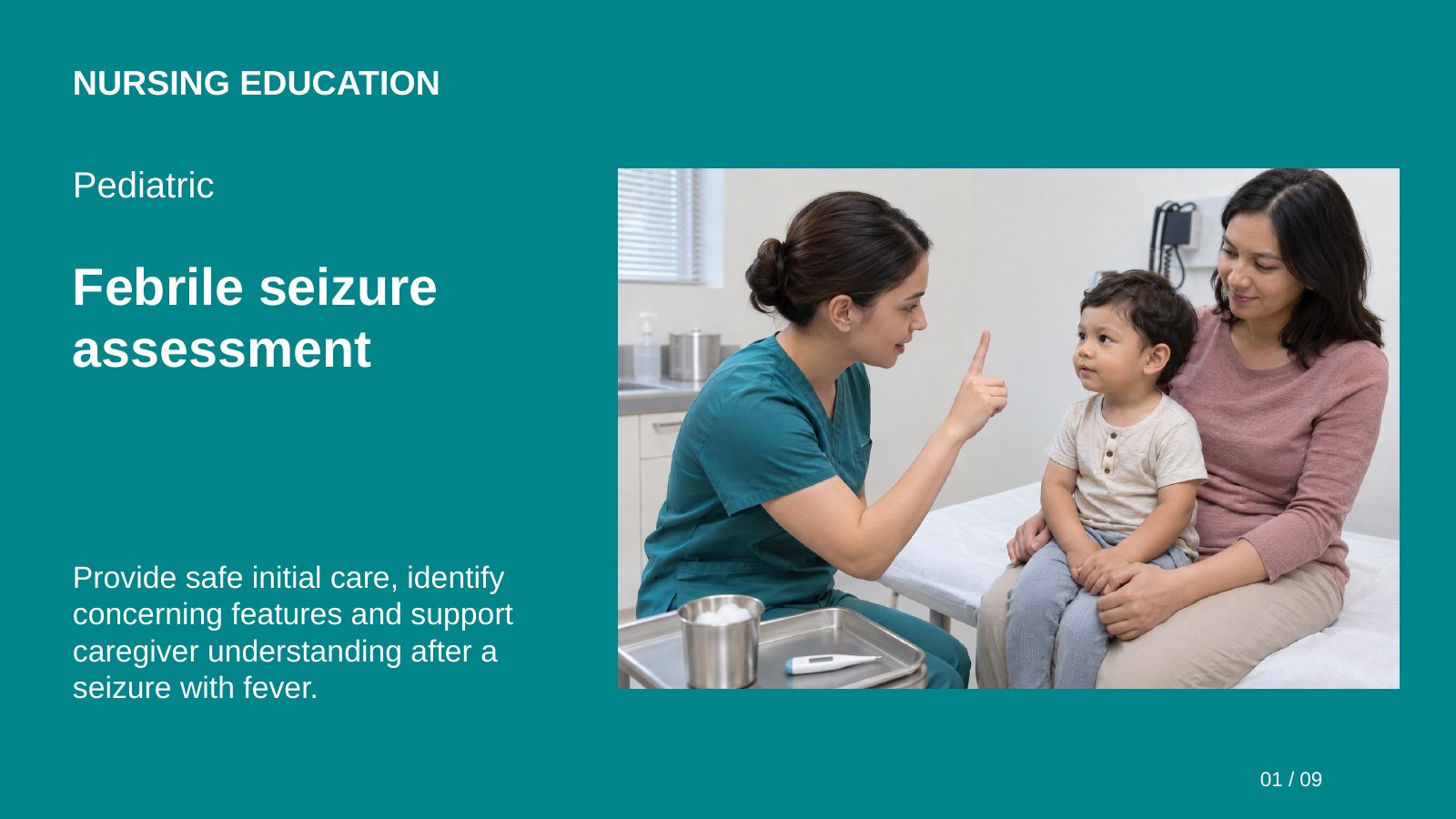
Pediatric febrile seizure assessment
Provide safe initial care, identify concerning features and support caregiver understanding after a seizure with fever.
Start free preview →
9 scenes · approximately 4 minutes · pre & post test
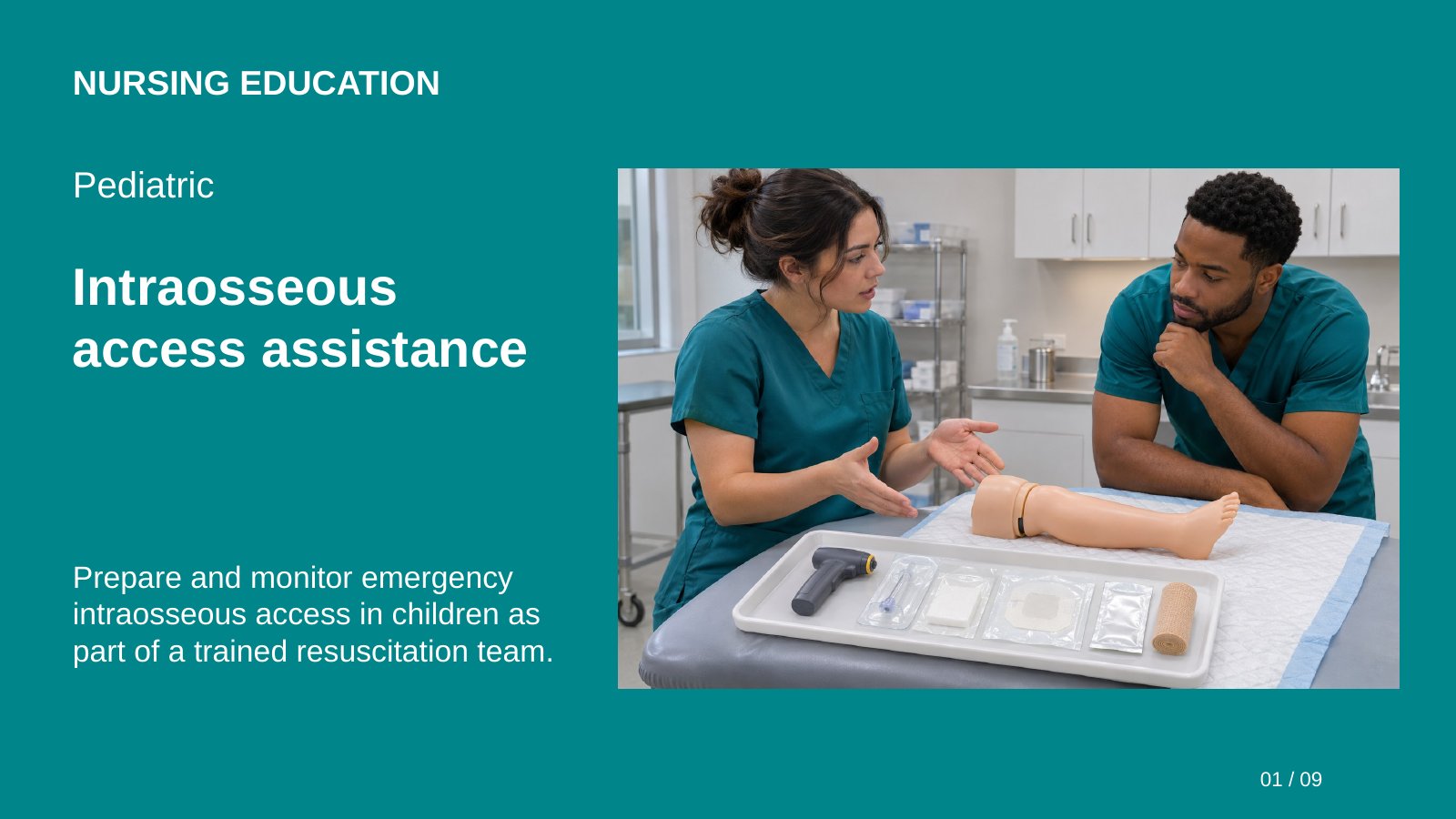
Pediatric intraosseous access assistance
Prepare and monitor emergency intraosseous access in children as part of a trained resuscitation team.
Start free preview →
9 scenes · approximately 4 minutes · pre & post test
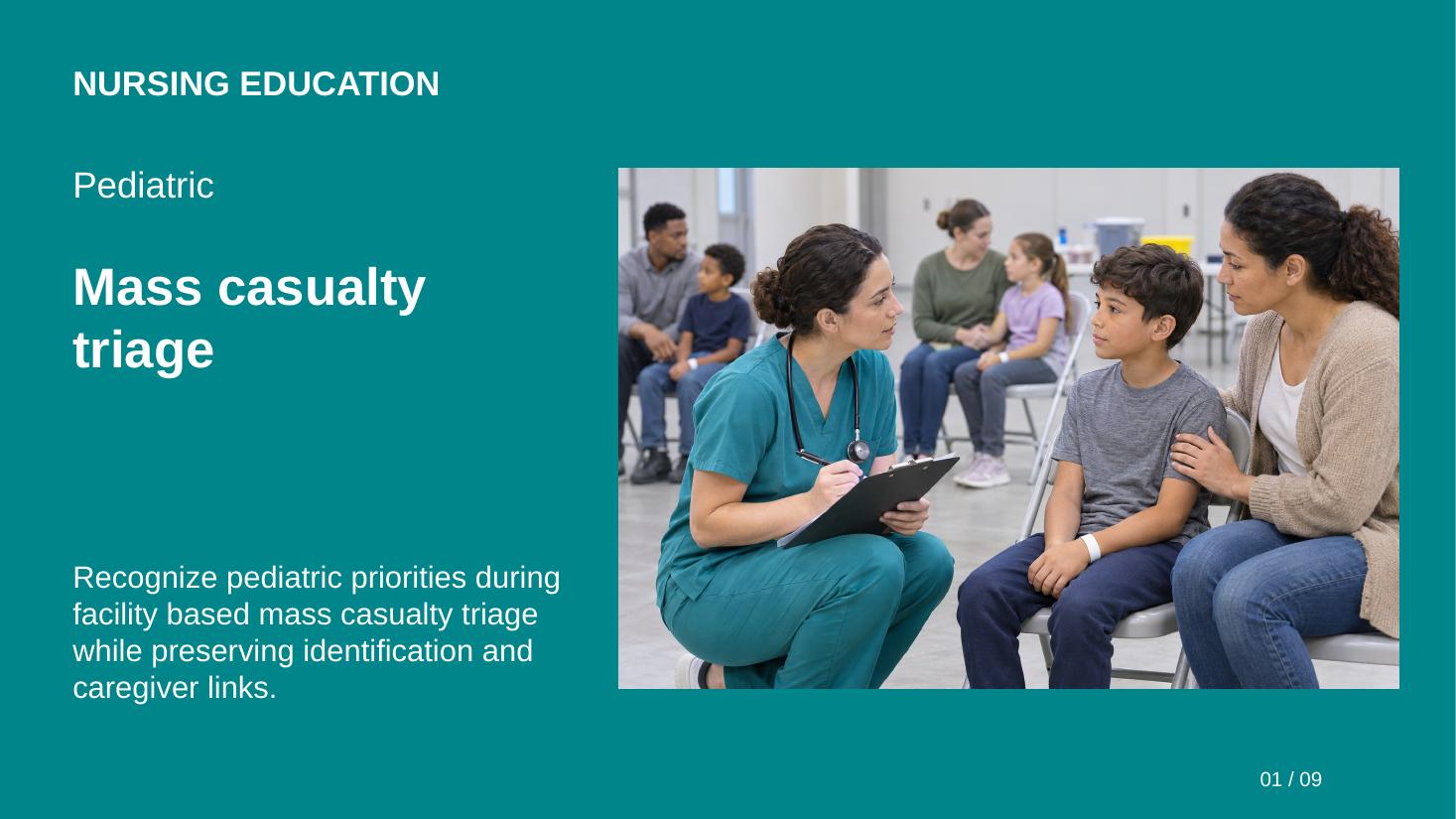
Pediatric mass casualty triage
Recognize pediatric priorities during facility based mass casualty triage while preserving identification and caregiver links.
Start free preview →
9 scenes · approximately 4 minutes · pre & post test
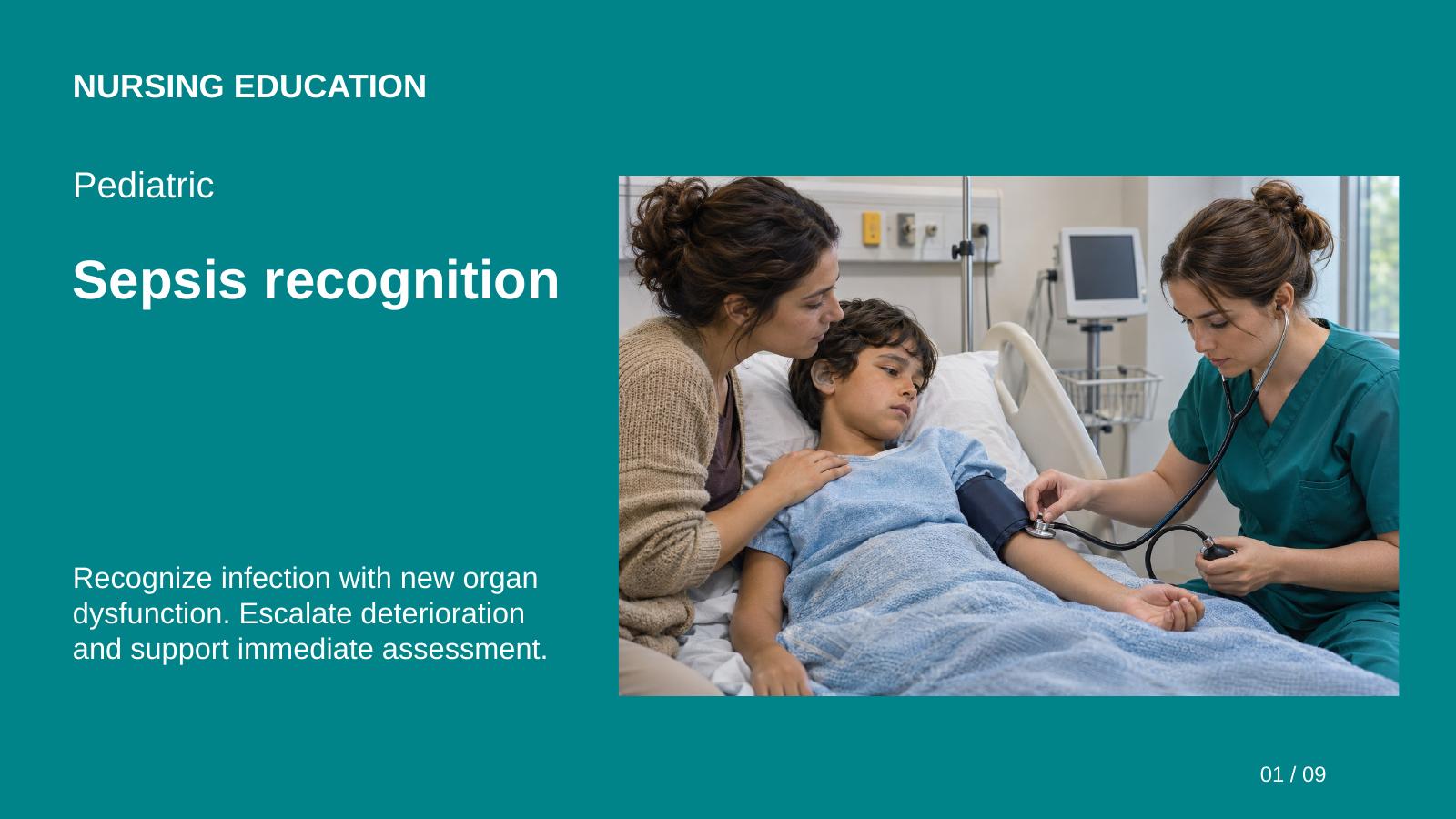
Pediatric Sepsis Recognition
Sepsis occurs when the response to infection causes life threatening organ dysfunction. Recognition starts with a change in the patient, rather than waiting for a laboratory label. This lesson focuses on nursing assessment, urgent communication and reassessment. Emergency treatment requires a clinical team, with interventions matched to the individual.
Start free preview →
9 scenes · approximately 4 minutes · pre & post test
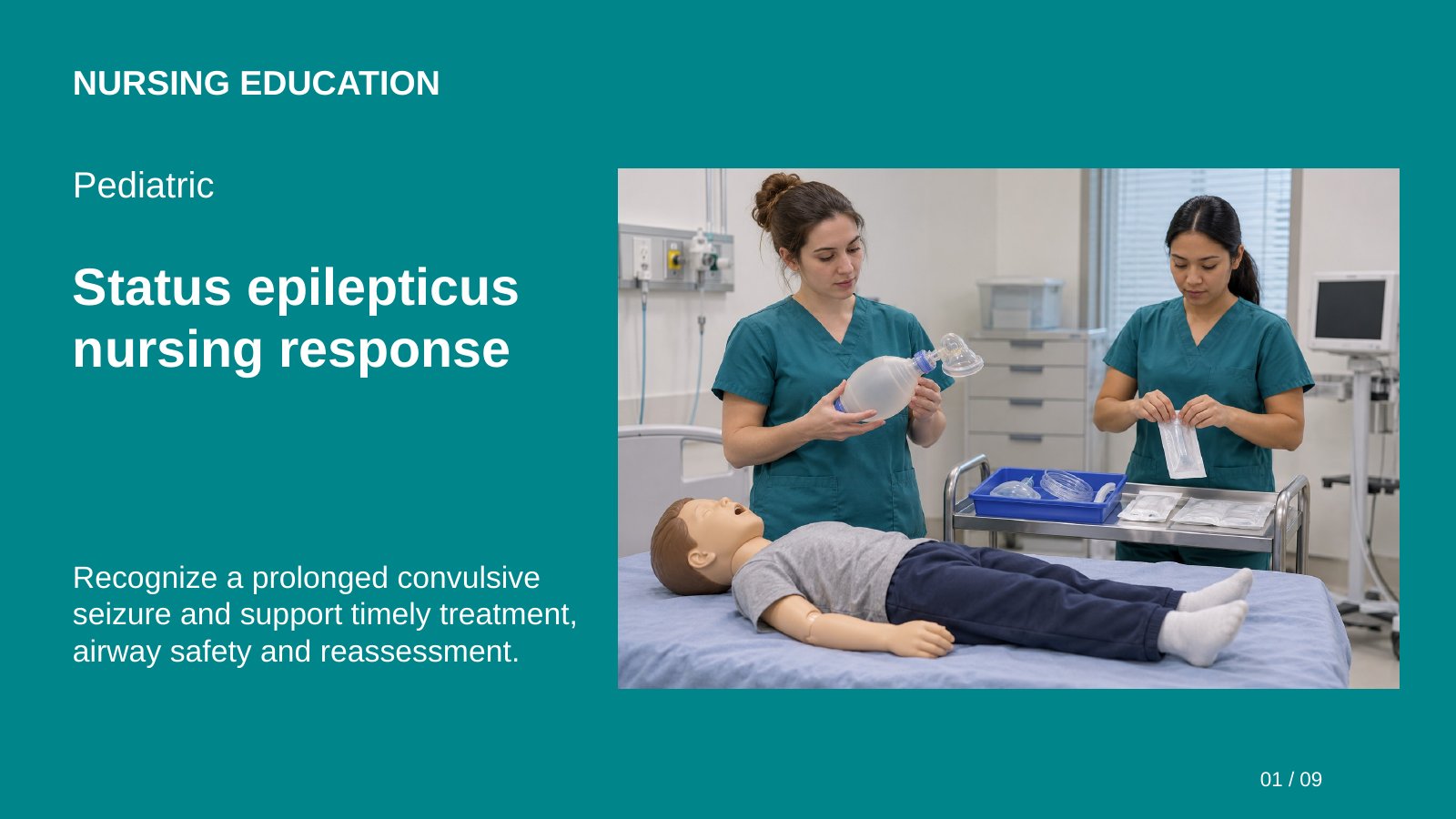
Pediatric status epilepticus nursing response
Recognize a prolonged convulsive seizure and support timely treatment, airway safety and reassessment.
Start free preview →
9 scenes · approximately 4 minutes · pre & post test
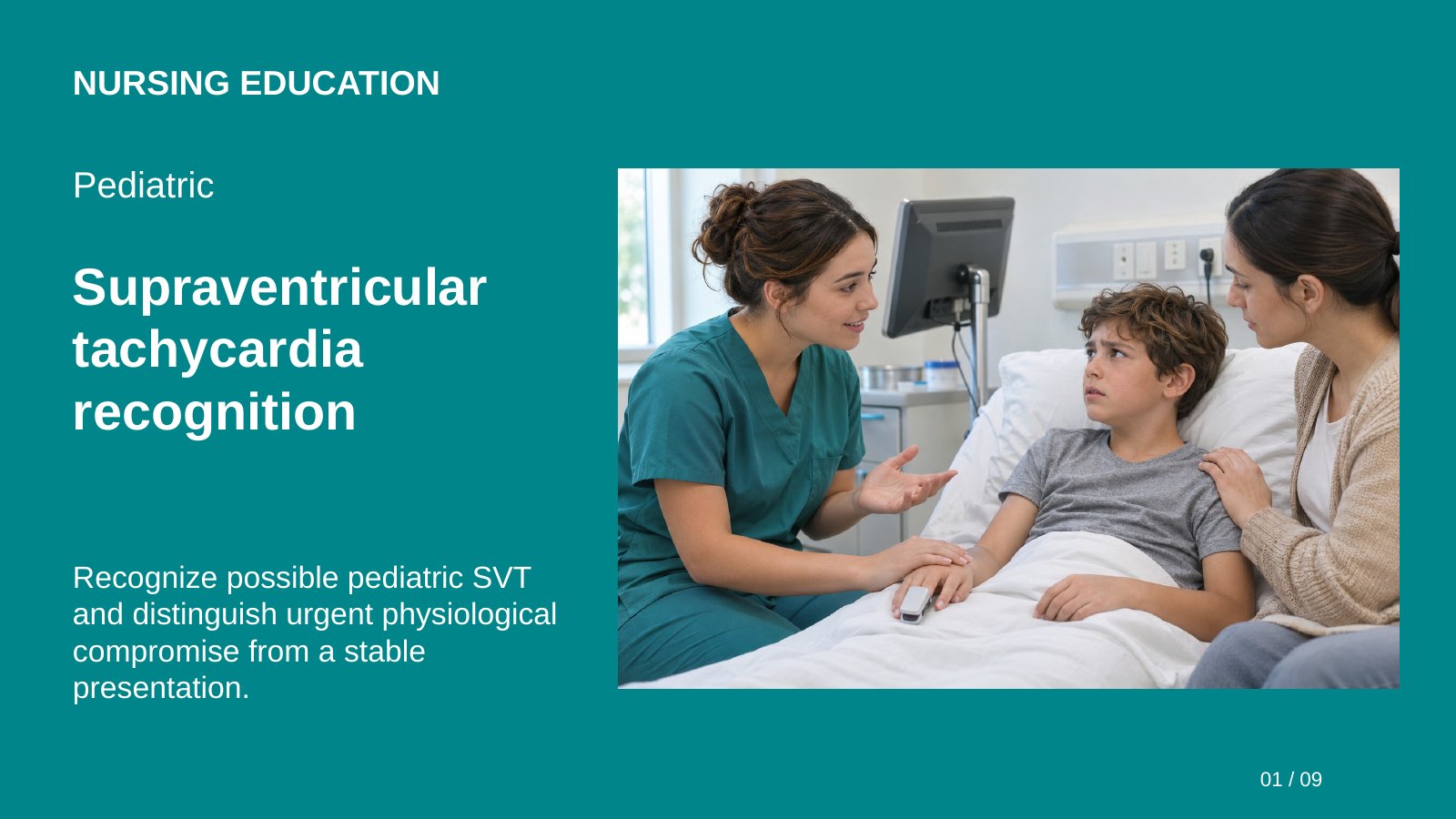
Pediatric supraventricular tachycardia recognition
Recognize possible pediatric SVT and distinguish urgent physiological compromise from a stable presentation.
Start free preview →

9 scenes · approximately 4 minutes · pre & post test
Pediatric trauma primary survey
Recognize pediatric trauma life threats, act on findings and reassess using age-appropriate observations.
Start free preview →

9 scenes · approximately 4 minutes · pre & post test
Pediatric trauma secondary survey
Support a systematic pediatric injury assessment with caregiver input, comfort and repeated observation.
Start free preview →
9 scenes · approximately 4 minutes · pre & post test
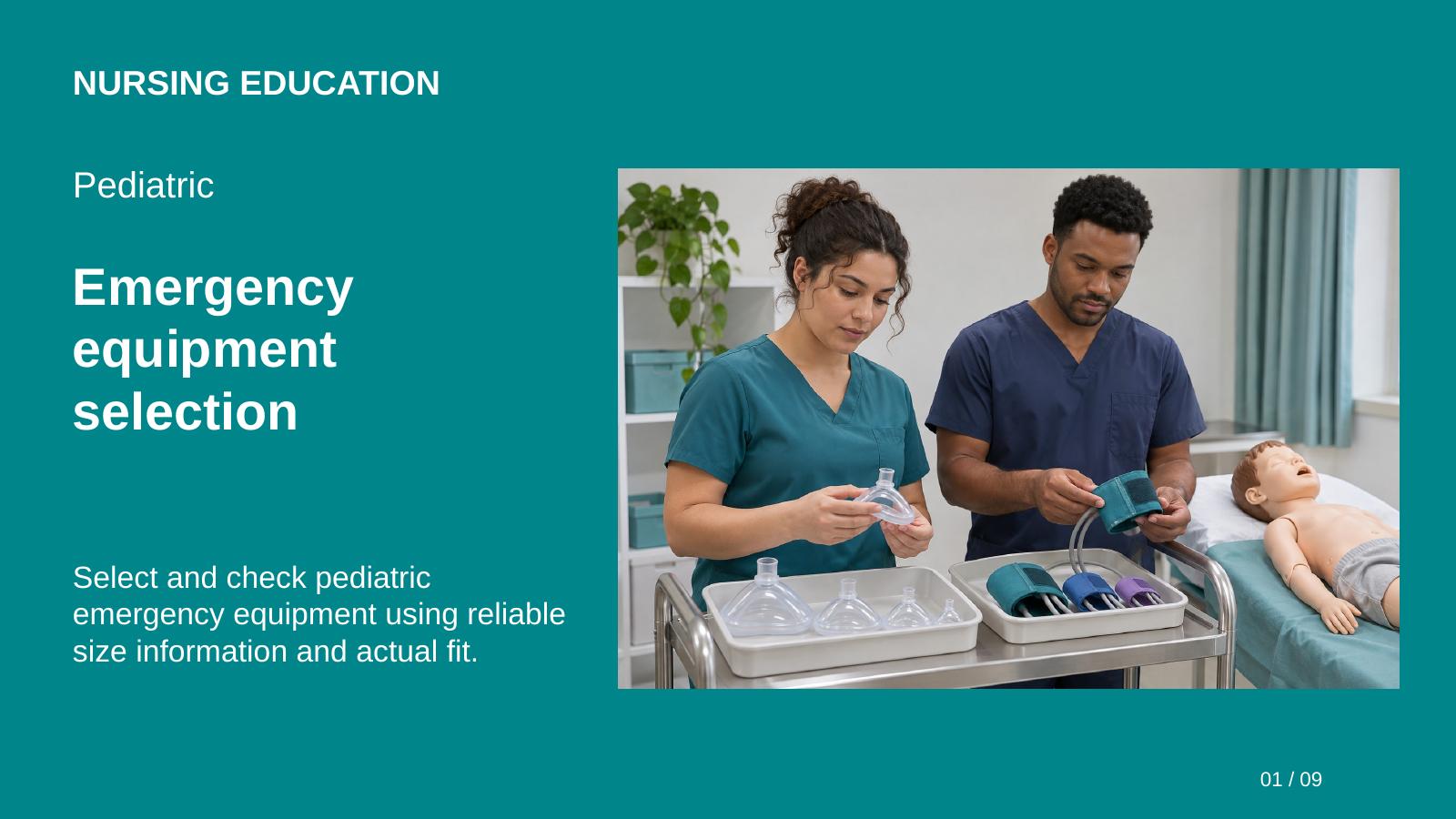
Pediatric weight-based emergency equipment selection
Select and check pediatric emergency equipment using reliable size information and actual fit.
Start free preview →
Critical Care · 18 courses
9 scenes · approximately 5 minutes · pre & post test
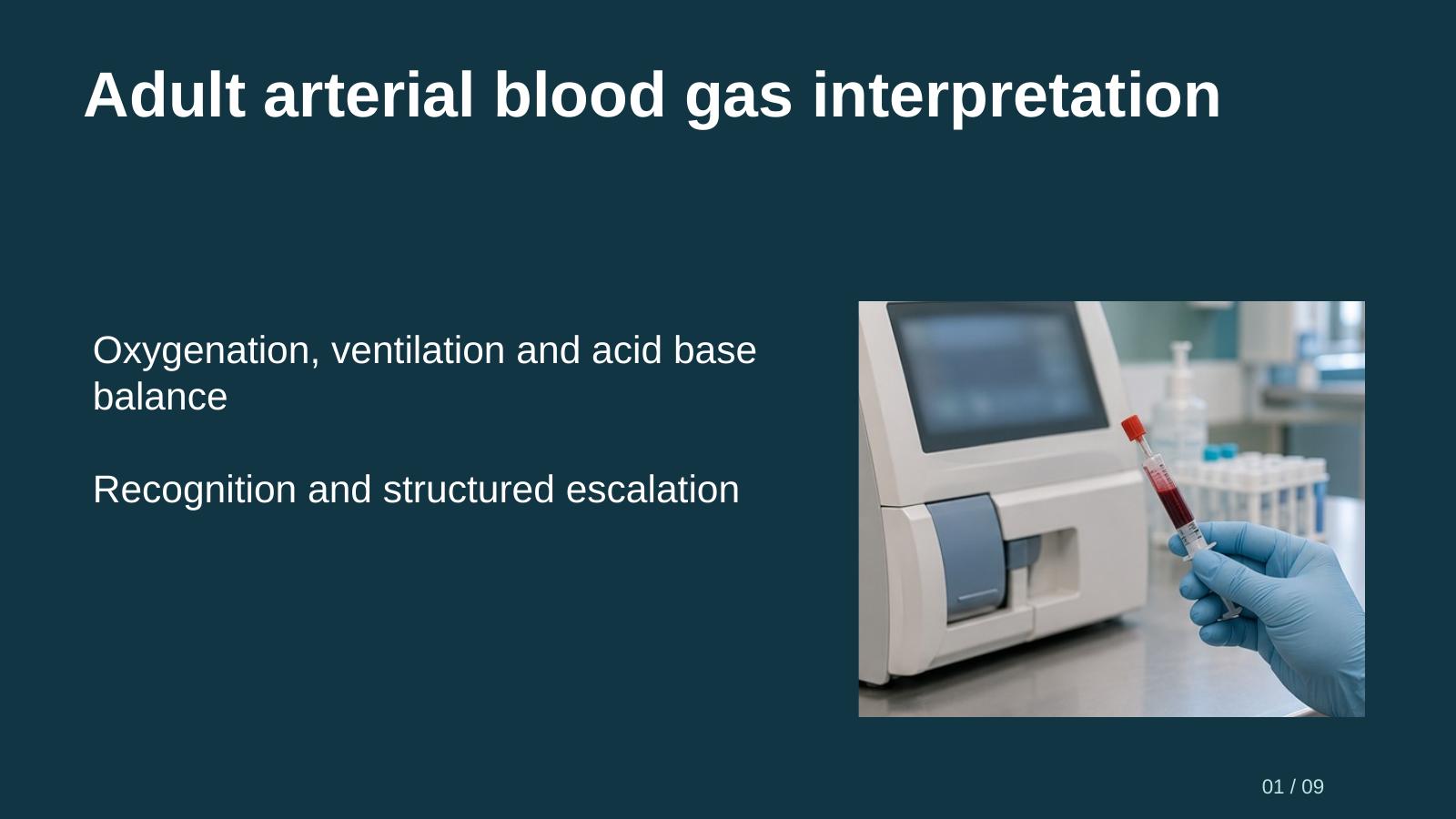
Adult arterial blood gas interpretation
An arterial blood gas gives information about oxygenation, carbon dioxide and acid-base balance.
Start free preview →
9 scenes · approximately 5 minutes · pre & post test
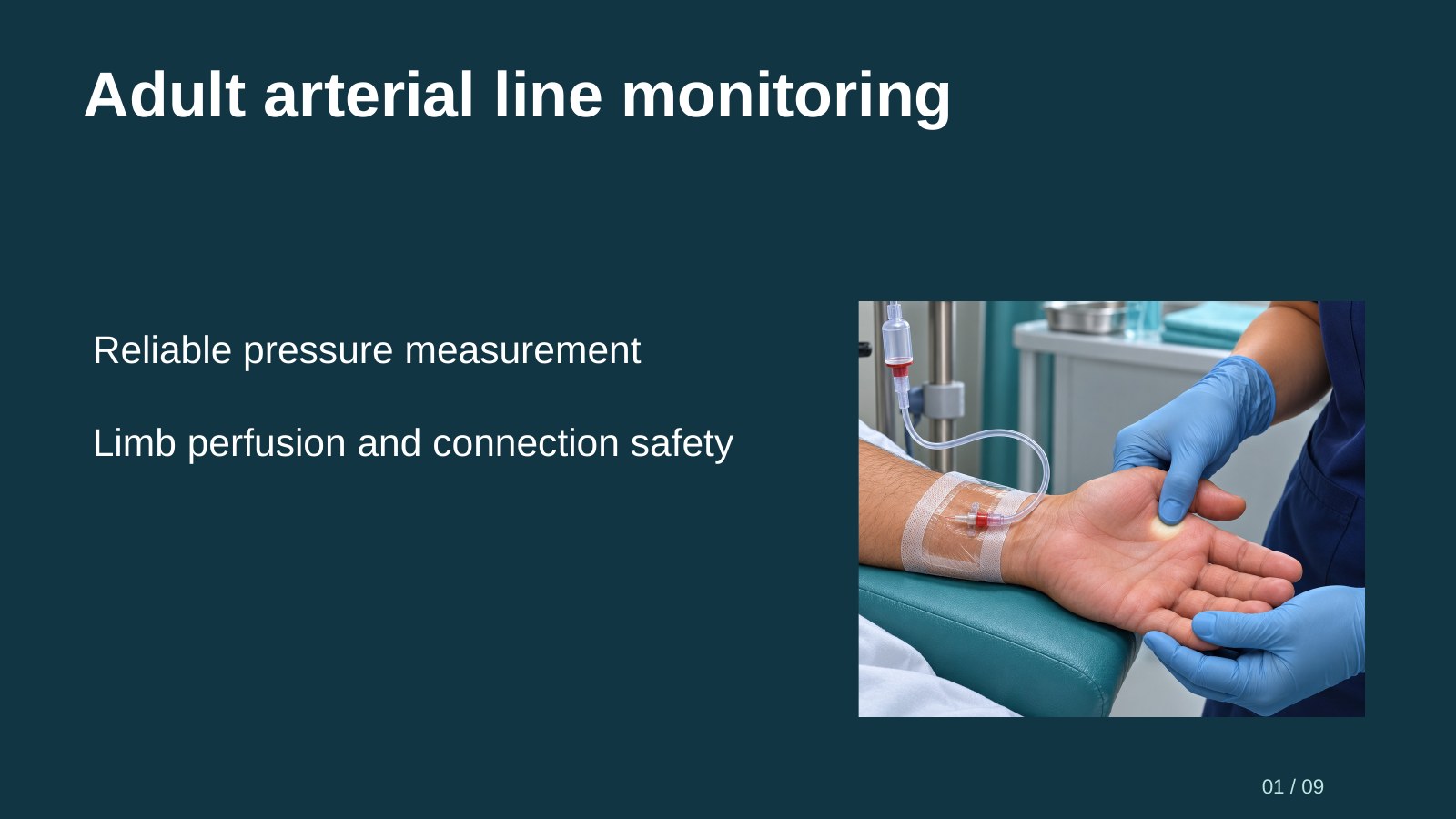
Adult arterial line monitoring
An arterial catheter provides continuous pressure measurements and access for selected blood samples.
Start free preview →
9 scenes · approximately 5 minutes · pre & post test
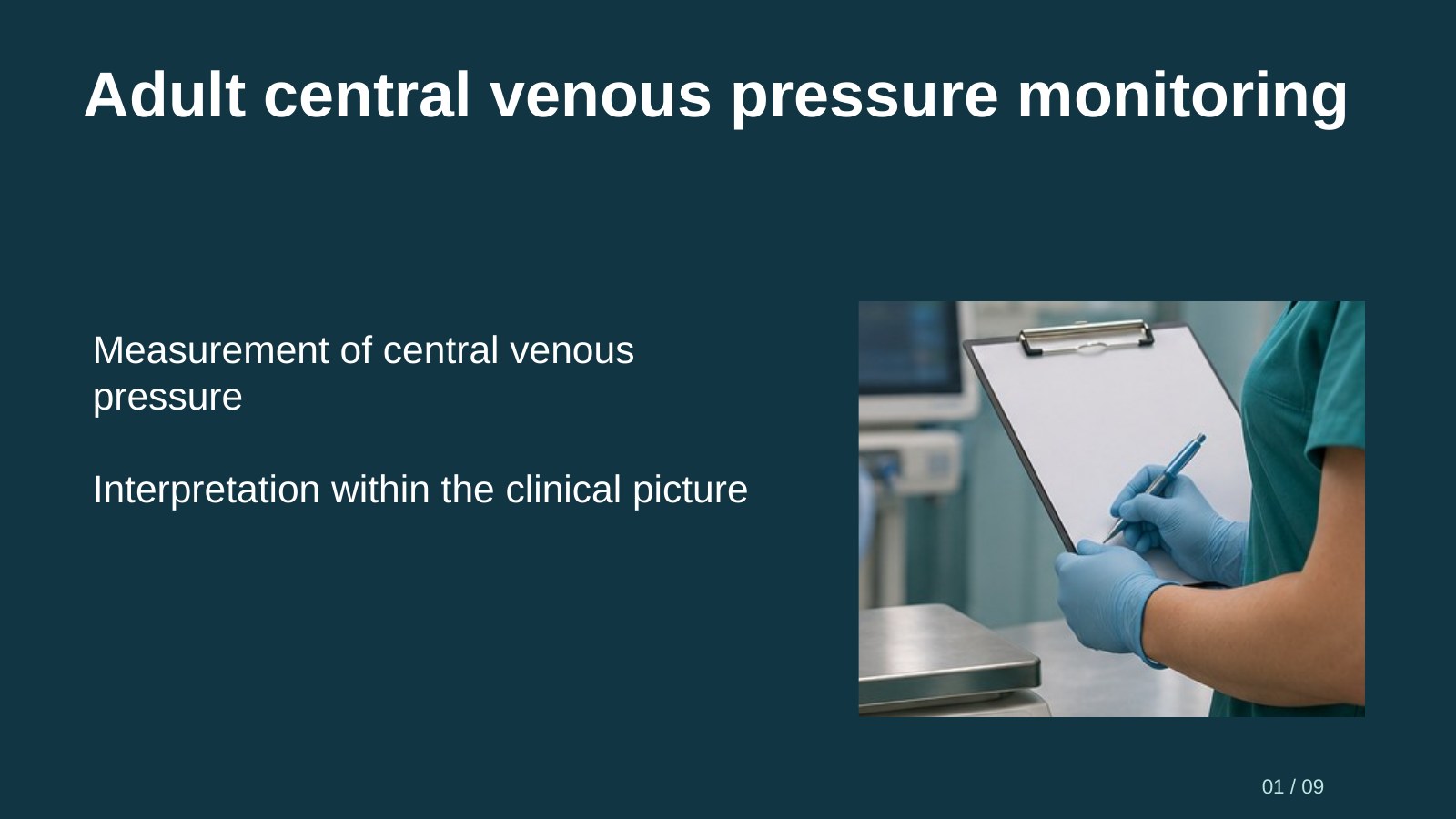
Adult central venous pressure monitoring
Central venous pressure, or C V P, estimates pressure near the right atrium through a suitable central venous catheter.
Start free preview →
9 scenes · approximately 5 minutes · pre & post test
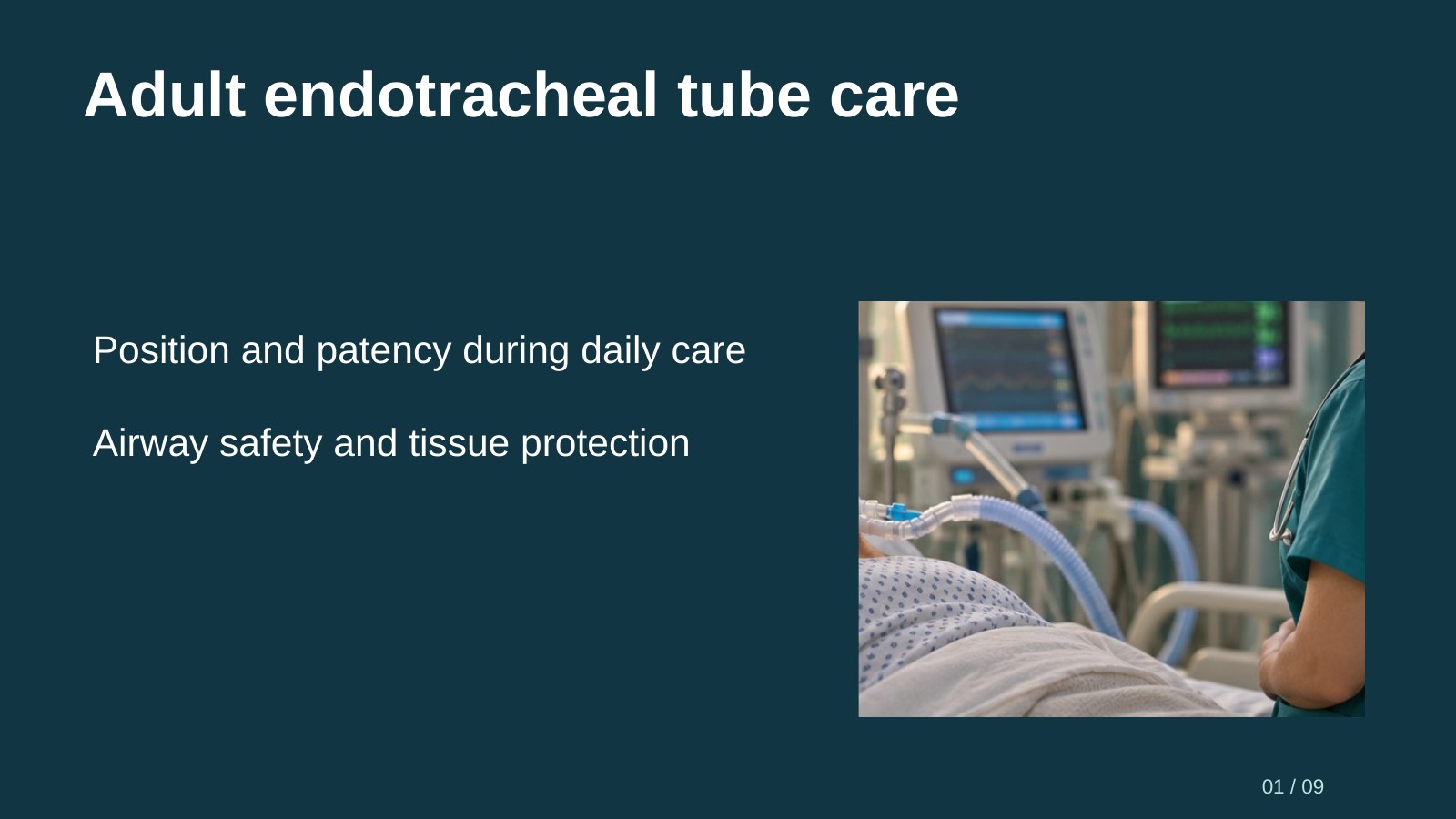
Adult endotracheal tube care
An endotracheal tube supports ventilation but requires repeated bedside assessment.
Start free preview →
9 scenes · approximately 5 minutes · pre & post test
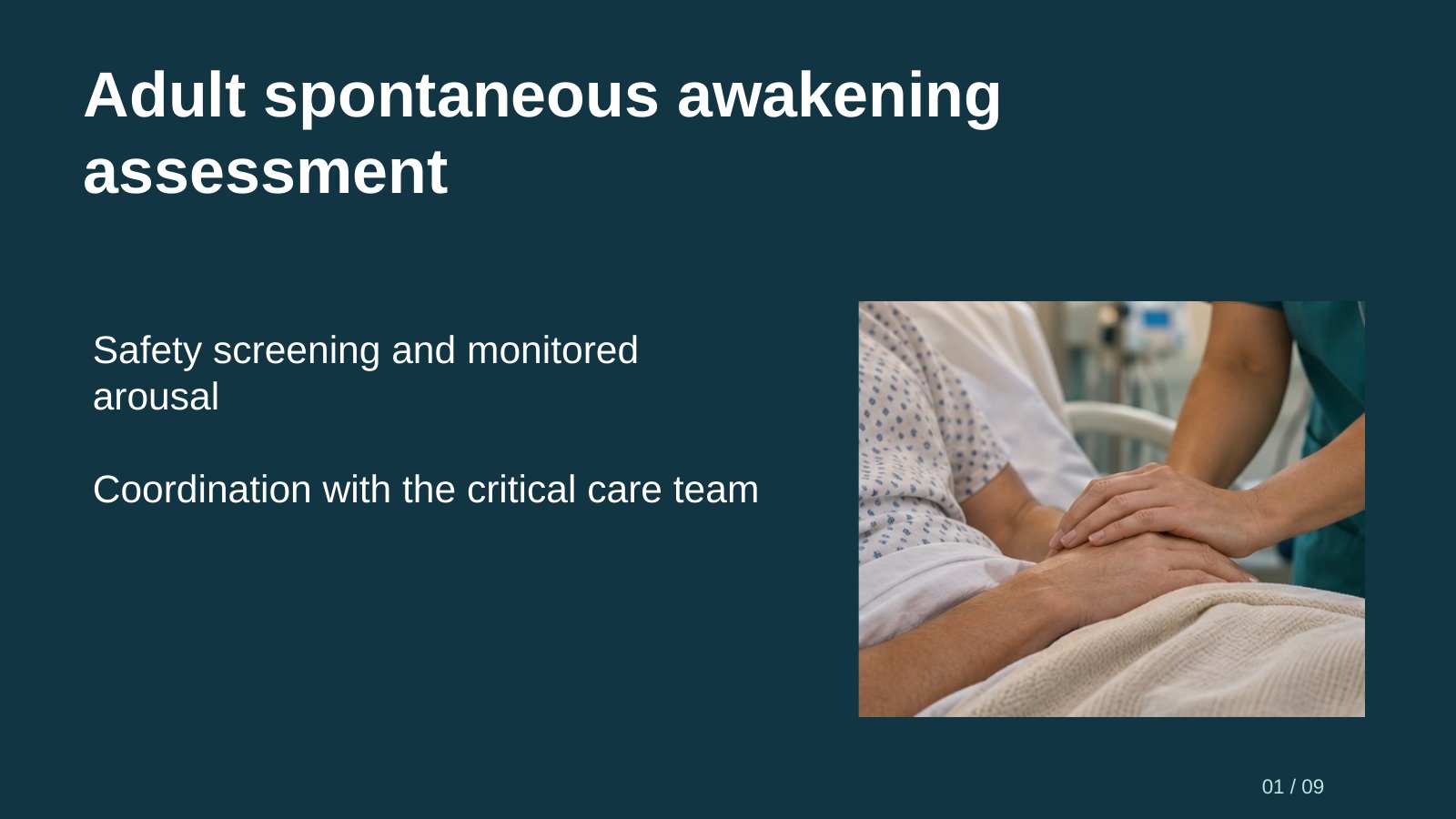
Adult spontaneous awakening assessment
A spontaneous awakening trial is a planned, closely monitored interruption of selected sedative therapy to assess arousal when appropriate.
Start free preview →
9 scenes · approximately 5 minutes · pre & post test
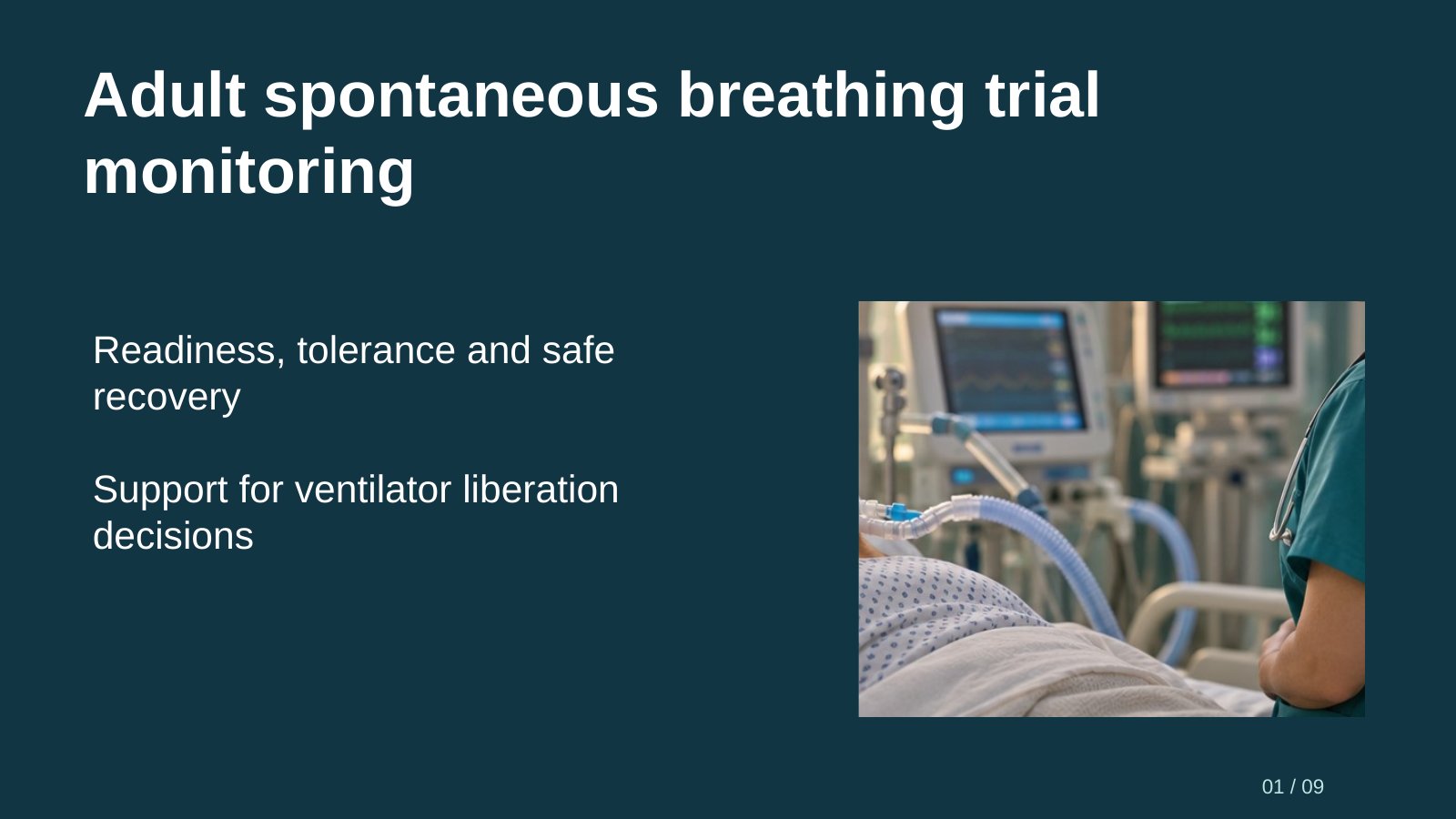
Adult spontaneous breathing trial monitoring
A spontaneous breathing trial evaluates whether a patient can sustain breathing with minimal or no additional assistance using a prescribed trial method.
Start free preview →
9 scenes · approximately 5 minutes · pre & post test
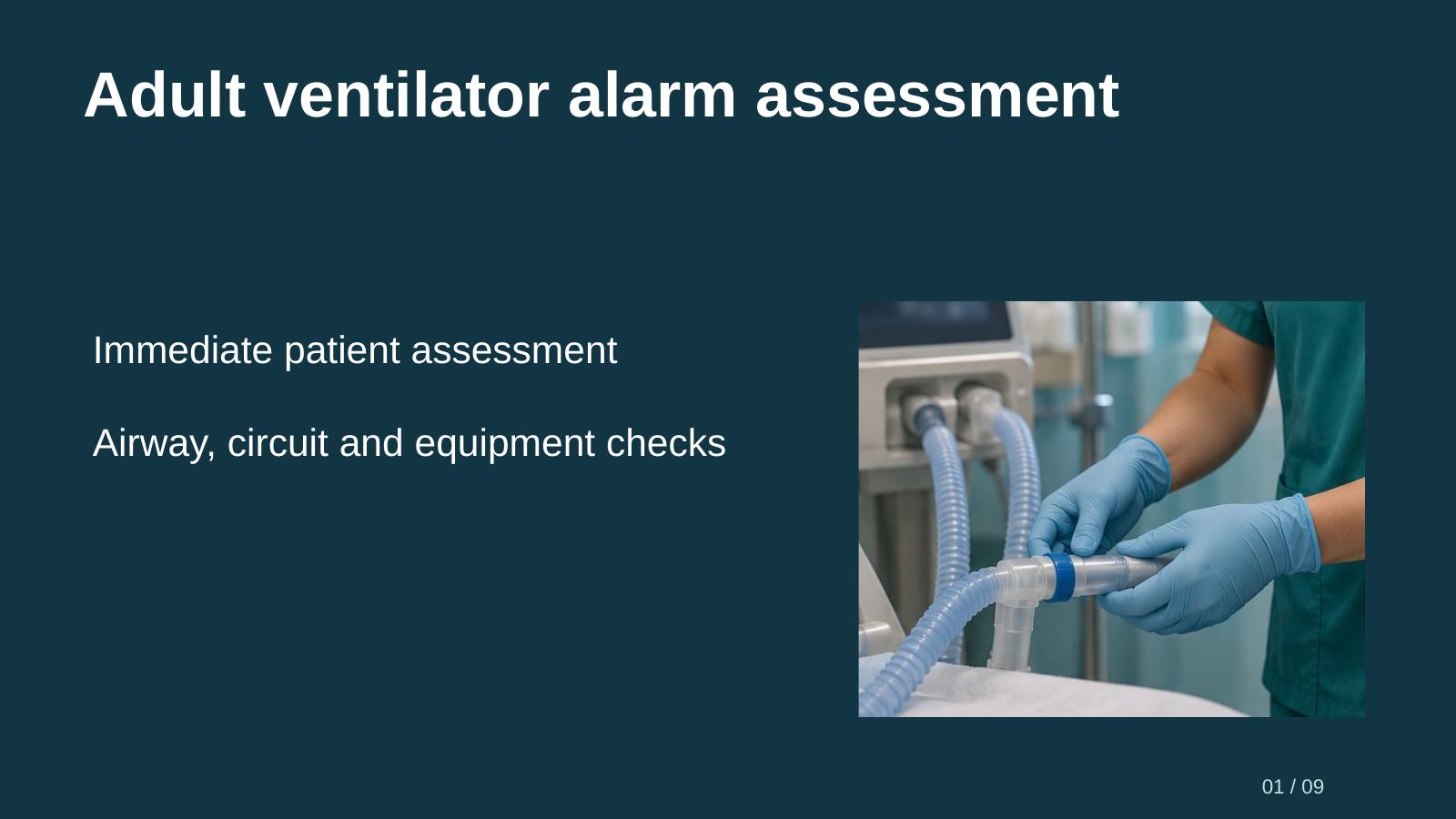
Adult ventilator alarm assessment
An alarm signals a possible change in support, patient condition or equipment.
Start free preview →
9 scenes · approximately 5 minutes · pre & post test
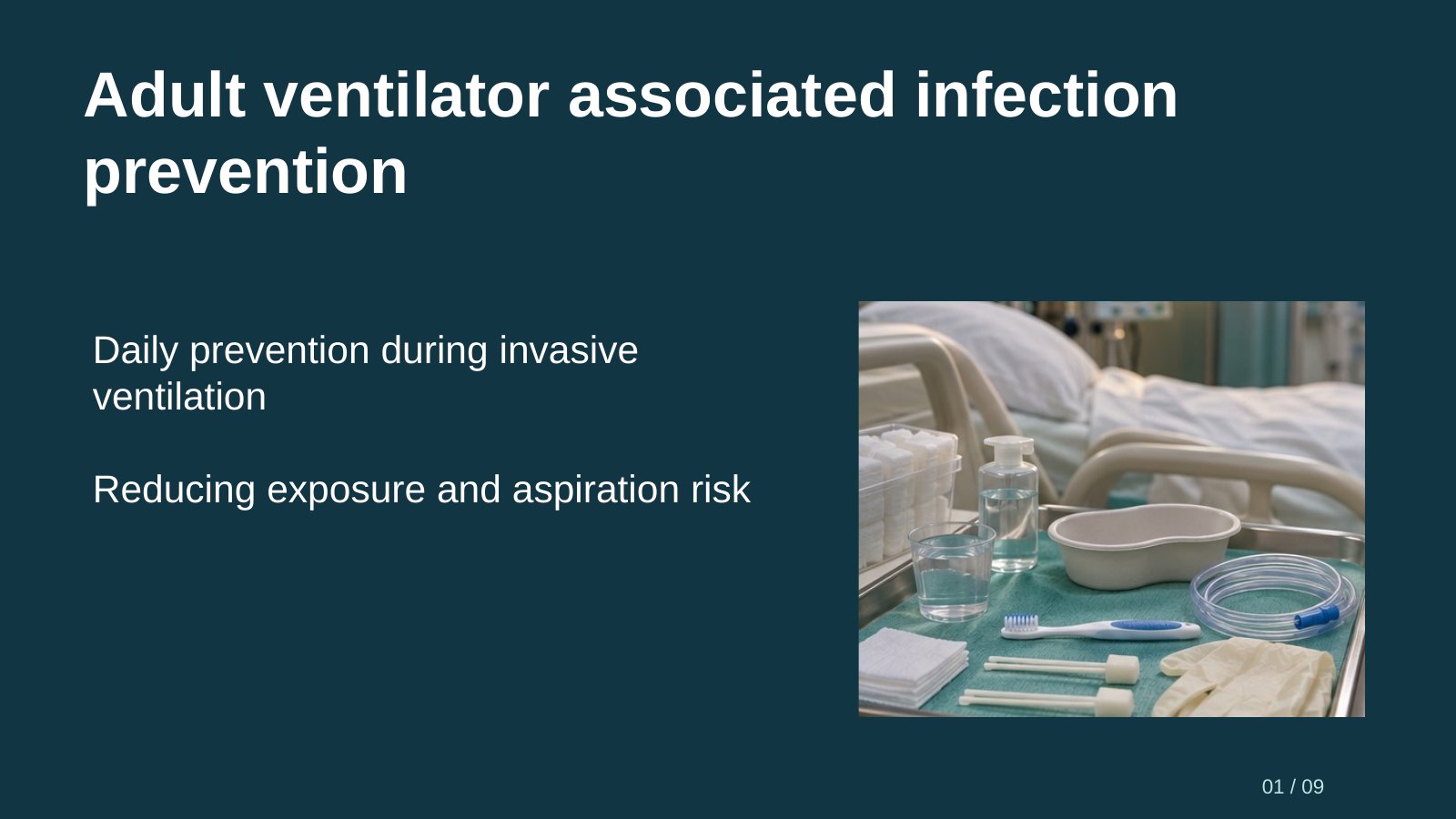
Adult ventilator associated infection prevention
Prevention combines safe daily care with review of whether invasive ventilation is still needed.
Start free preview →
9 scenes · approximately 5 minutes · pre & post test
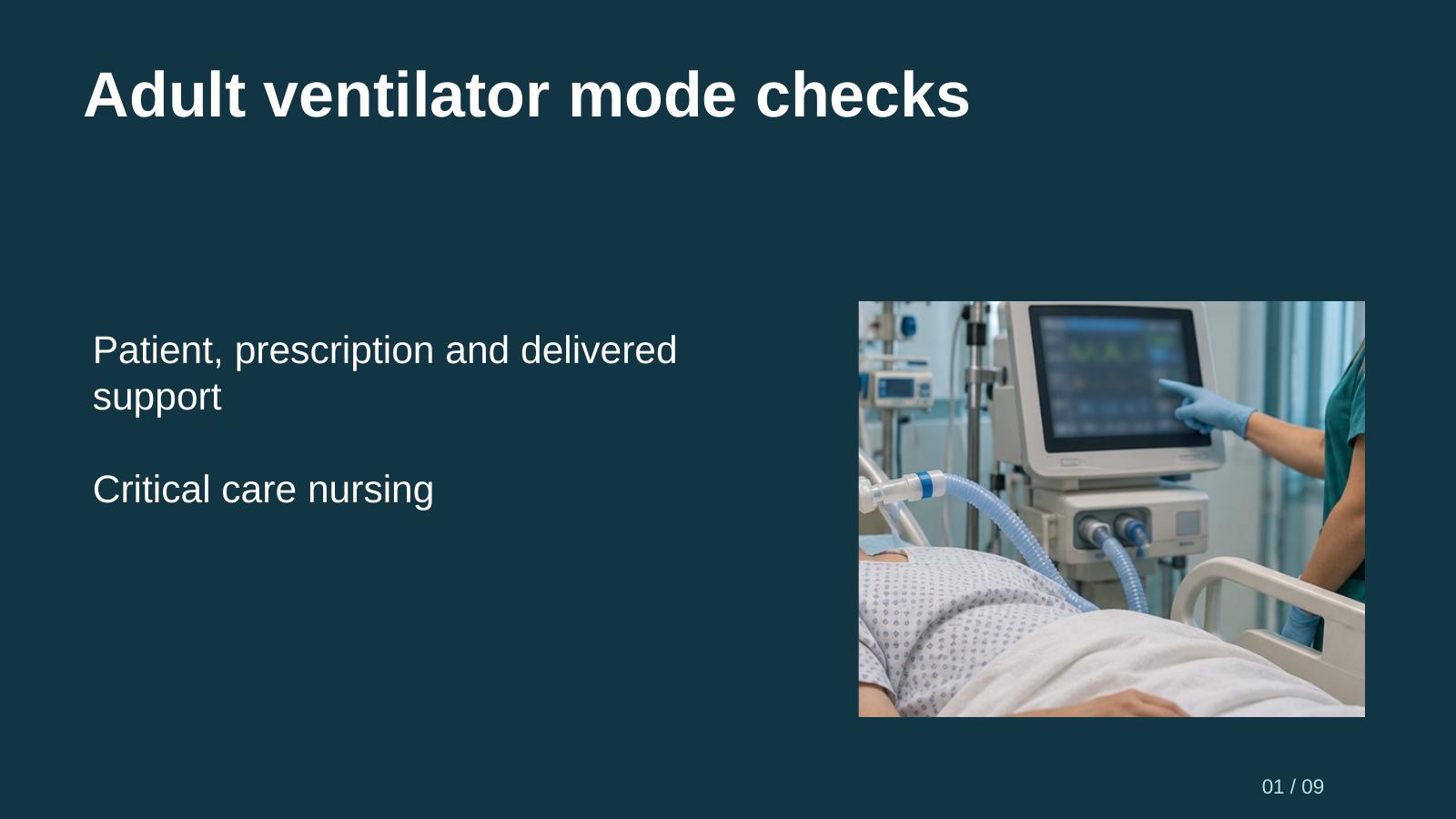
Adult ventilator mode checks
A ventilator check compares the patient, the current prescription and the support actually delivered.
Start free preview →
9 scenes · approximately 5 minutes · pre & post test
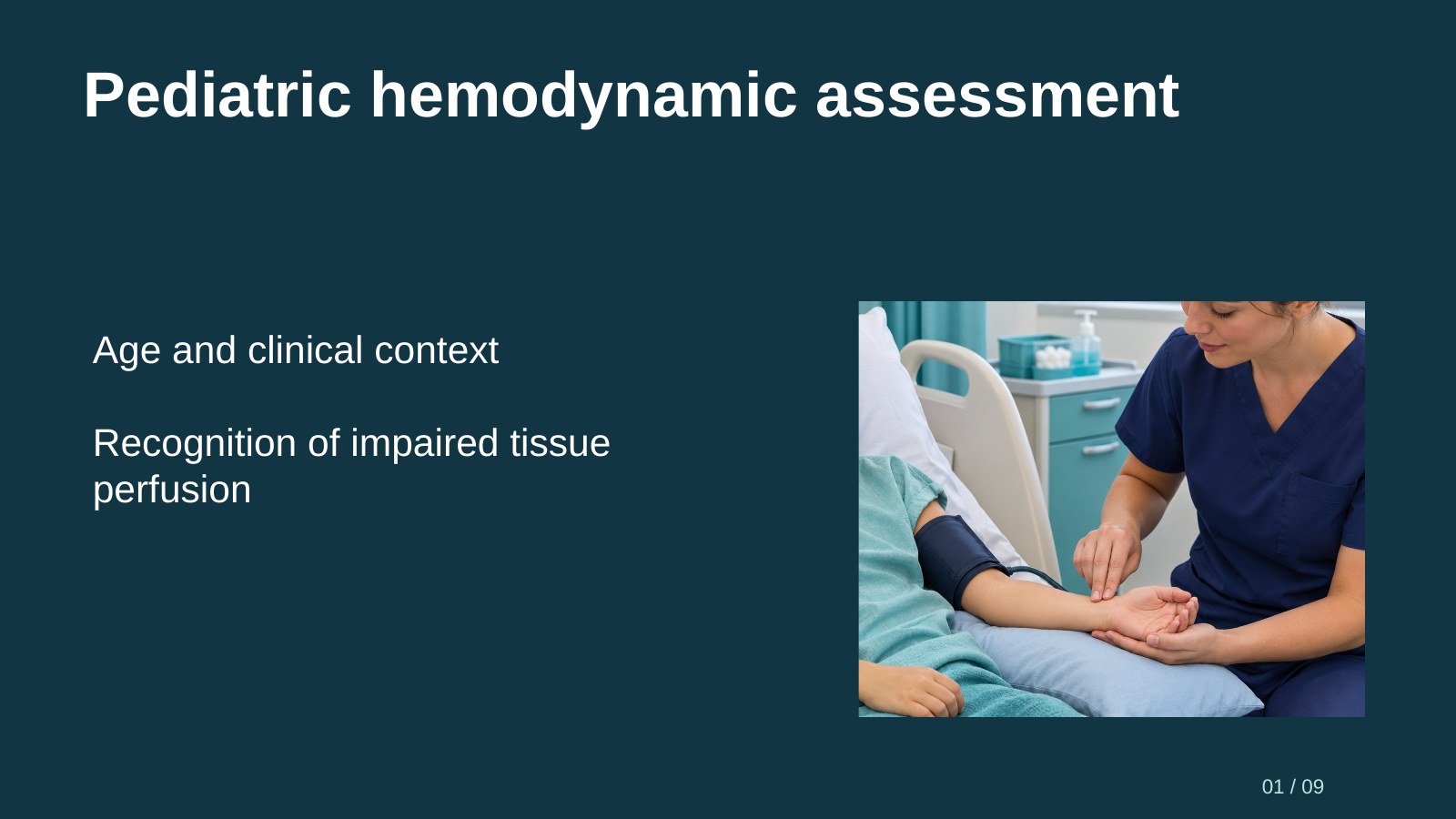
Pediatric age-appropriate hemodynamic assessment
Hemodynamic assessment asks whether circulation meets tissue needs.
Start free preview →
9 scenes · approximately 5 minutes · pre & post test
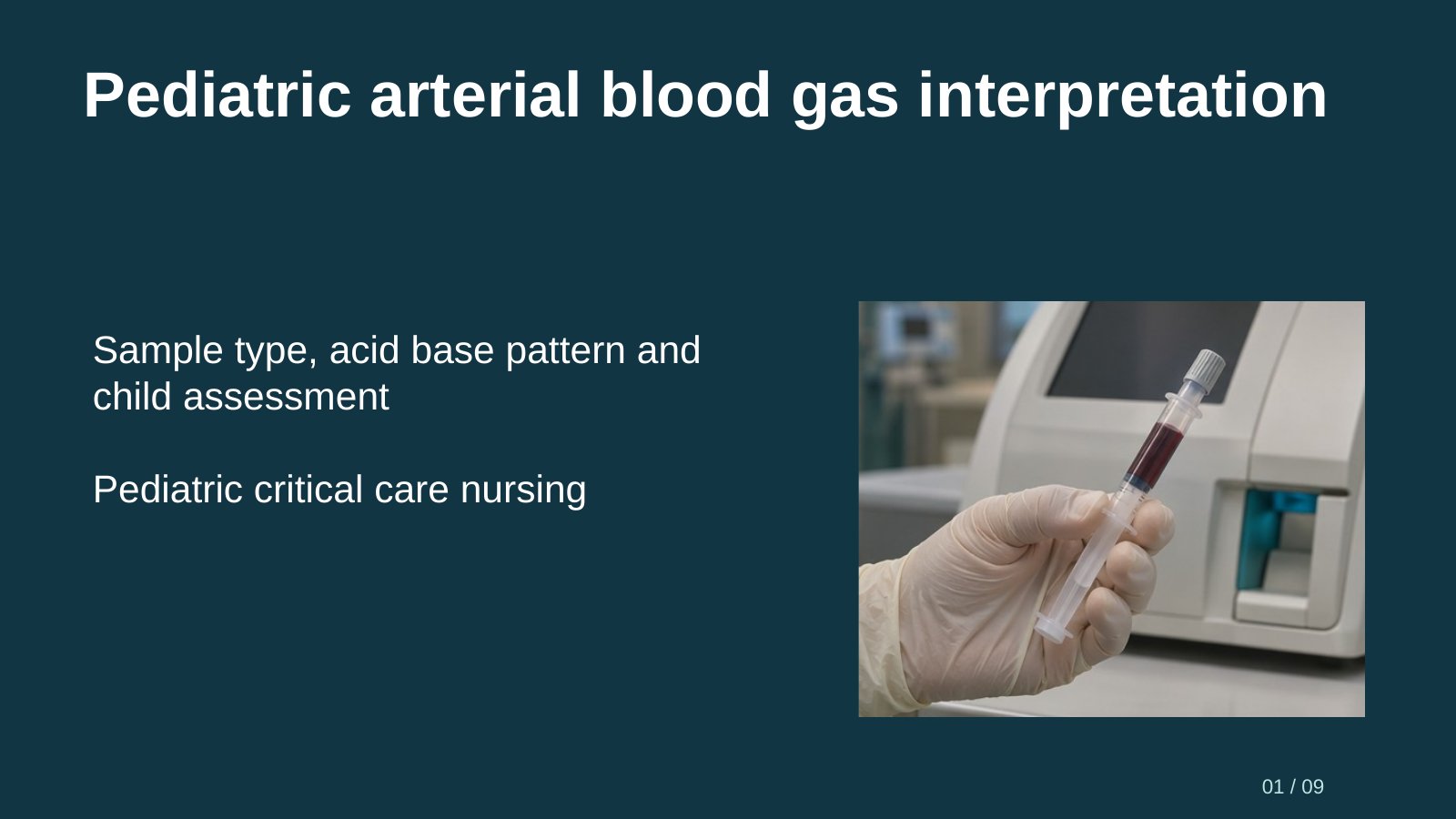
Pediatric arterial blood gas interpretation
Interpret blood gases with the child’s age, illness, perfusion and respiratory support.
Start free preview →
9 scenes · approximately 5 minutes · pre & post test
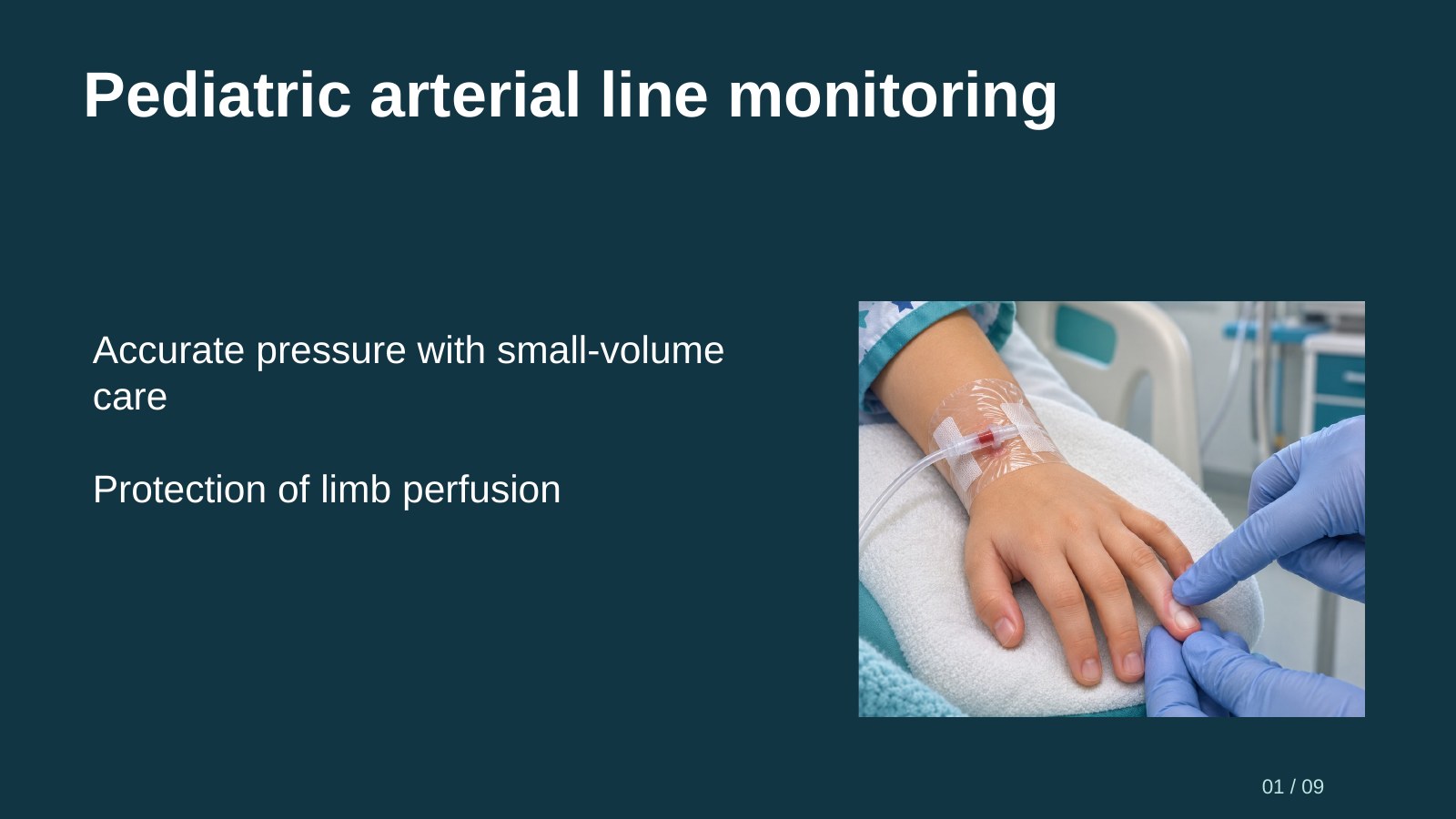
Pediatric arterial line monitoring
A peripheral arterial line supports continuous pressure monitoring and indicated blood sampling in selected children.
Start free preview →
9 scenes · approximately 5 minutes · pre & post test
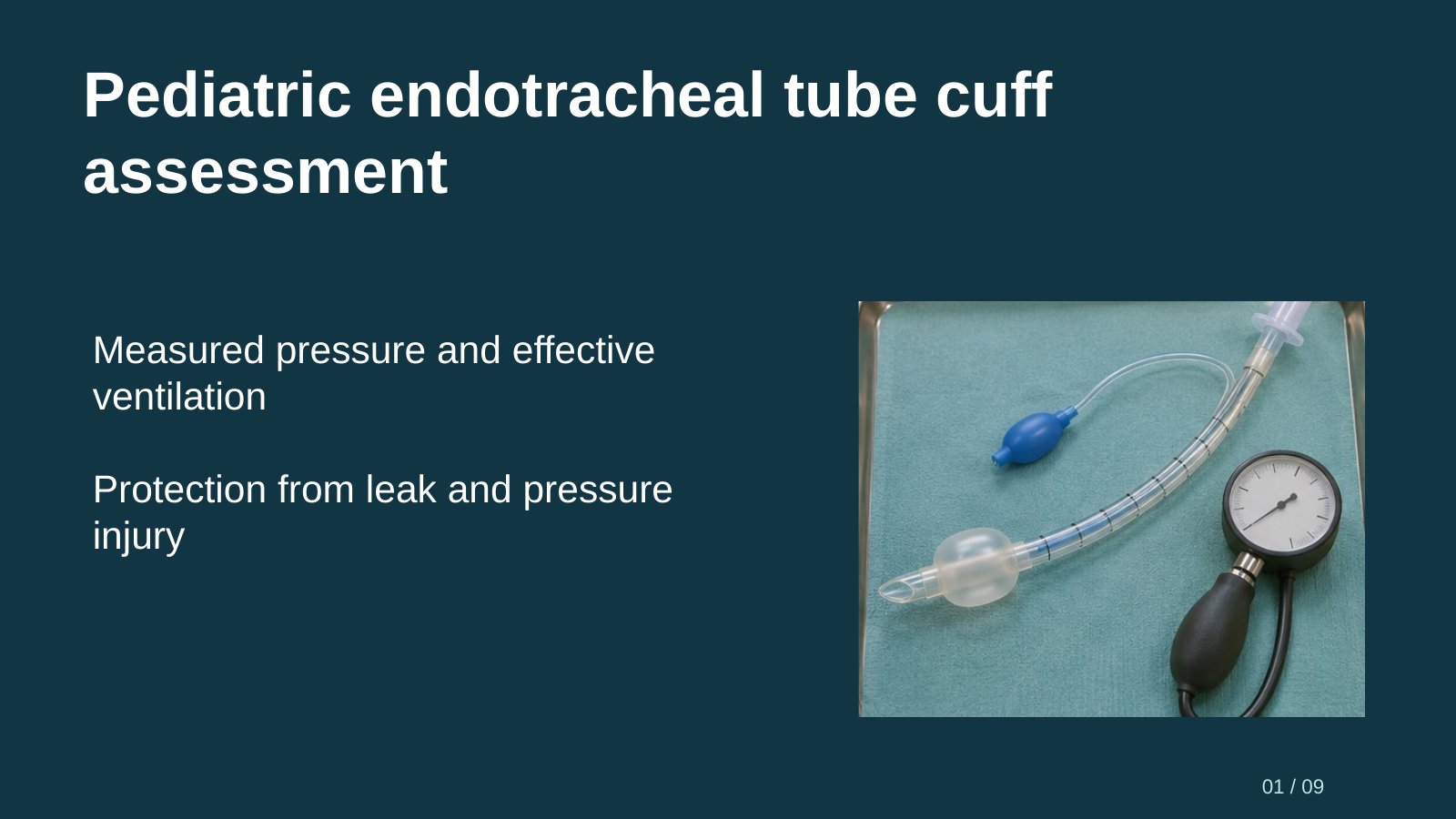
Pediatric endotracheal tube cuff assessment
A cuff assessment checks whether an inflated cuff provides the needed seal without excessive pressure.
Start free preview →
9 scenes · approximately 5 minutes · pre & post test
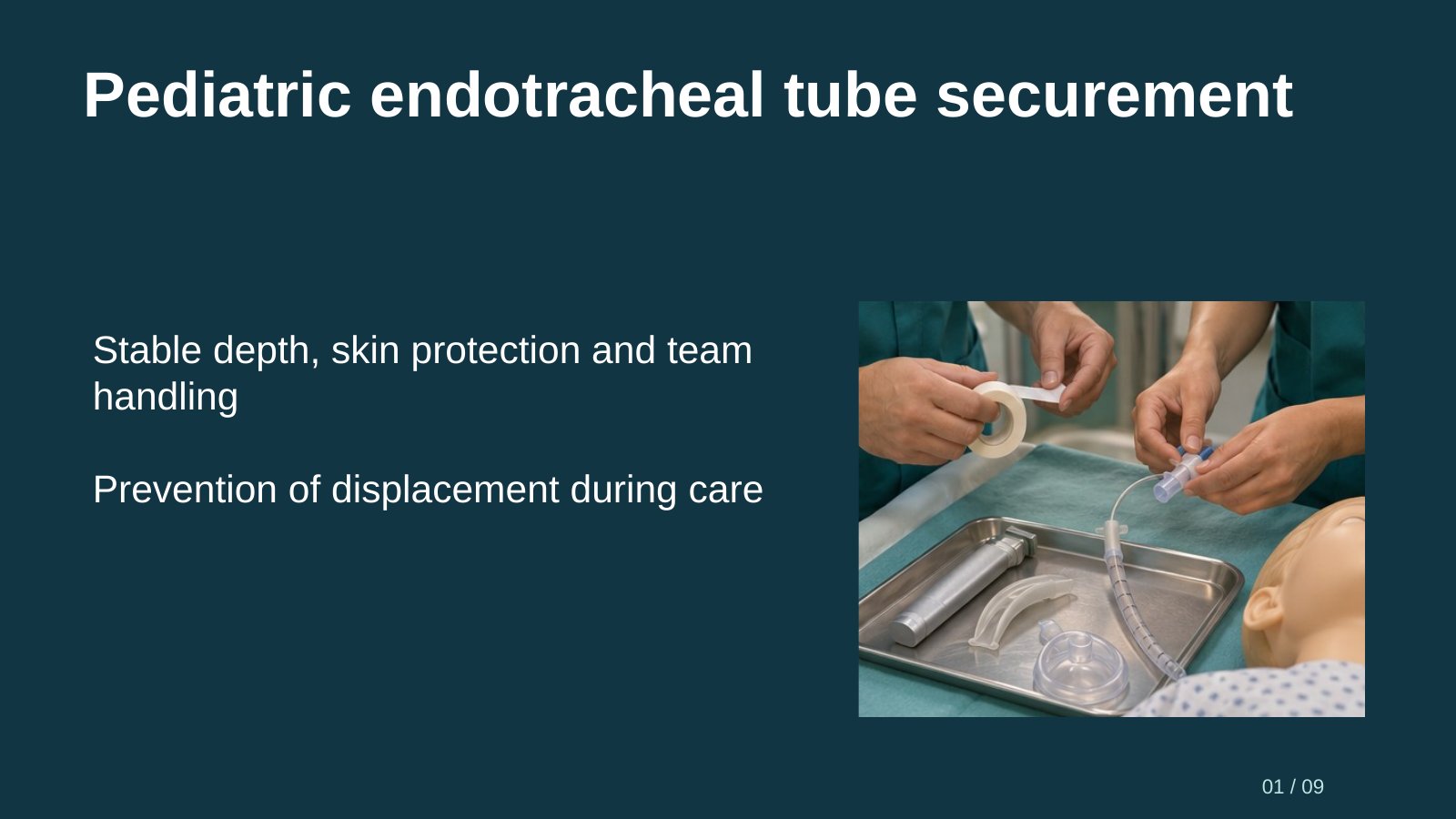
Pediatric endotracheal tube securement
Endotracheal tube securement maintains the verified tube position while protecting skin and mucosa.
Start free preview →
9 scenes · approximately 5 minutes · pre & post test
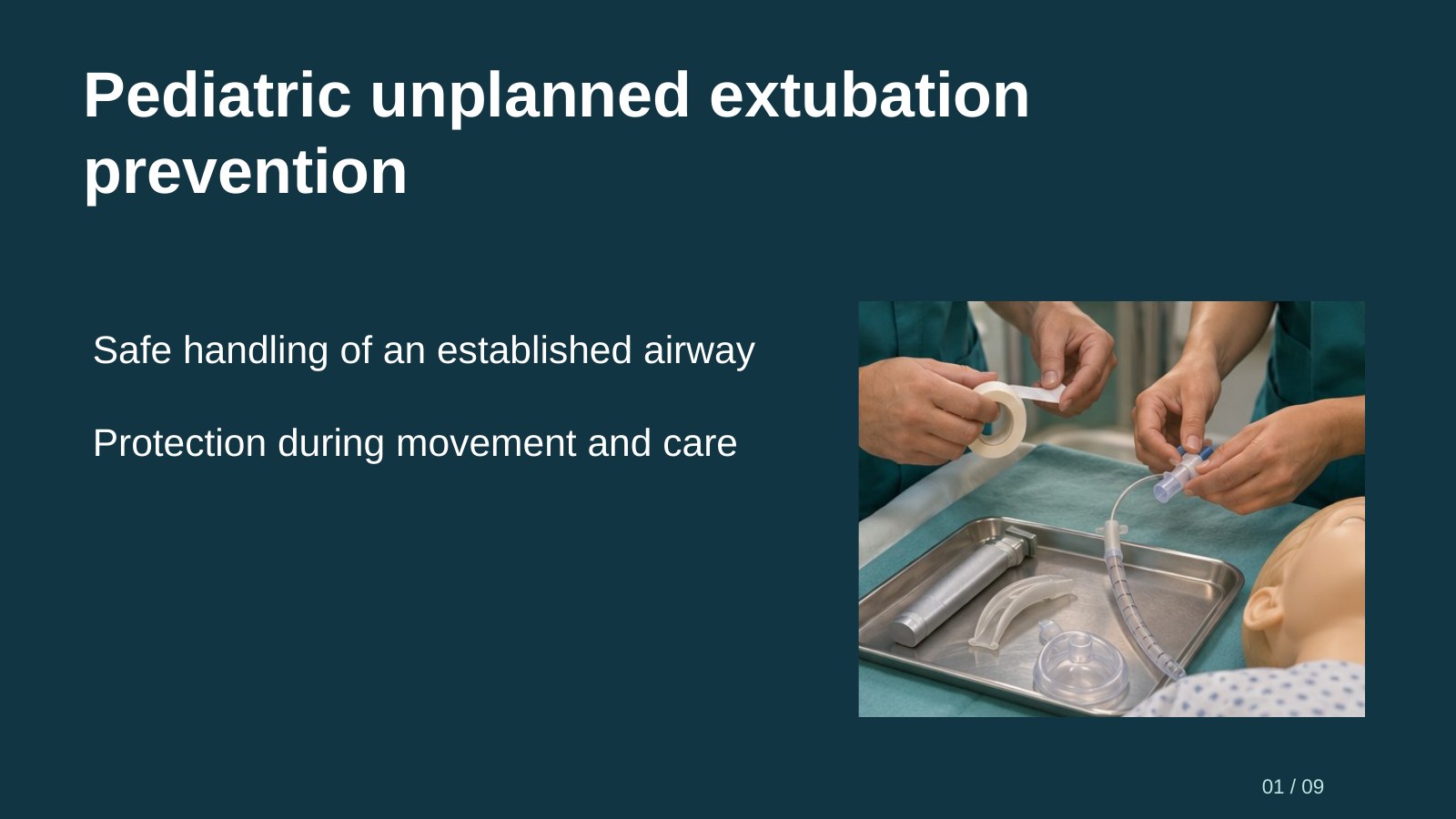
Pediatric unplanned extubation prevention
Unplanned extubation is unintended removal or displacement of an endotracheal tube.
Start free preview →
9 scenes · approximately 5 minutes · pre & post test
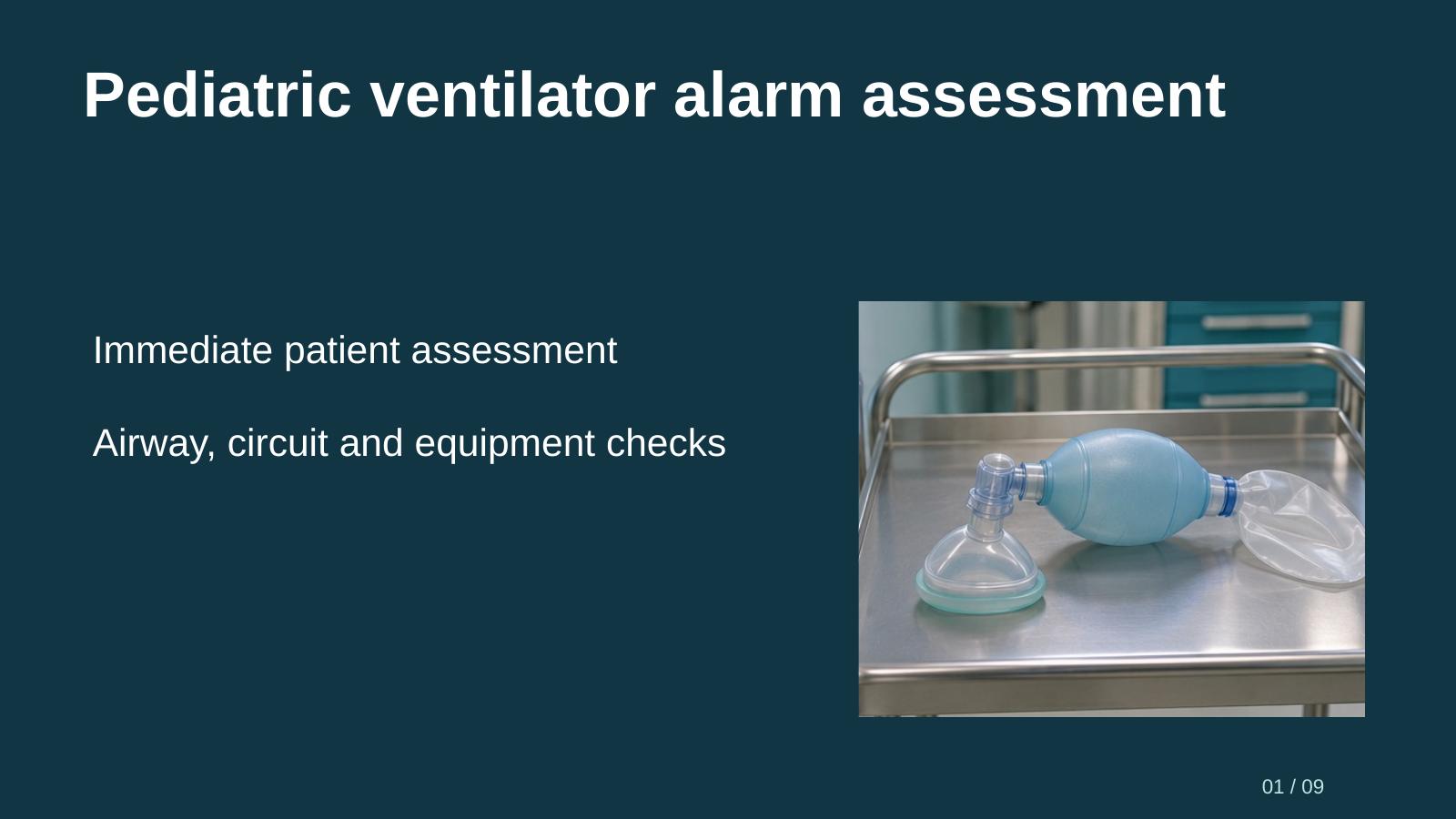
Pediatric ventilator alarm assessment
An alarm signals a possible change in support, patient condition or equipment.
Start free preview →
9 scenes · approximately 5 minutes · pre & post test
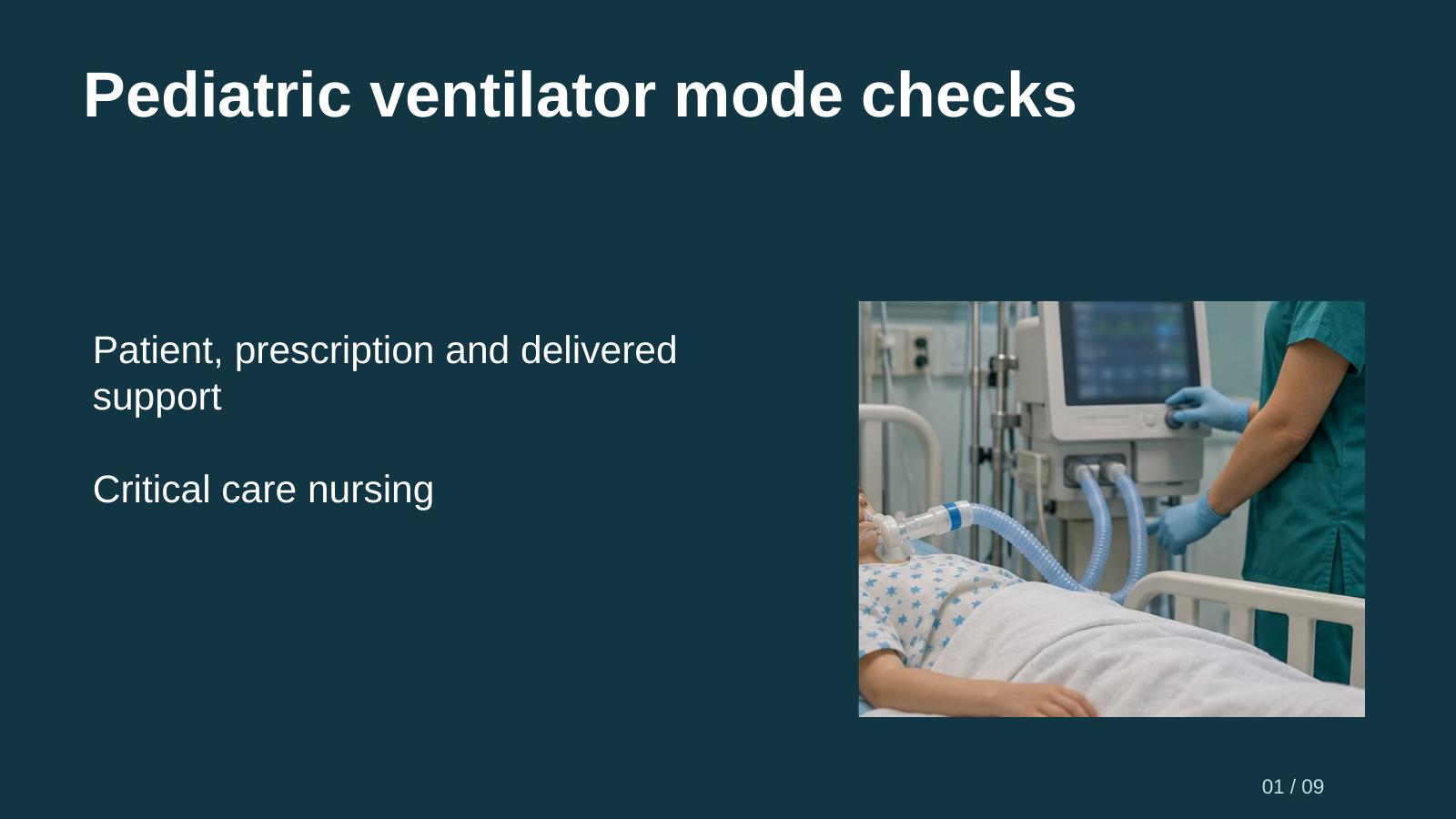
Pediatric ventilator mode checks
A ventilator check compares the patient, the current prescription and the support actually delivered.
Start free preview →
9 scenes · approximately 5 minutes · pre & post test
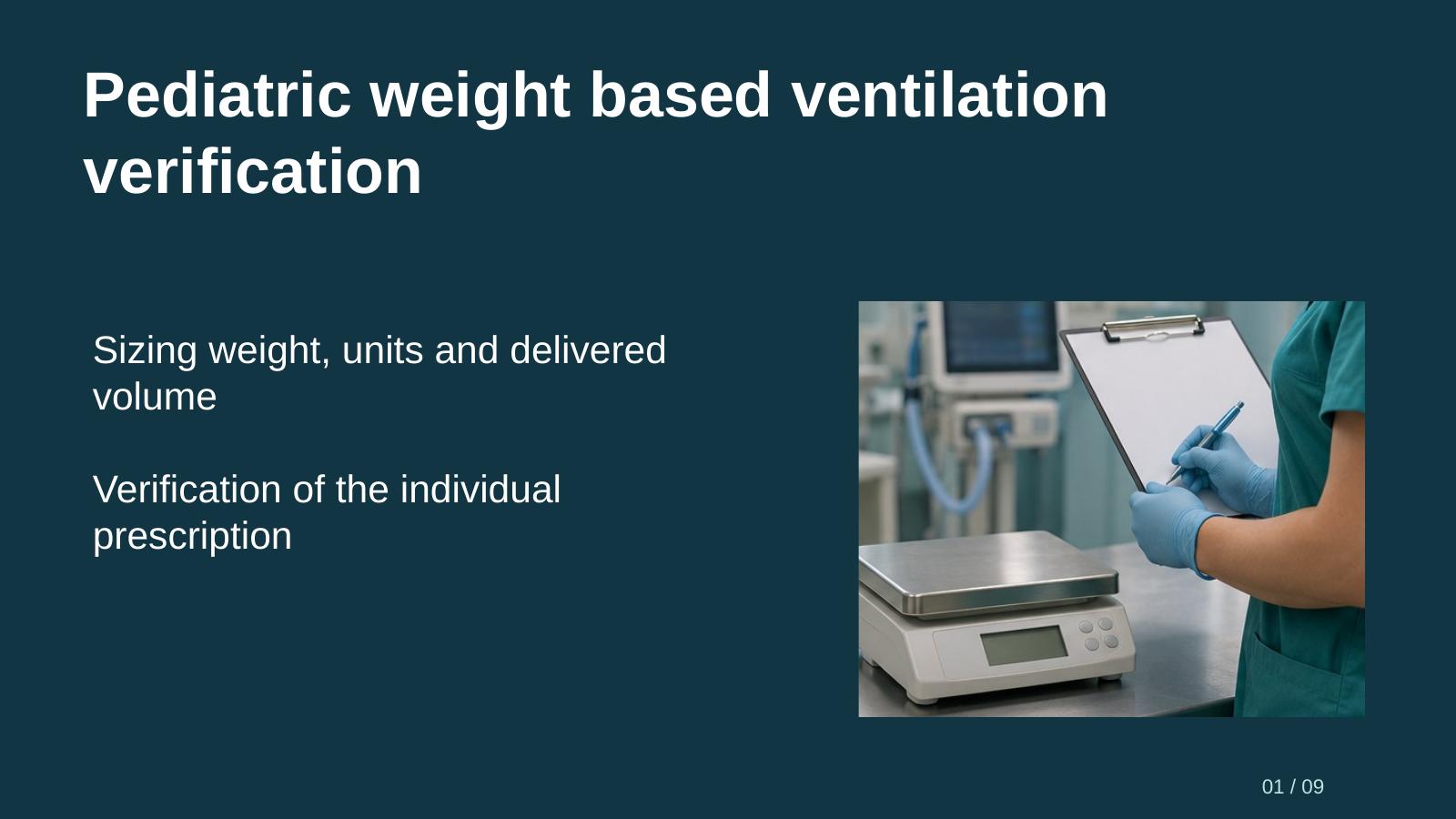
Pediatric weight based ventilation verification
Safe pediatric verification starts with the correct child and the correct sizing weight.
Start free preview →
Medication Safety · 7 courses
37 scenes · pre & post test
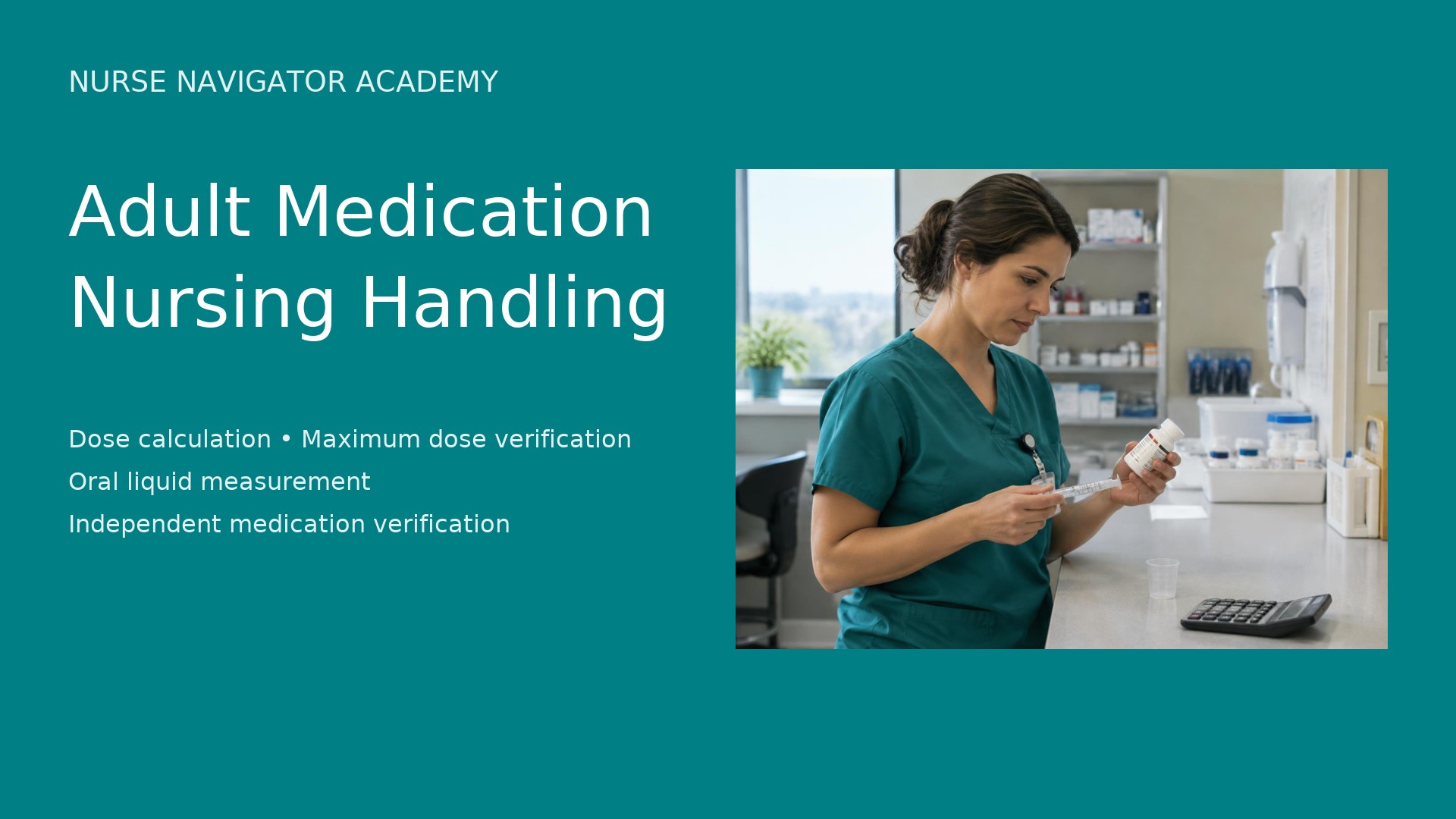
Adult Medication Nursing Handling
One complete program covering adult medication dose calculation, maximum dose verification, oral liquid measurement and independent medication verification, with worked fictional examples, practice scenarios and supervised practice.
Start free preview →

9 scenes · approximately 4 minutes · pre & post test
Adult Medication Reconciliation
Medication reconciliation compares the medicines a person actually uses with the intended prescription at a transition of care. The aim is to identify and resolve differences before they cause harm. This lesson focuses on nursing history taking, clinical clarification and communication of a confirmed medicine plan.
Start free preview →
9 scenes · approximately 4 minutes · pre & post test
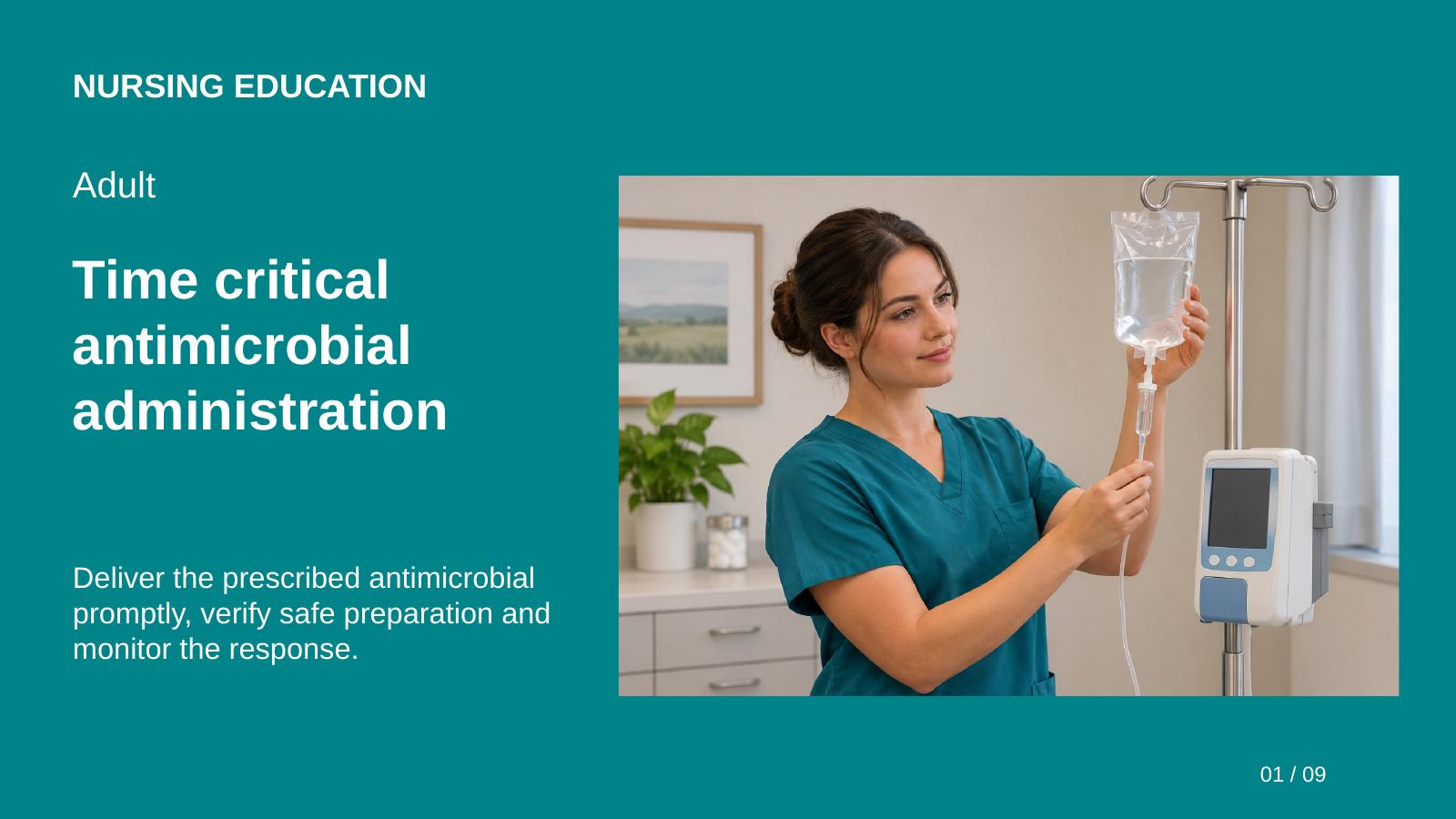
Adult Time-Critical Antimicrobial Administration
Timely antimicrobial treatment matters when a serious infection is likely. The nurse confirms the prescription, resolves urgent safety questions and delivers the intended dose with monitoring. This lesson focuses on sepsis related administration. The prescriber selects the agent, dose and regimen using the suspected source, patient factors and microbiology advice.
Start free preview →
24 scenes · approximately 13 minutes · pre & post test
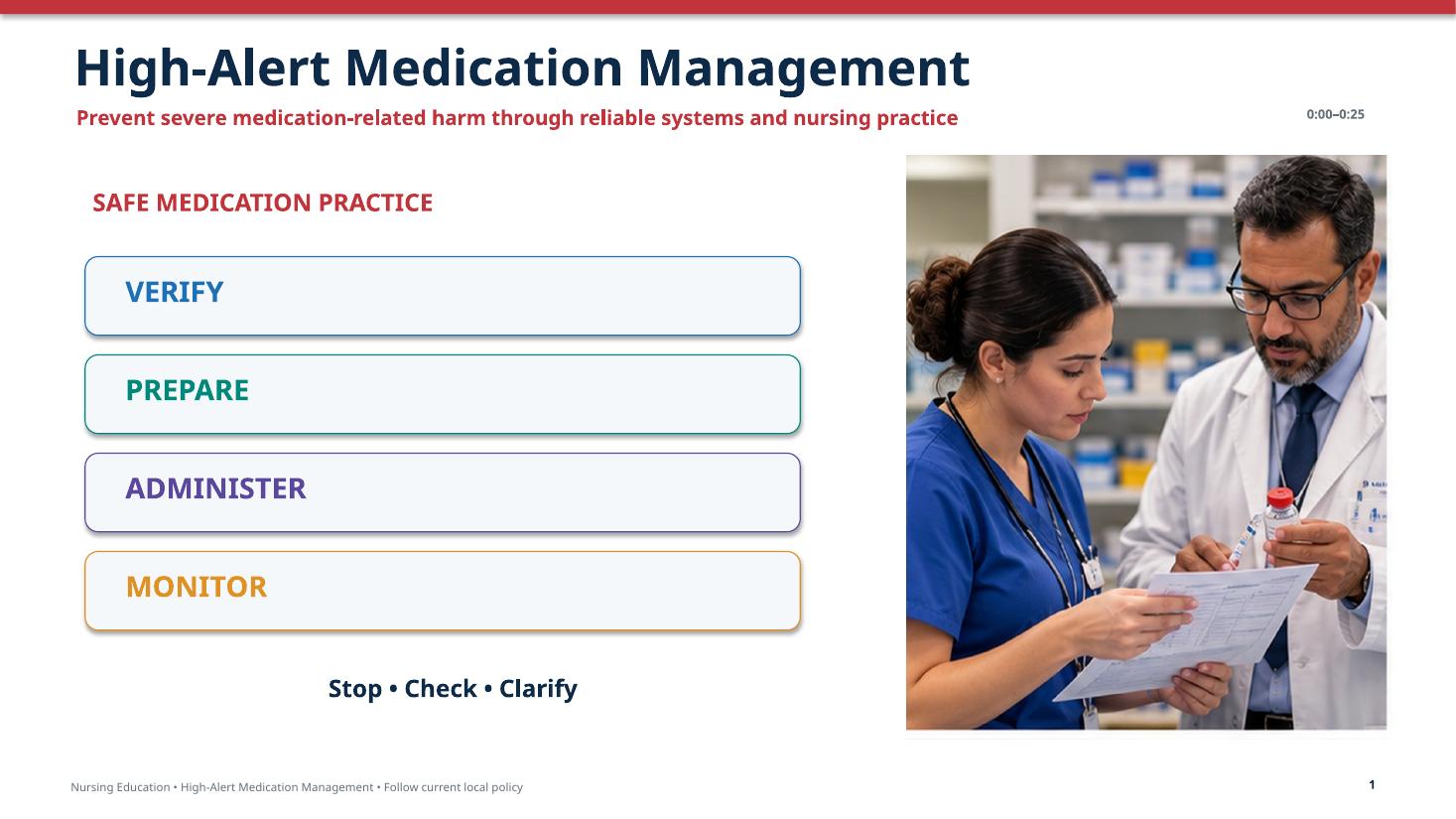
High-Alert Medication Management
A nursing safety pathway for high-alert medicines: verification, preparation, administration, monitoring, escalation and patient education.
Start free preview →
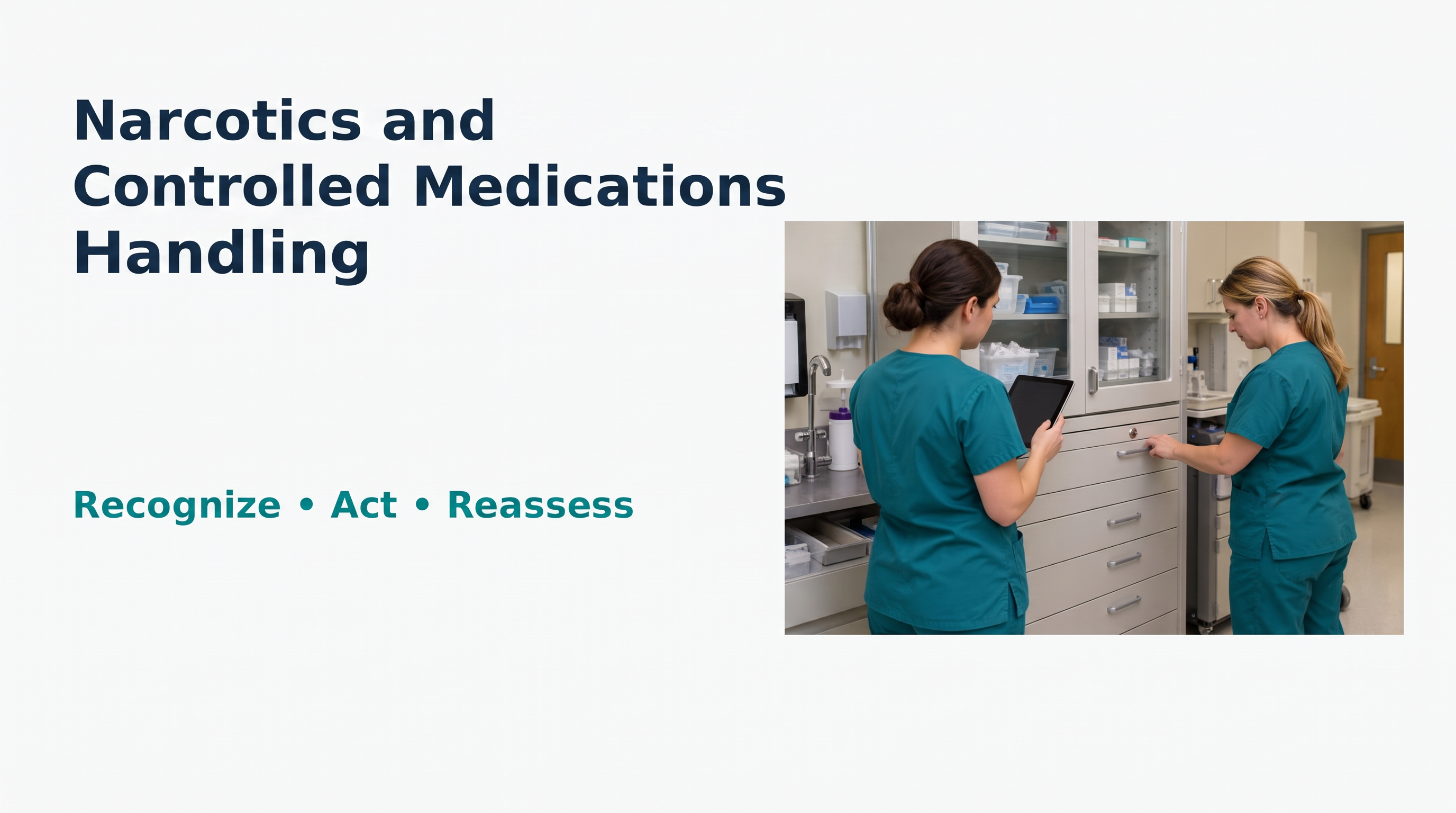
13 scenes · pre & post test
Narcotics and Controlled Medications Handling
Controlled medications safety, security and opioid monitoring: confirming treatment, preventing dose stacking, secure storage, accurate records, safe return and waste, detecting harm and handling discrepancies transparently.
Start free preview →
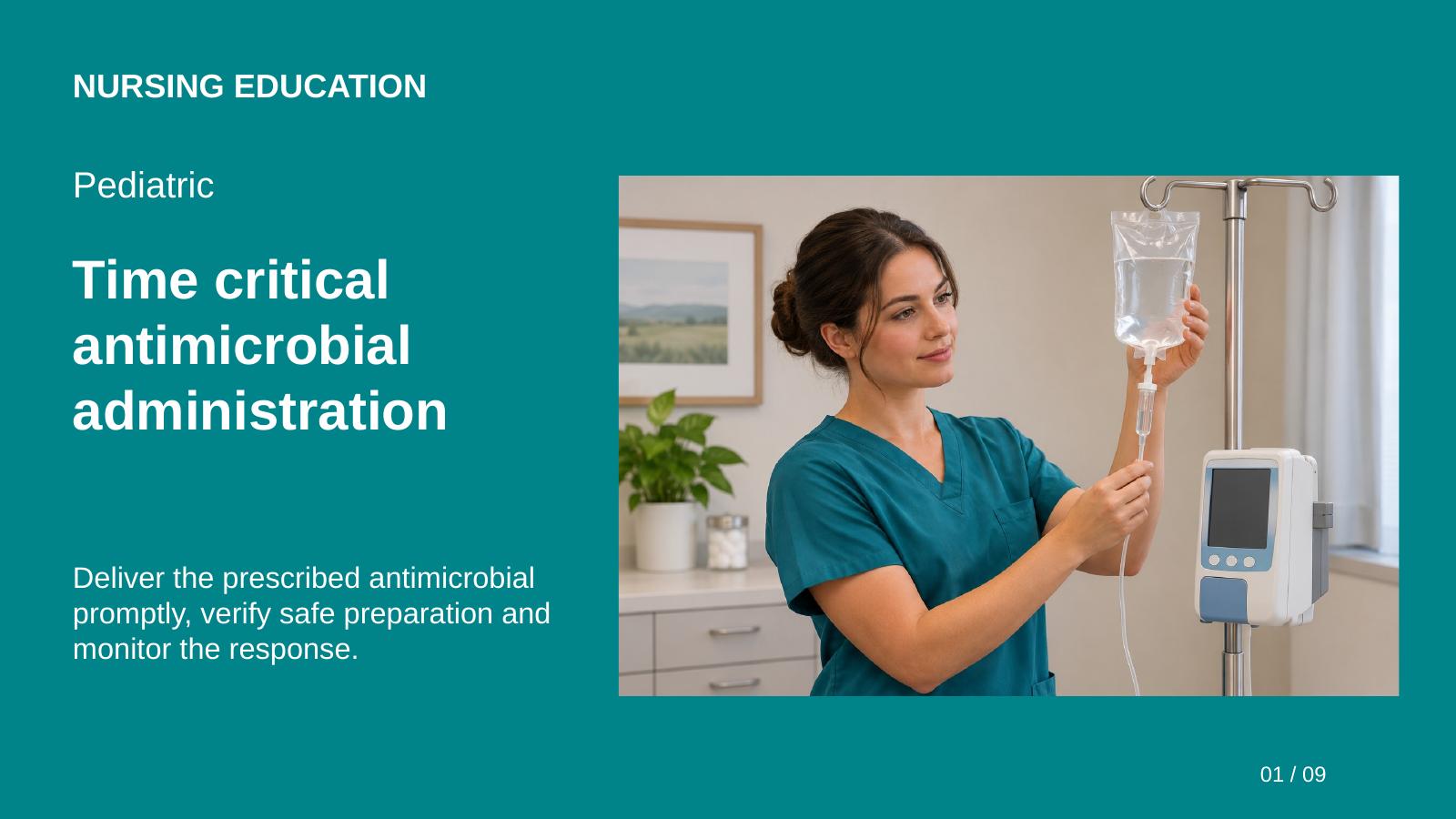
9 scenes · approximately 4 minutes · pre & post test
Pediatric Time-Critical Antimicrobial Administration
Timely antimicrobial treatment matters when a serious infection is likely. The nurse confirms the prescription, resolves urgent safety questions and delivers the intended dose with monitoring. This lesson focuses on sepsis related administration. The prescriber selects the agent, dose and regimen using the suspected source, patient factors and microbiology advice.
Start free preview →

9 scenes · approximately 4 minutes · pre & post test
Pediatric weight-based toxic exposure calculation
Calculate a possible exposure in milligrams per kilogram while preserving uncertainty and seeking agent specific interpretation.
Start free preview →
Clinical Procedures & Sampling · 15 courses
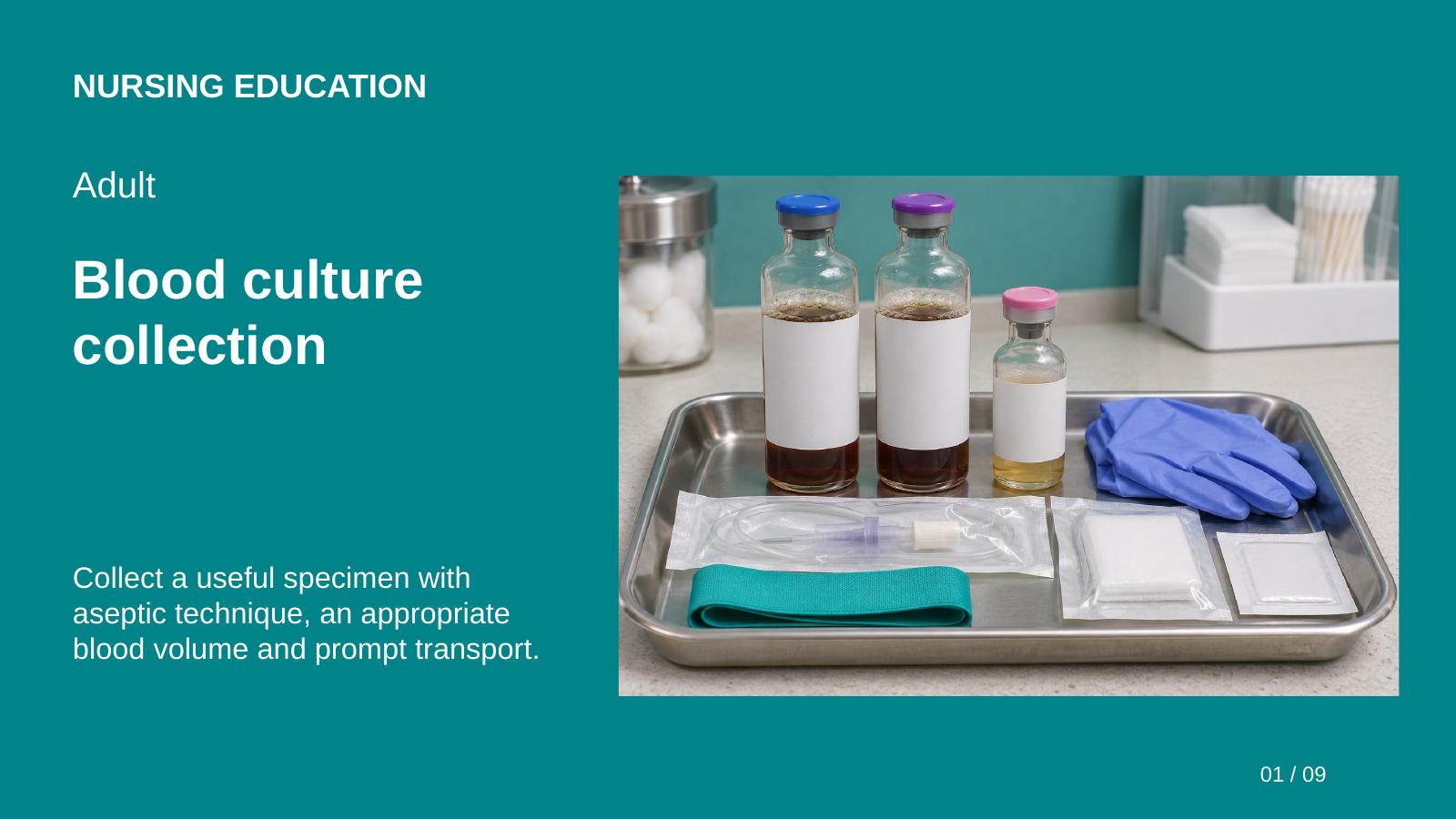
9 scenes · approximately 4 minutes · pre & post test
Adult Blood Culture Collection
Blood cultures help identify organisms in the bloodstream and guide treatment. A useful result depends on the clinical indication, aseptic collection and enough blood for the chosen culture system. This lesson covers preparation, peripheral collection and safe handling. Sampling from a vascular device requires a specific trained technique and clinical indication.
Start free preview →
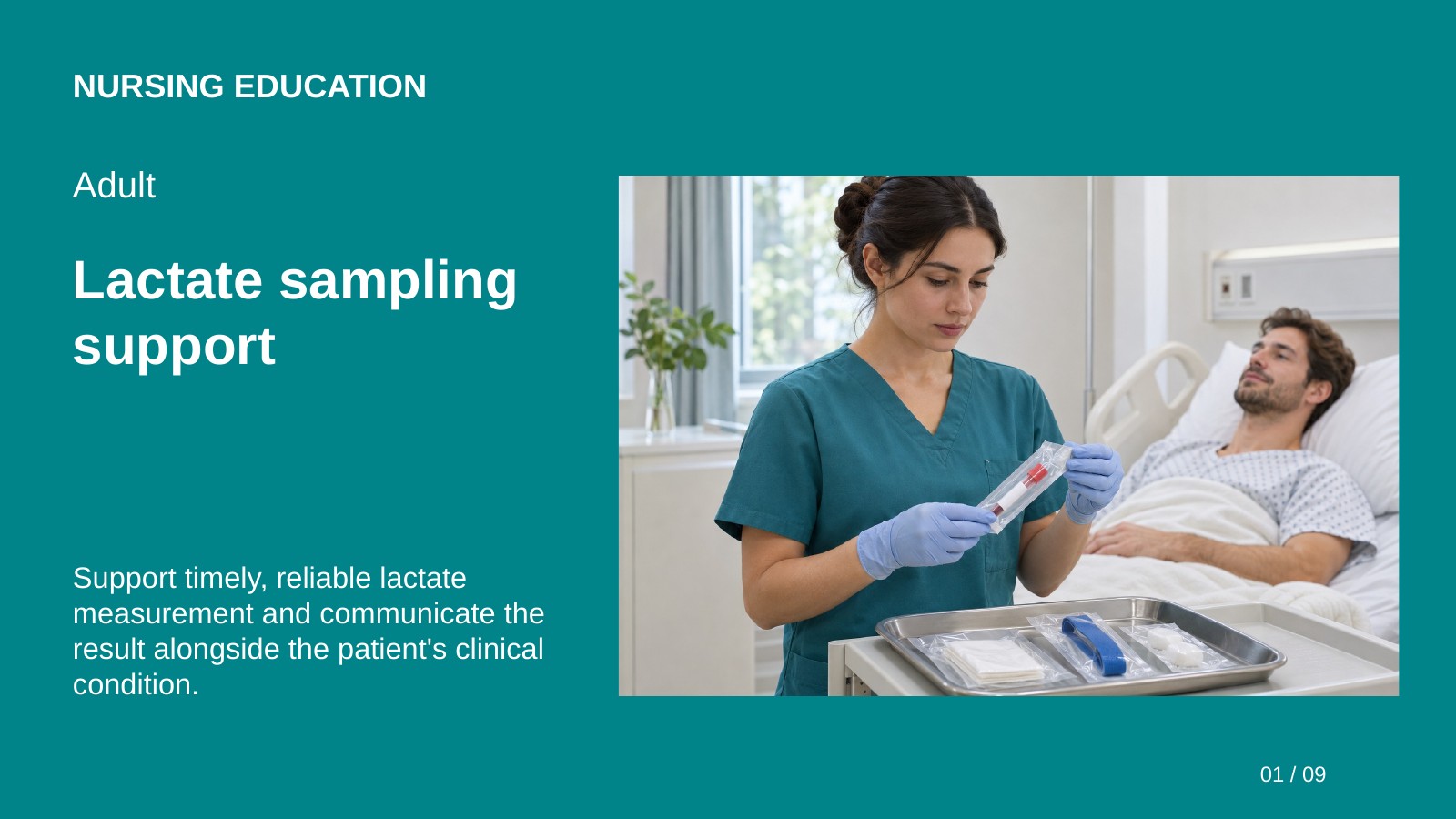
9 scenes · approximately 4 minutes · pre & post test
Adult Lactate Sampling Support
Lactate measurement can support assessment and monitoring in suspected sepsis and shock. A reliable result depends on correct collection and handling as well as timely clinical interpretation. This lesson covers preparation, sample quality and communication. It does not replace supervised venous or arterial blood collection training.
Start free preview →
9 scenes · approximately 4 minutes · pre & post test
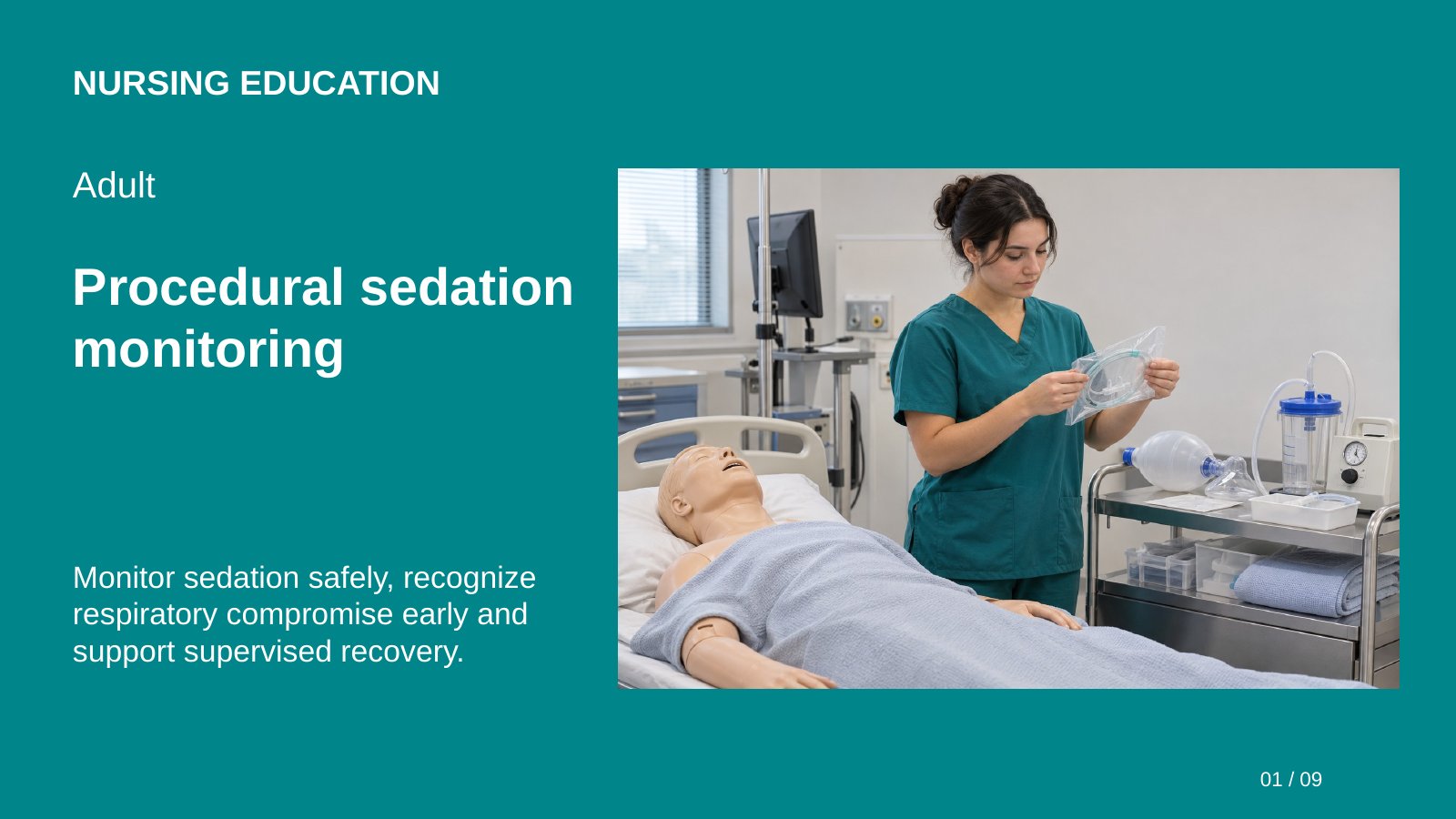
Adult procedural sedation monitoring
Monitor sedation safely, recognize respiratory compromise early and support supervised recovery.
Start free preview →

9 scenes · approximately 4 minutes · pre & post test
Adult splint application
Apply a prescribed temporary splint while protecting skin, circulation and nerve function.
Start free preview →

9 scenes · approximately 4 minutes · pre & post test
Adult twelve-lead ECG acquisition
Record a technically reliable adult ECG using accurate landmarks and prompt clinical handover.
Start free preview →
9 scenes · approximately 4 minutes · pre & post test
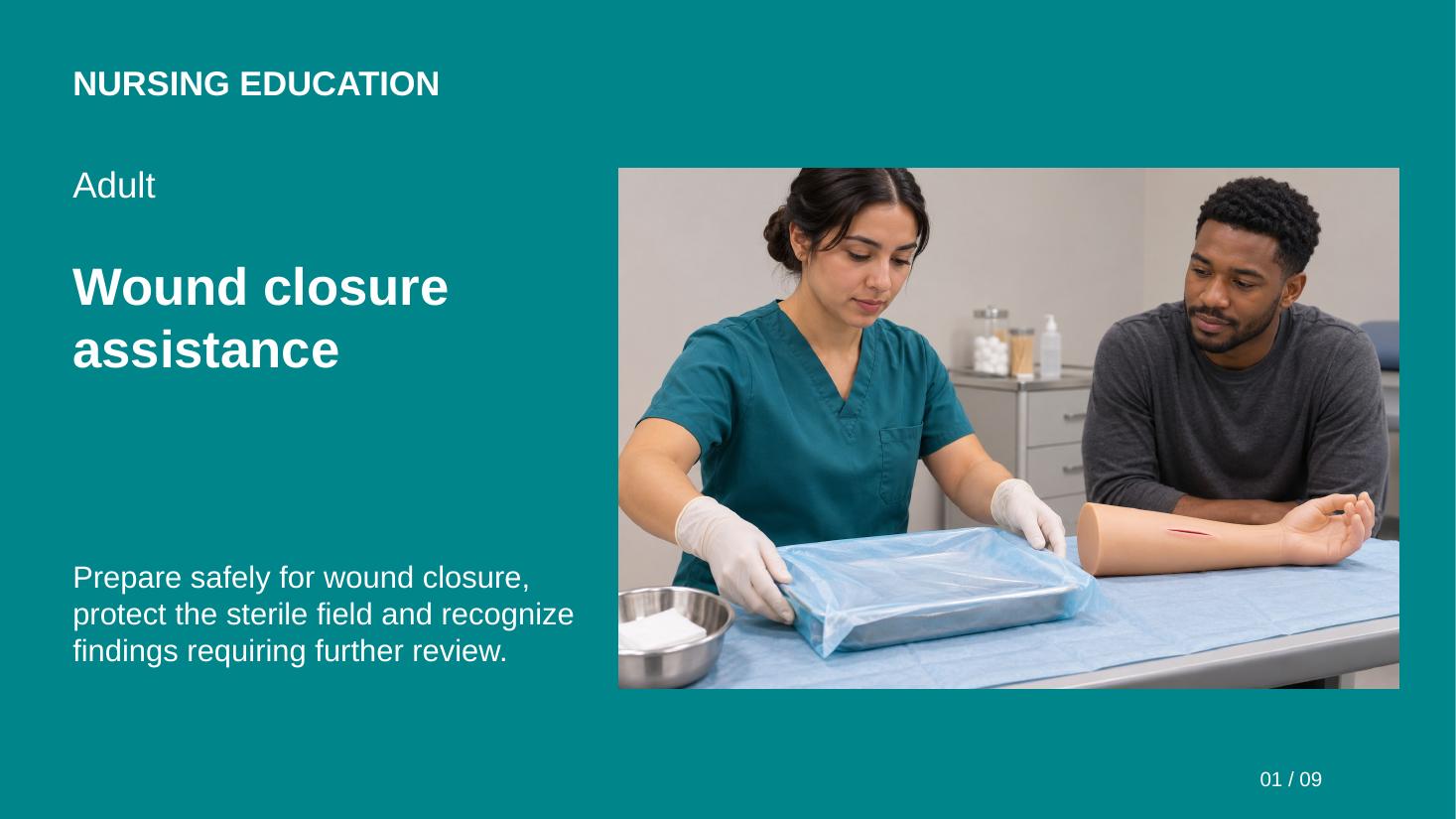
Adult wound closure assistance
Prepare safely for wound closure, protect the sterile field and recognize findings requiring further review.
Start free preview →
13 scenes · pre & post test
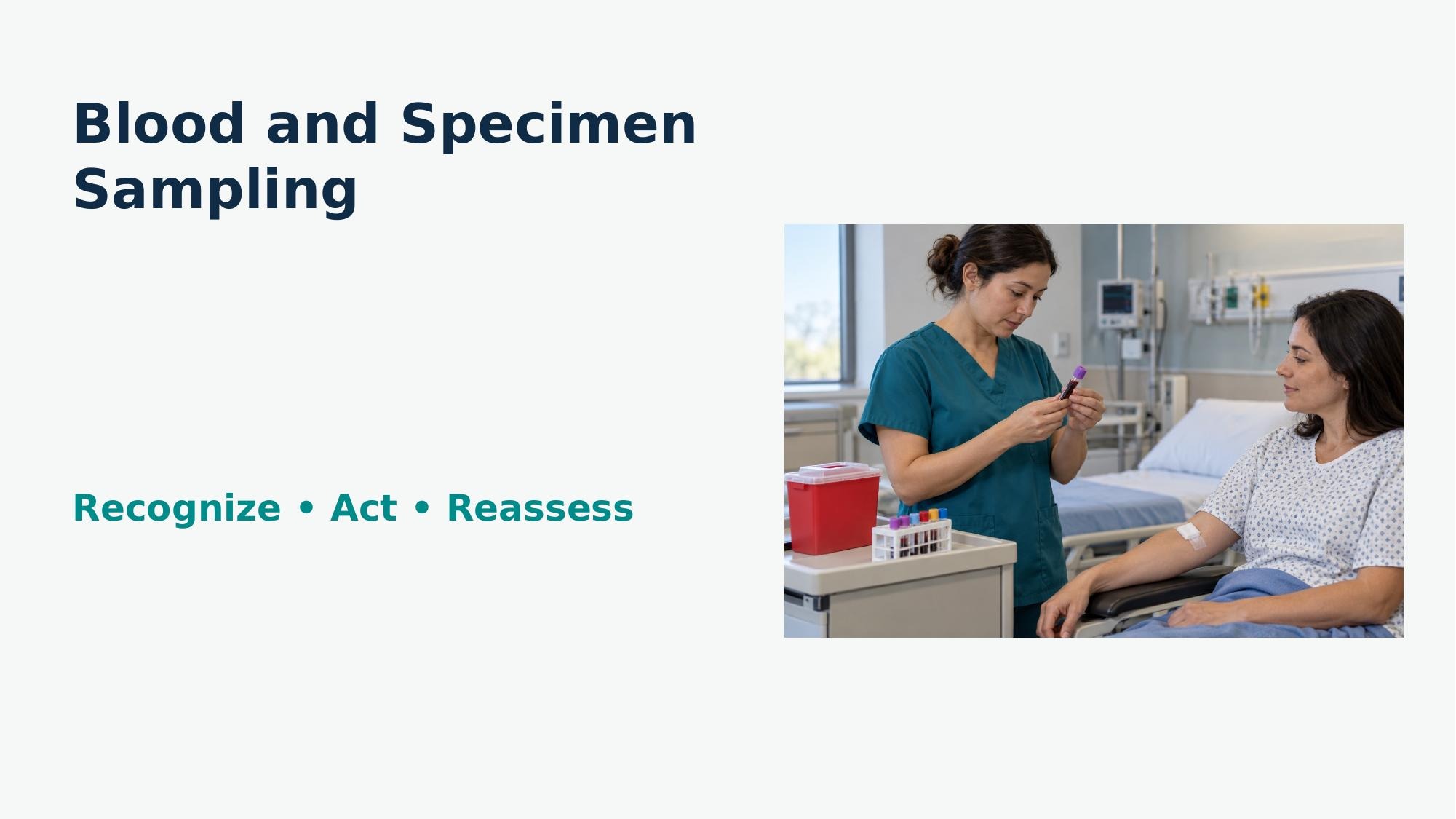
Blood and Specimen Sampling
Reliable blood and specimen collection: verifying the request and patient, preparation and positioning, asepsis, protecting sample quality, bedside labelling, safe sharps handling, other specimen types, transport and rejected samples.
Start free preview →
13 scenes · pre & post test
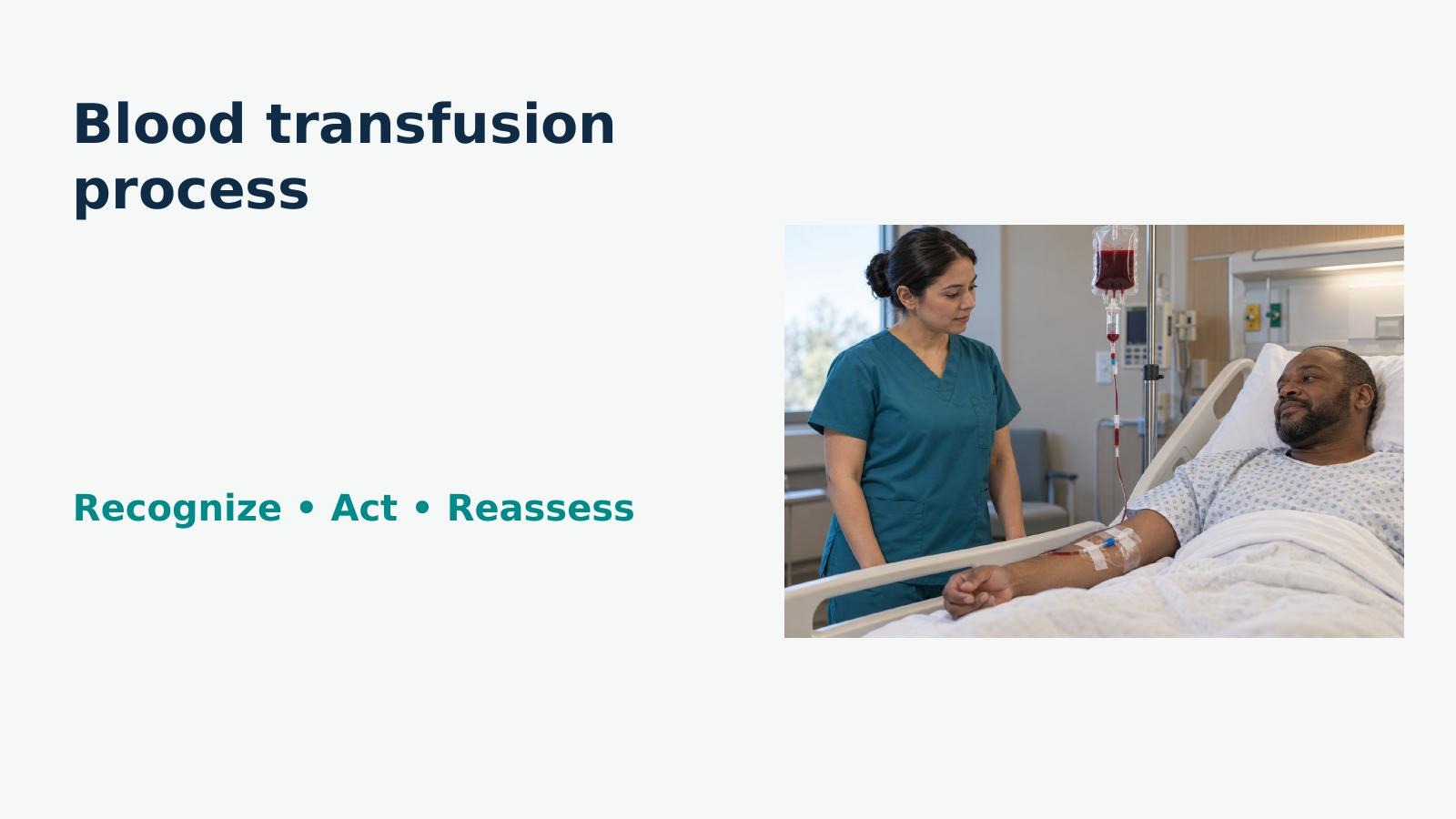
Blood Transfusion Skills
Bedside transfusion safety: confirming readiness, positive patient identification, component and equipment checks, baseline observations, early monitoring, recognising and responding to reactions, and follow-up documentation.
Start free preview →
13 scenes · pre & post test
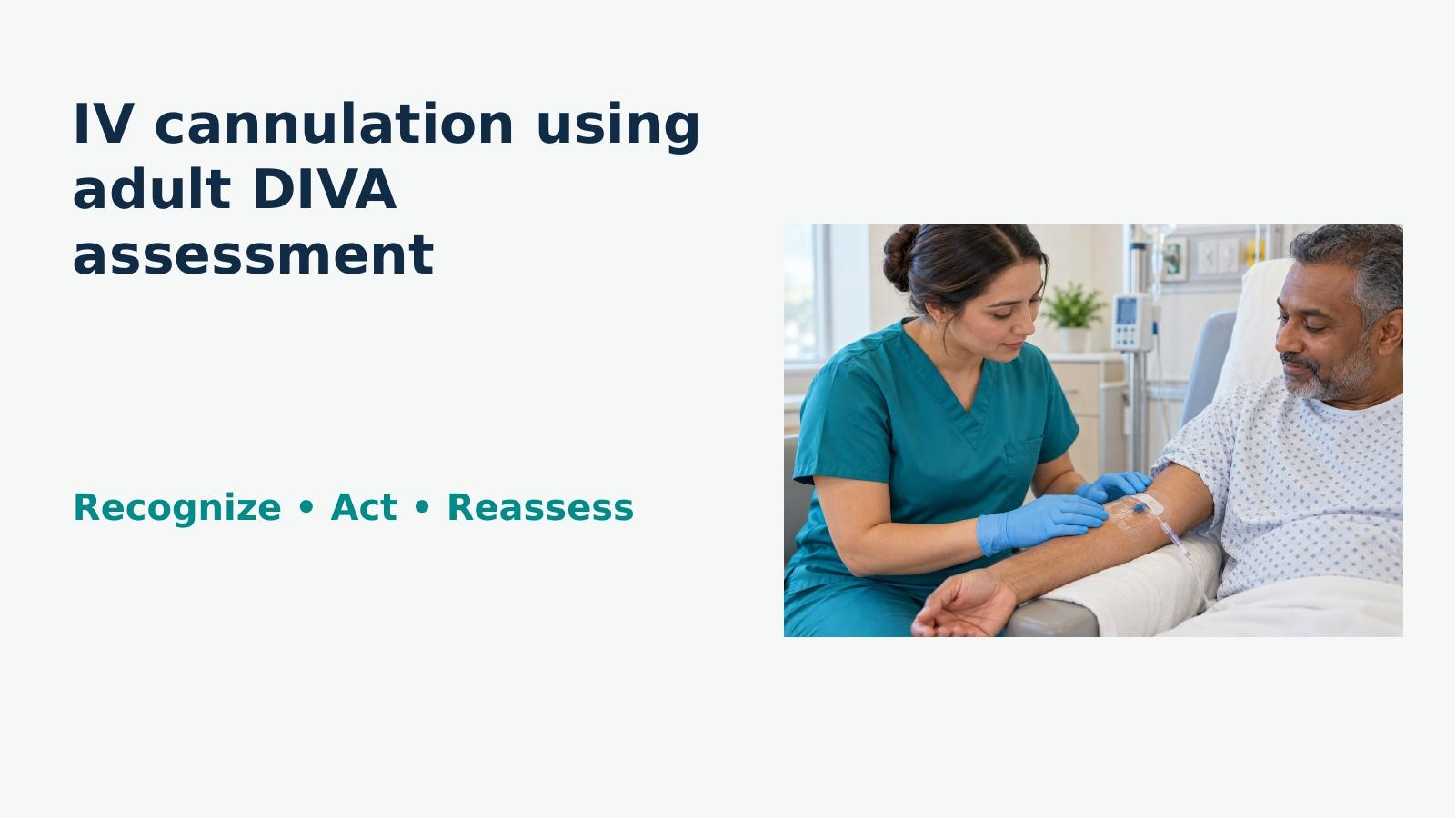
IV Cannulation Using Adult DIVA Assessment
Adult short peripheral IV access: modified adult A-DIVA assessment, safe device selection, asepsis, early skilled escalation and ongoing catheter care. Supervised procedural competence is required.
Start free preview →
9 scenes · approximately 4 minutes · pre & post test
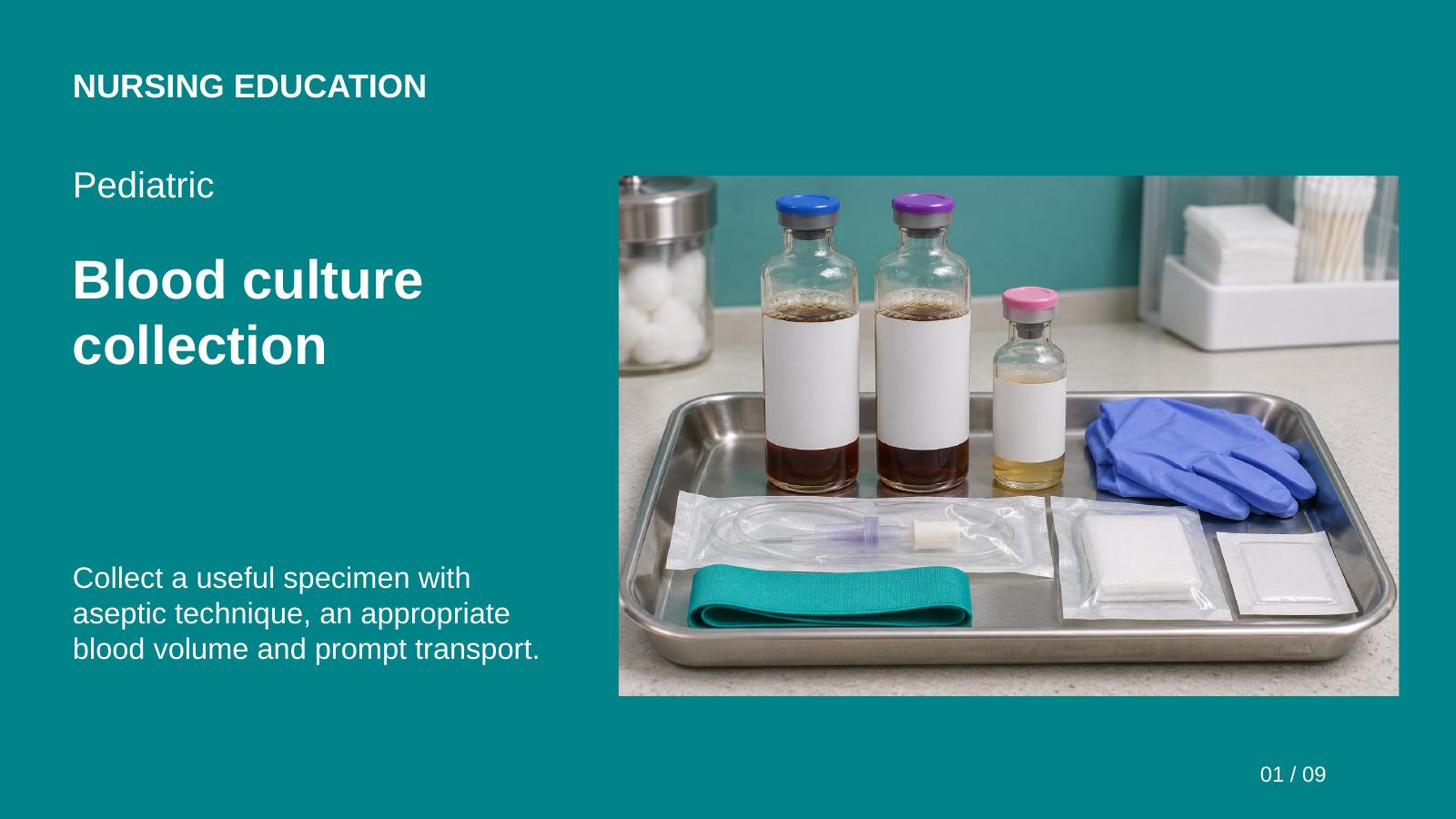
Pediatric Blood Culture Collection
Blood cultures help identify organisms in the bloodstream and guide treatment. A useful result depends on the clinical indication, aseptic collection and enough blood for the chosen culture system. This lesson covers preparation, peripheral collection and safe handling. Sampling from a vascular device requires a specific trained technique and clinical indication.
Start free preview →
9 scenes · approximately 4 minutes · pre & post test
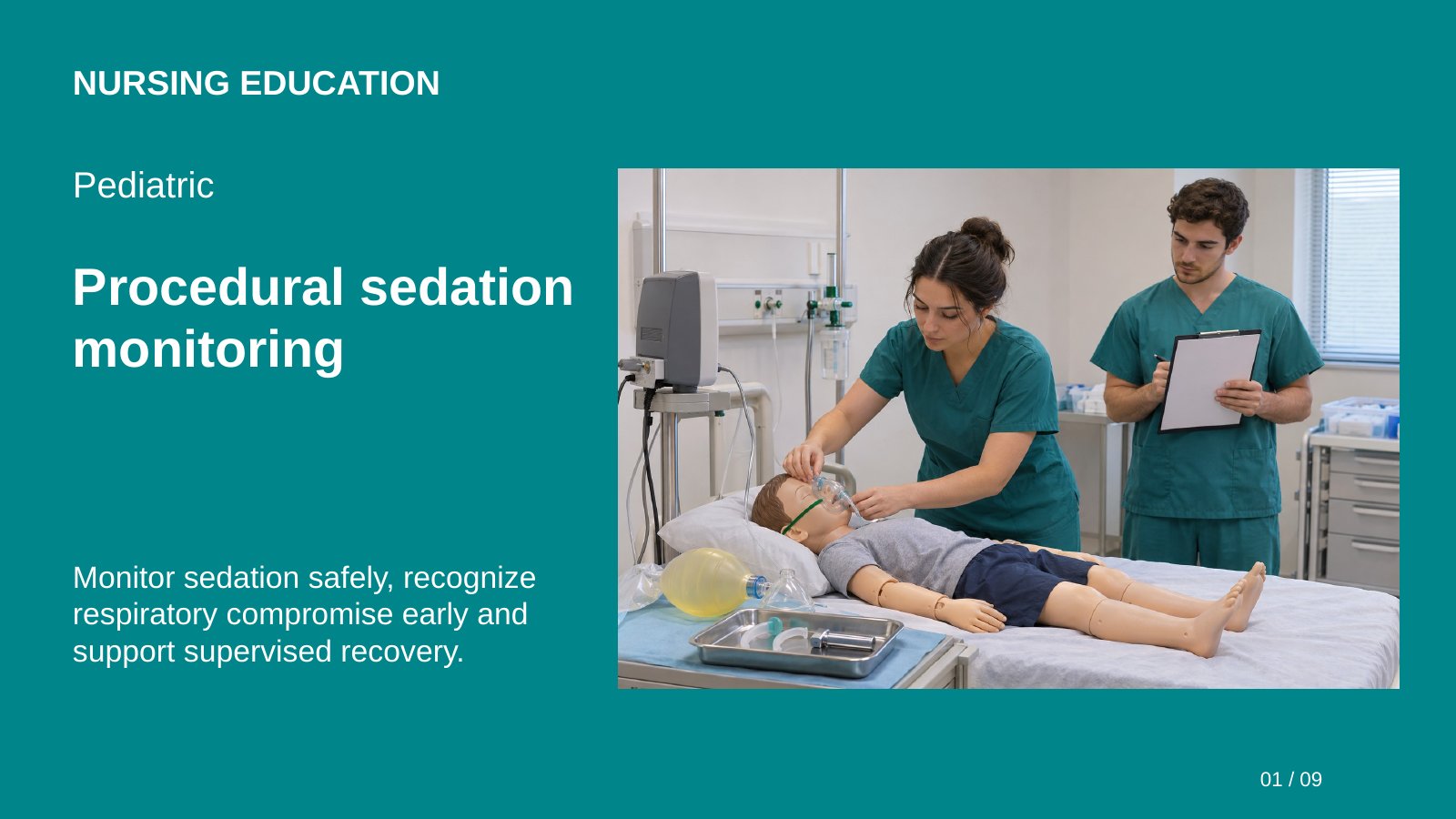
Pediatric procedural sedation monitoring
Monitor sedation safely, recognize respiratory compromise early and support supervised recovery.
Start free preview →

9 scenes · approximately 4 minutes · pre & post test
Pediatric splint application
Apply a prescribed temporary splint while protecting skin, circulation and nerve function.
Start free preview →

9 scenes · approximately 4 minutes · pre & post test
Pediatric twelve-lead ECG acquisition
Record a technically reliable pediatric ECG using accurate landmarks and prompt clinical handover.
Start free preview →
25 scenes · approximately 9 minutes · pre & post test
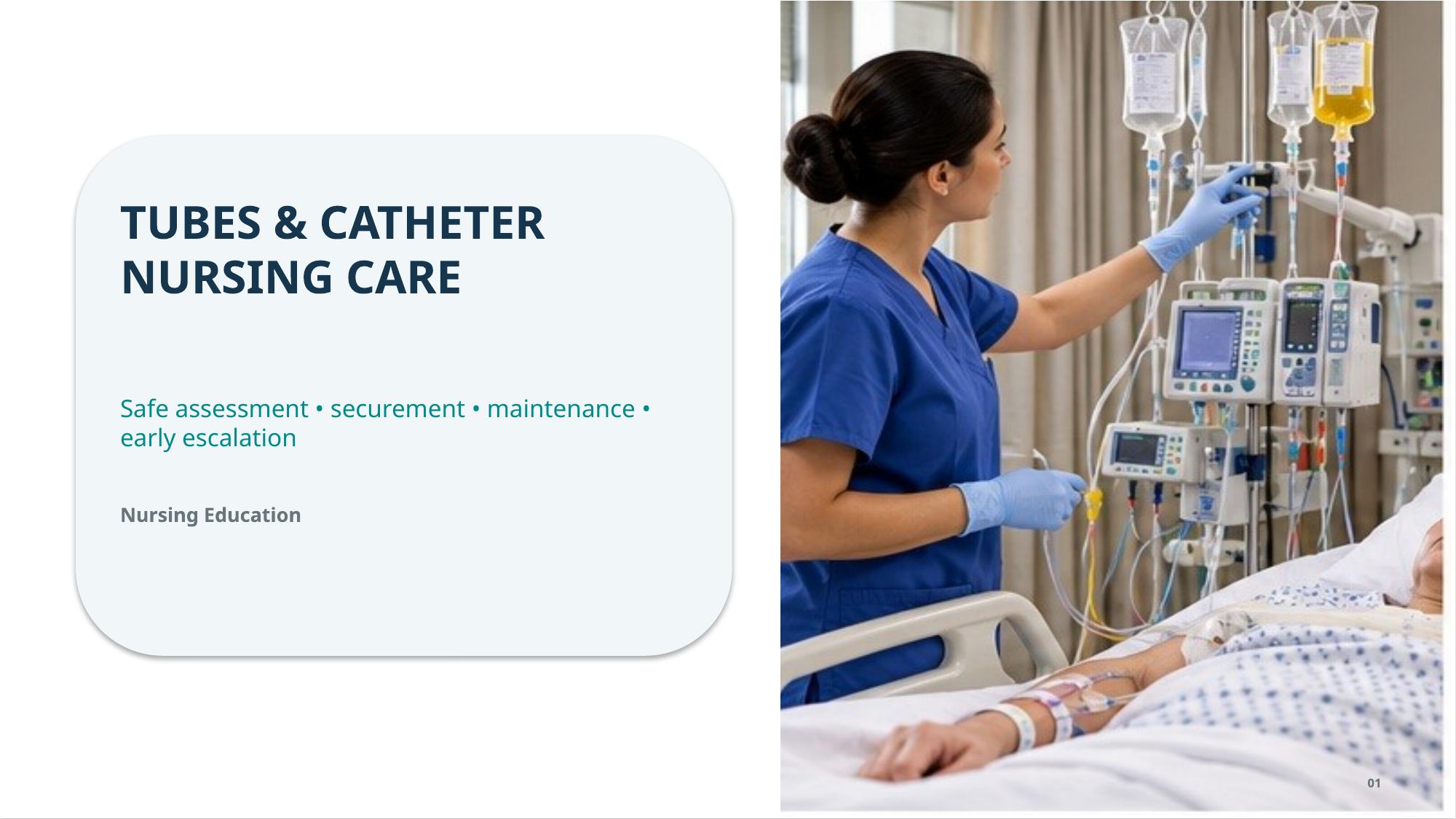
Tubes & Catheter Nursing Care
Safe bedside assessment, line tracing, infection prevention, securement, device function, handover and early escalation across common tubes and catheters.
Start free preview →
20 scenes · pre & post test
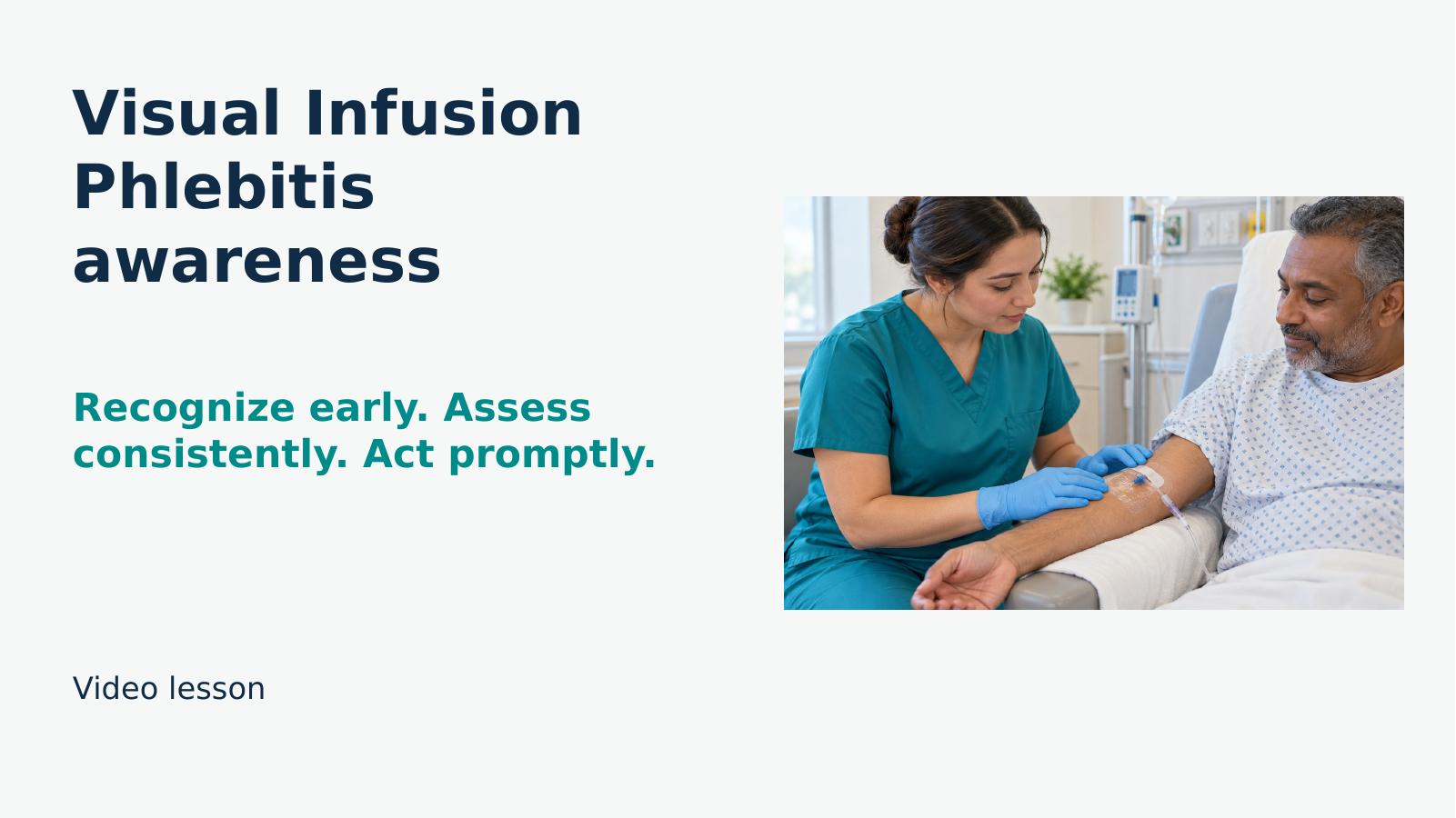
Visual Infusion Phlebitis Nursing Care
Assessment of short peripheral IV catheter sites, VIP scores 0–5, recognition of phlebitis versus infiltration and extravasation, safe intervention, prevention, documentation and bedside practice.
Start free preview →
Infection Prevention · 3 courses
28 scenes · approximately 15 minutes · pre & post test
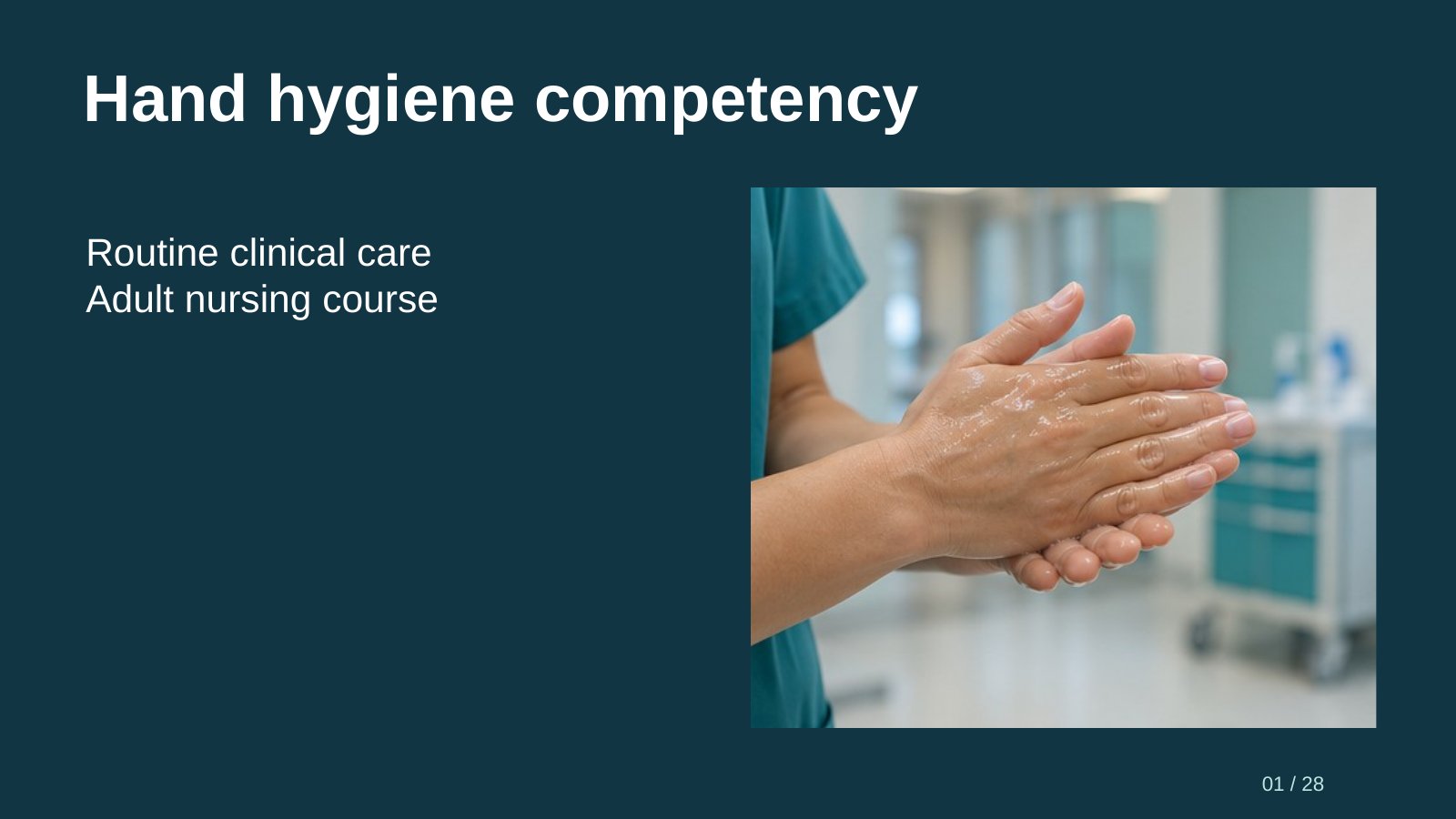
Adult hand hygiene competency
Free course: the five moments, choosing handrub or soap and water, complete coverage, safe drying and preventing recontamination.
Start free preview →
13 scenes · pre & post test
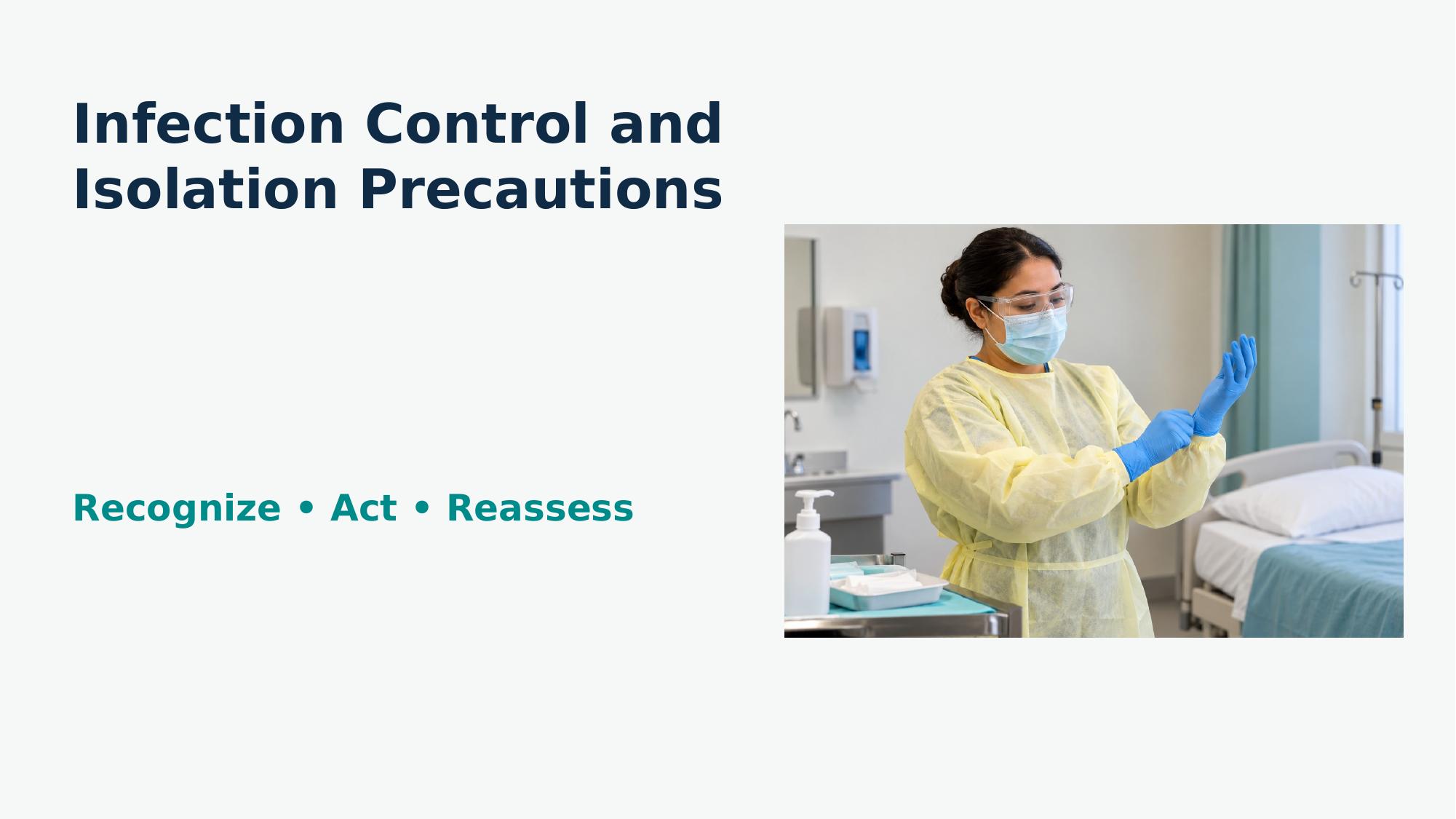
Infection Control and Isolation Precautions
General-ward standard and transmission-based precautions: hand hygiene, risk-based protective equipment, contact, droplet and airborne precautions, clean tasks and shared equipment, safe patient movement and clear communication.
Start free preview →
28 scenes · approximately 15 minutes · pre & post test
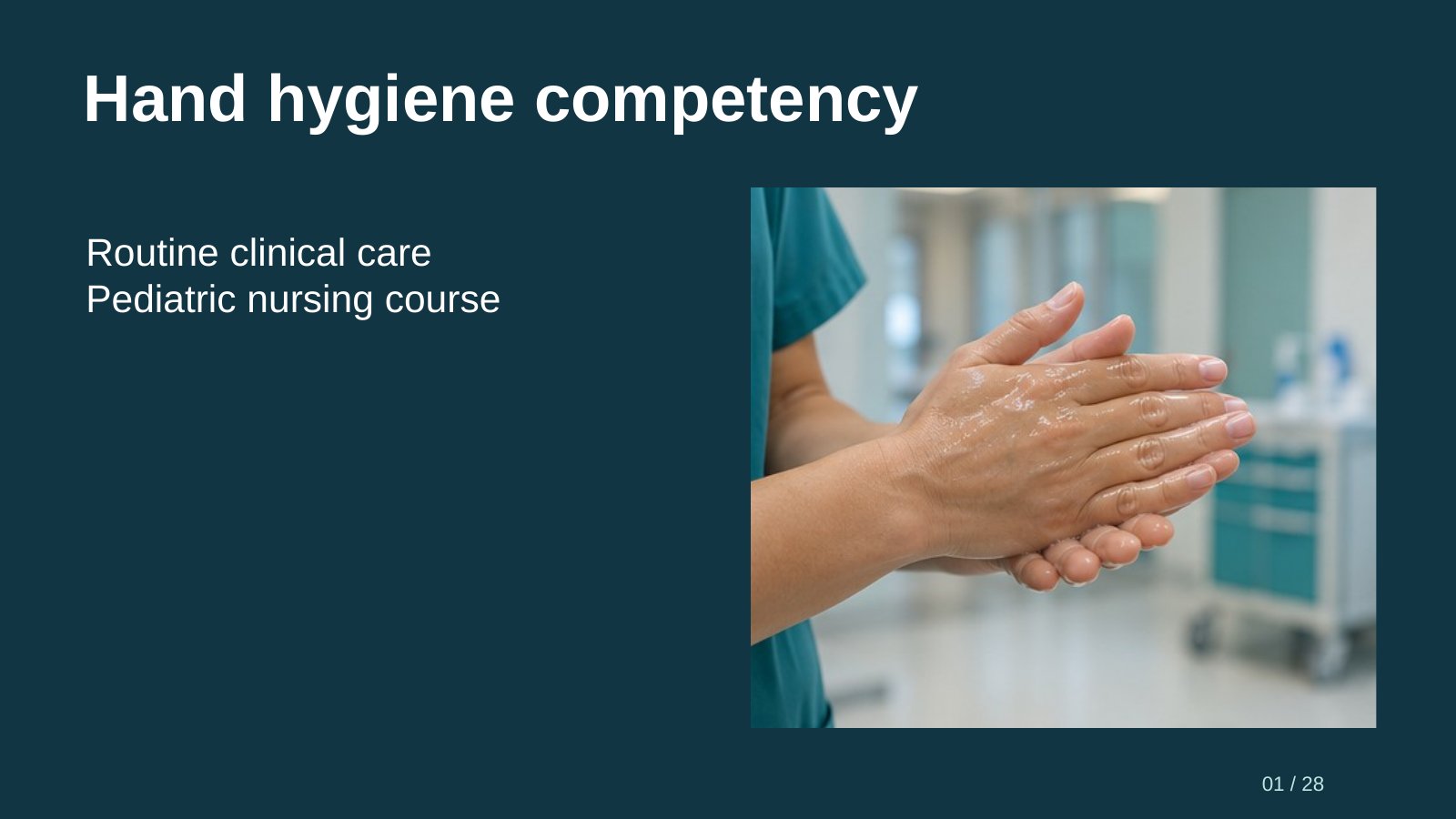
Pediatric hand hygiene competency
Free course: the five moments, choosing handrub or soap and water, complete coverage, safe drying and preventing recontamination.
Start free preview →
Pain Management · 4 courses

17 scenes · pre & post test
Non-Pharmacological Pain Management
Evidence-informed nursing comfort measures for adults: pain assessment, positioning, heat and cold safety, breathing, environment, music, touch, activity pacing and reassessment.
Start free preview →
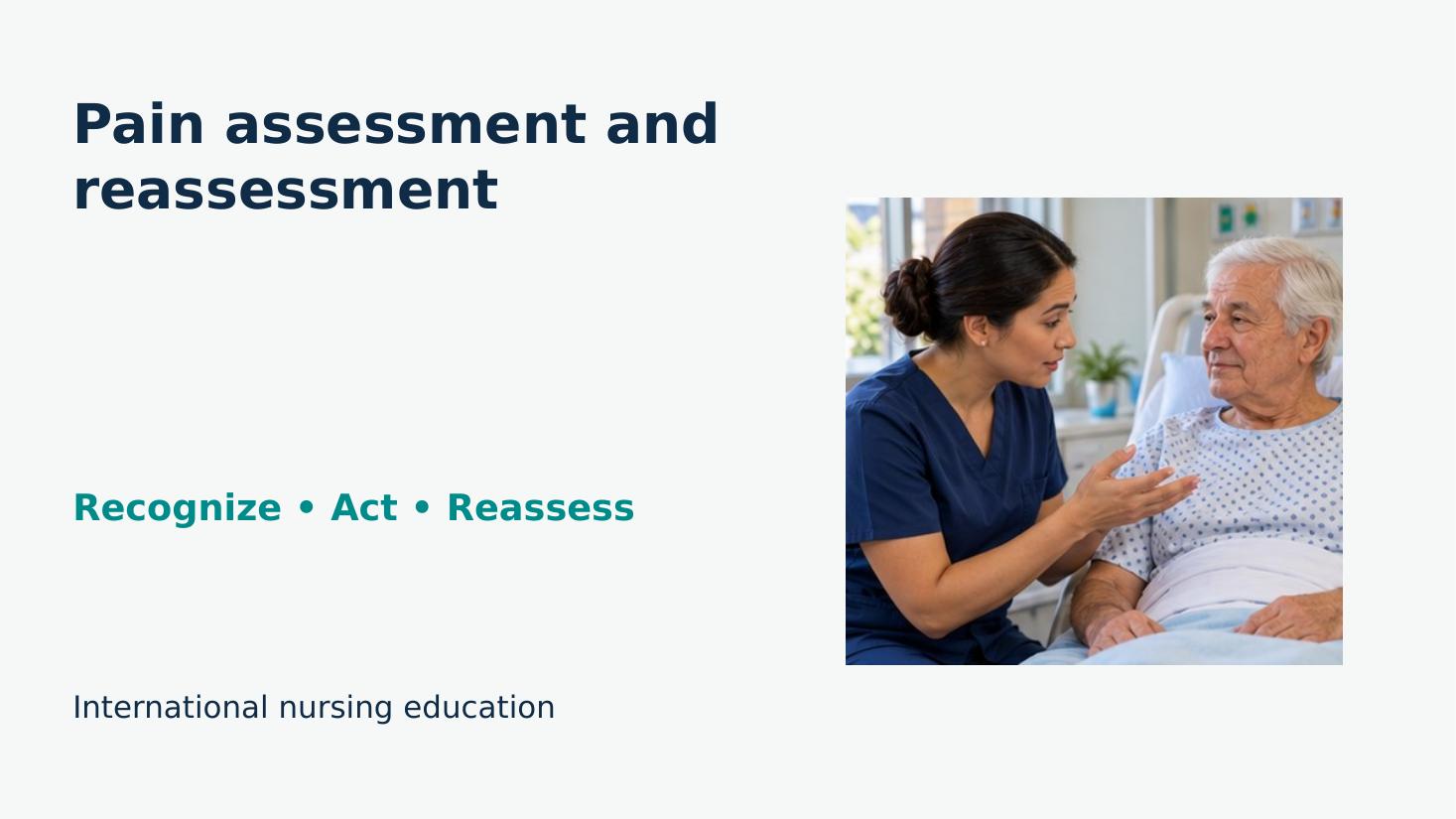
13 scenes · pre & post test
Pain Assessment & Reassessment Training
Adult pain, function and treatment-safety assessment: believing the patient report, characterizing pain, choosing suitable tools, functional goals, multimodal care, timed reassessment, opioid safety and documentation.
Start free preview →

9 scenes · approximately 4 minutes · pre & post test
Pediatric comfort positioning
Support the child’s comfort and control while preserving safe access for a brief procedure.
Start free preview →
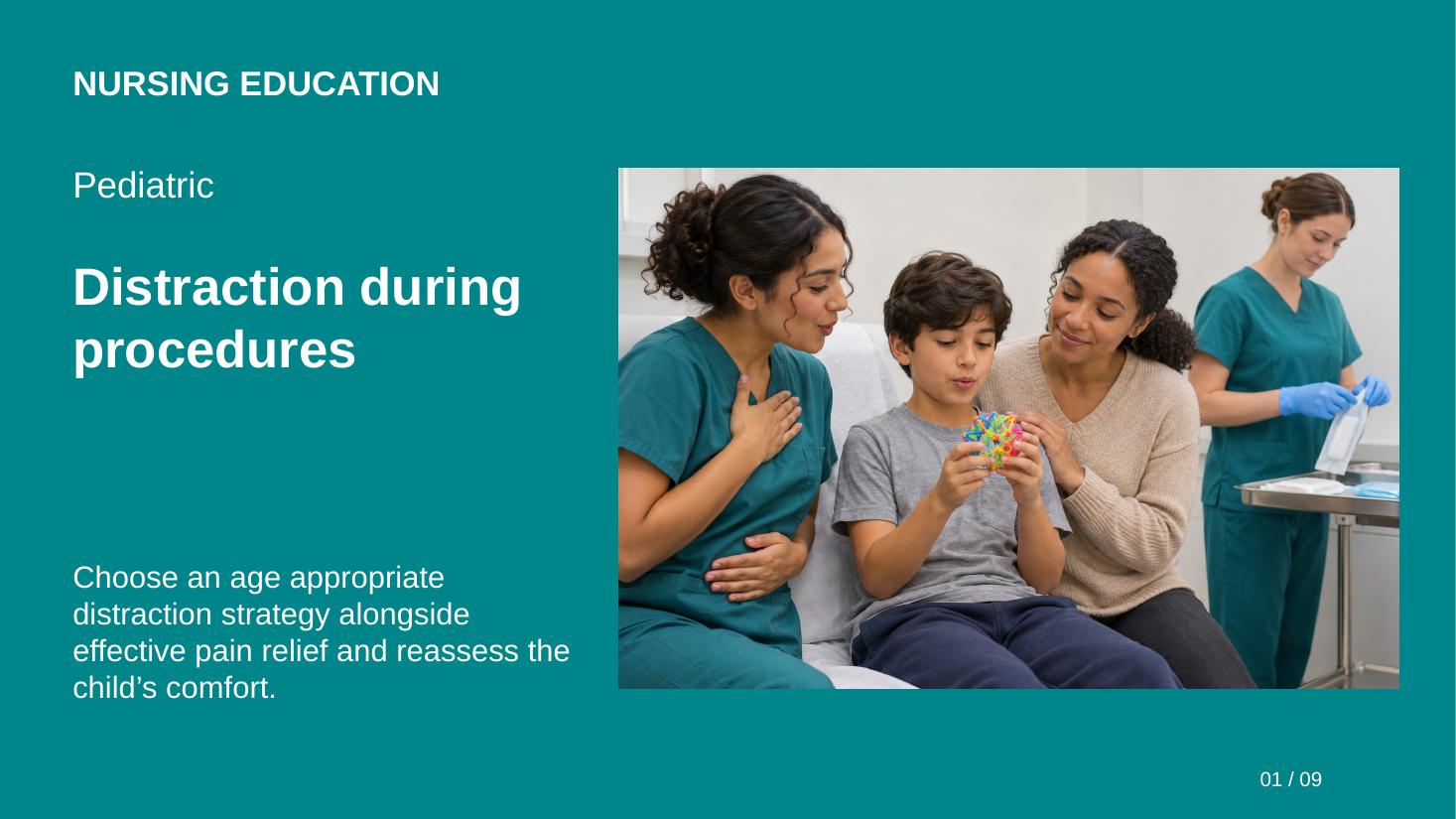
9 scenes · approximately 4 minutes · pre & post test
Pediatric distraction during procedures
Choose an age appropriate distraction strategy alongside effective pain relief and reassess the child’s comfort.
Start free preview →
Skin & Wound Care · 2 courses

14 scenes · pre & post test
Pressure Injury Prevention & Nursing Care
Risk recognition, accurate staging, pressure redistribution, prevention bundles, wound response, and timely escalation.
Start free preview →

21 scenes · pre & post test
Pressure Ulcer Prevention & Skin Care
Individualized pressure-injury prevention and skin protection: risk assessment, early recognition across skin tones, gentle cleansing, moisture management, repositioning, heel offloading, devices, nutrition and reassessment.
Start free preview →
Fundamentals of Care · 3 courses
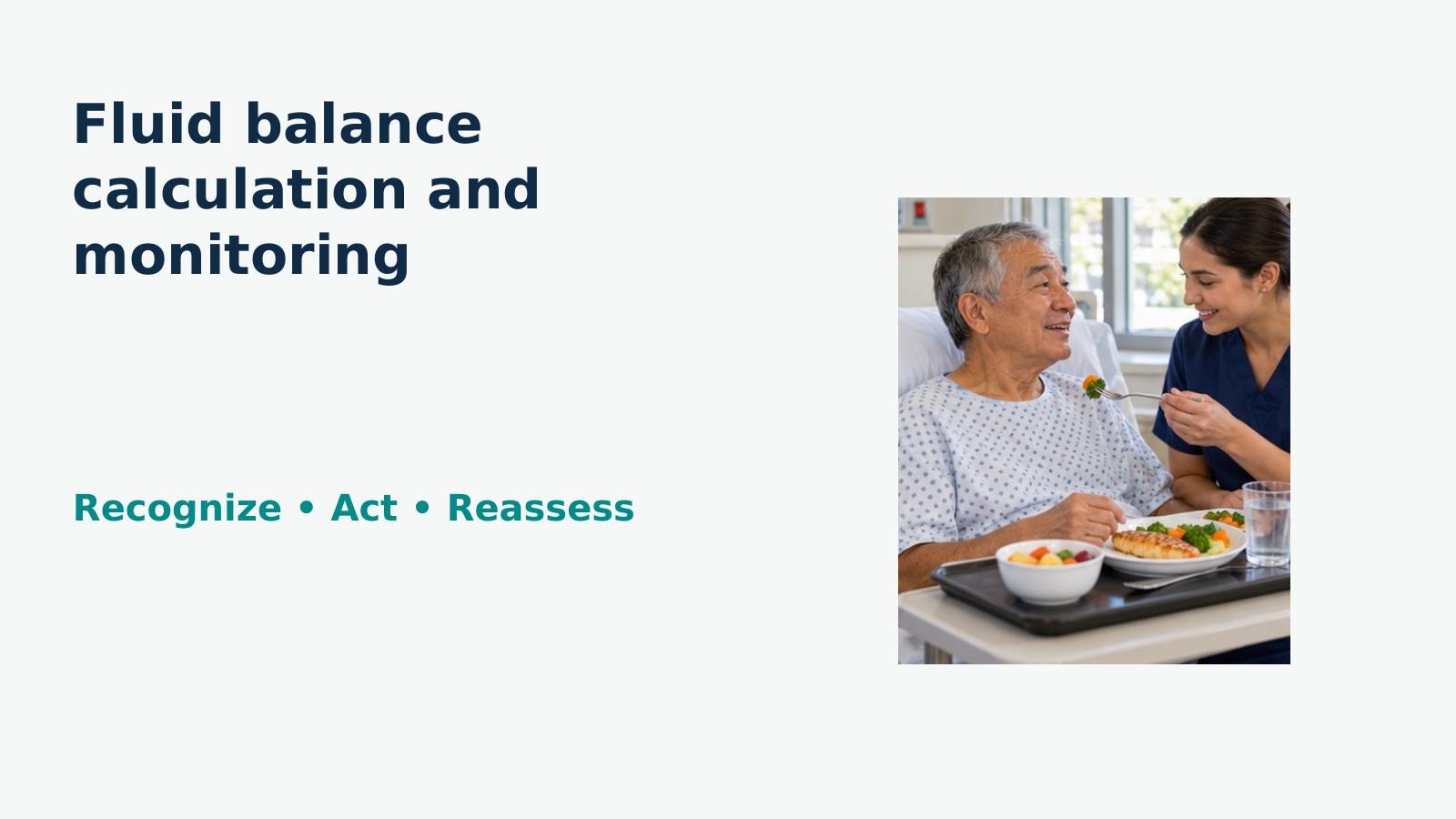
13 scenes · pre & post test
Fluid Balance Handling: Calculation and Monitoring
Accurate recording of adult intake and output, calculating the measured balance and interpreting it with clinical assessment, weight, laboratory trends and escalation.
Start free preview →
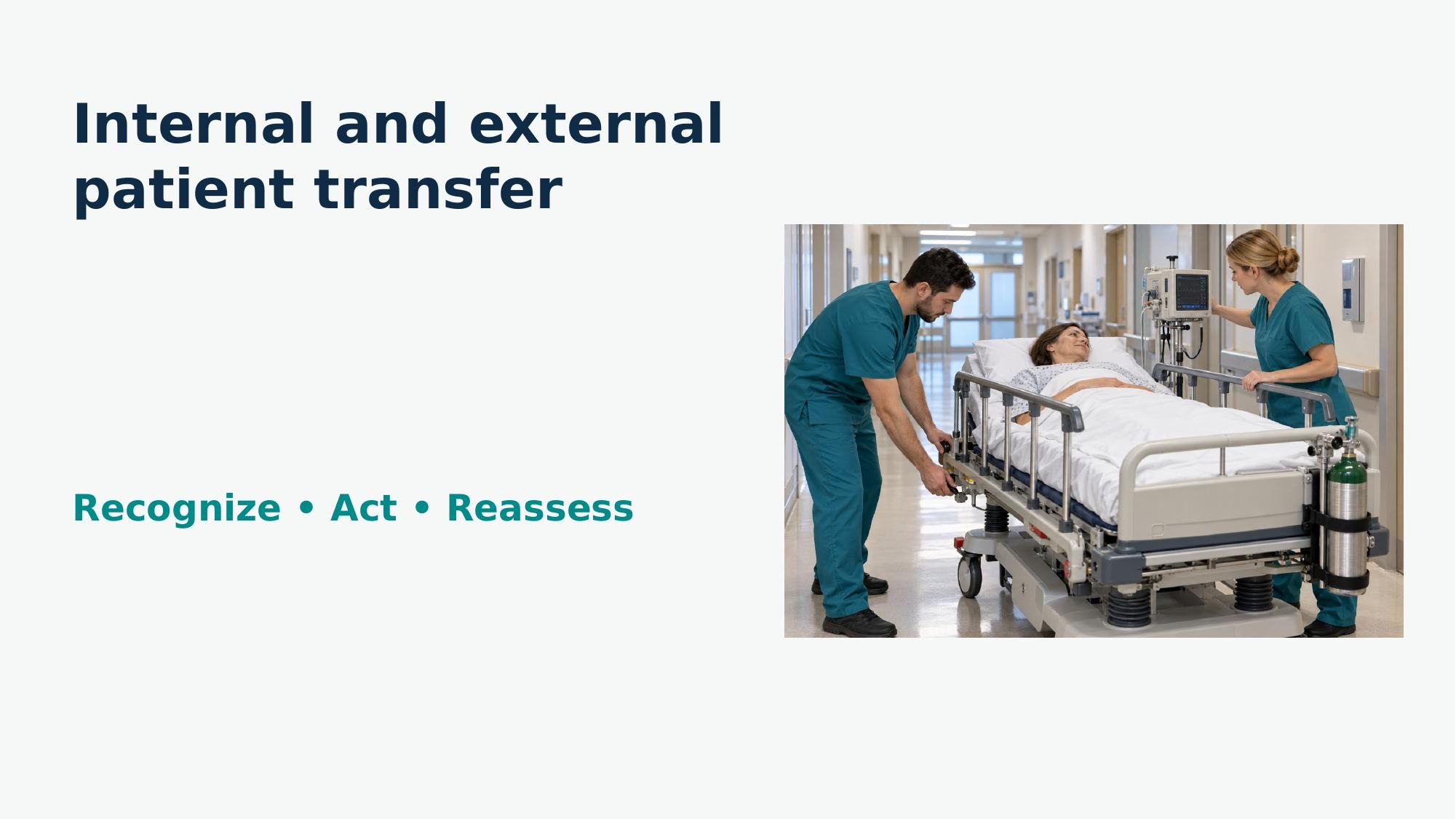
13 scenes · pre & post test
Internal and External Patient Transfer
Safe adult patient transfer within and between facilities: confirming purpose and acceptance, assessing risk before departure, stabilizing, checking equipment and oxygen reserves, securing devices, structured handover, monitoring en route and completing the transfer of responsibility.
Start free preview →
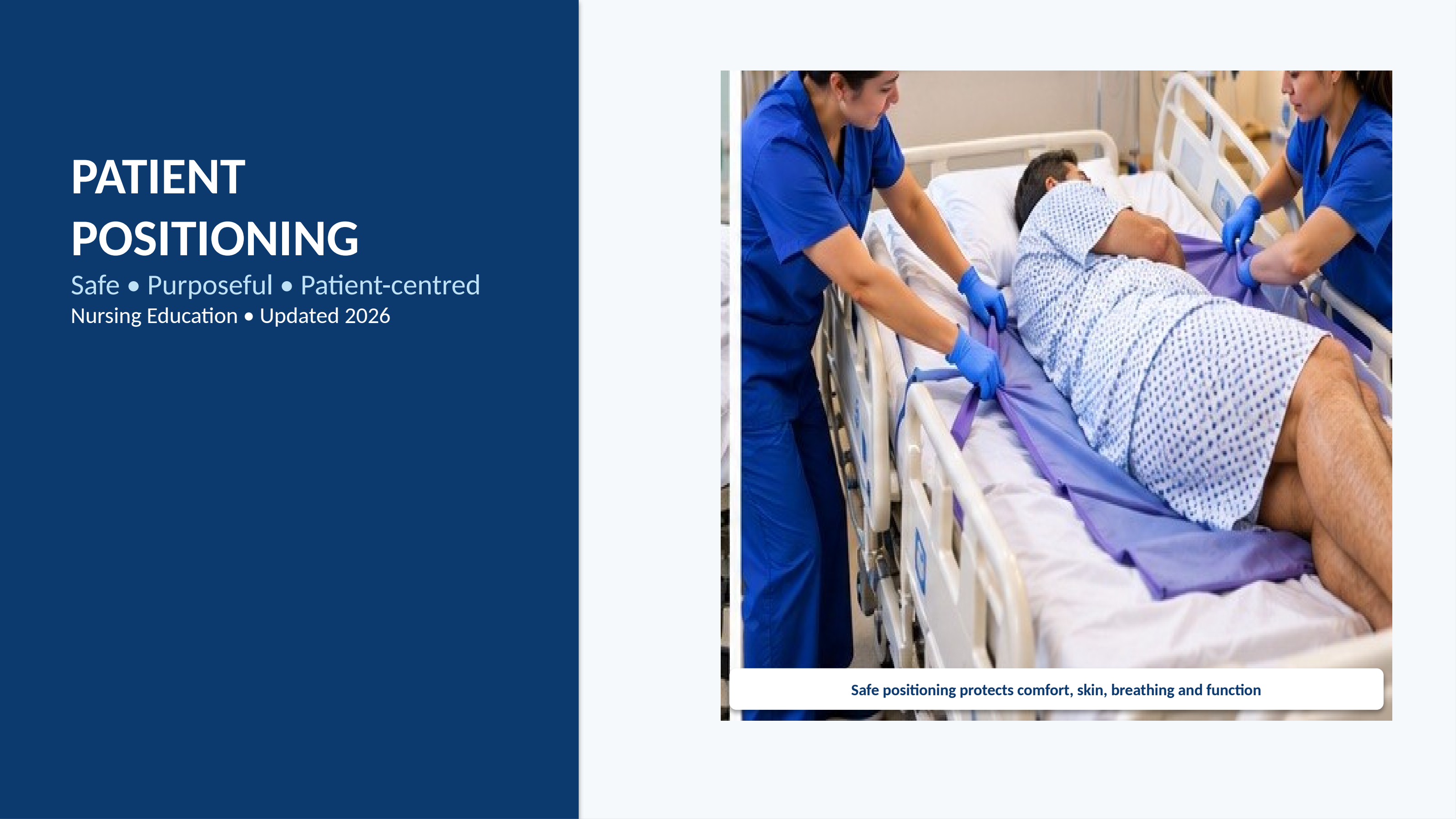
19 scenes · pre & post test
Patient Positioning
Purposeful, patient-centred positioning for breathing, pressure redistribution, procedural access and safe mobility, with bedside reassessment and escalation.
Start free preview →
Care Planning & Communication · 6 courses
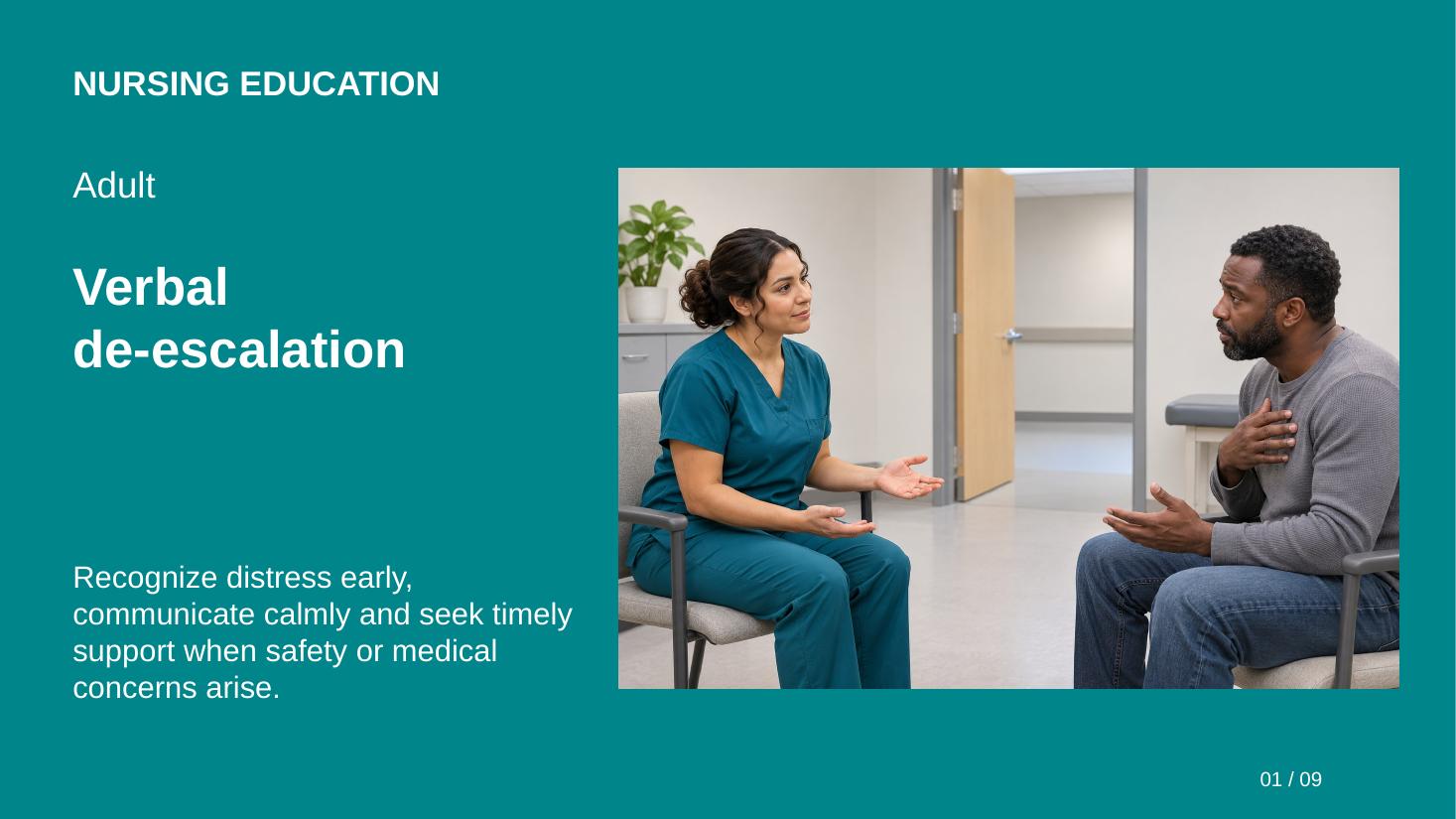
9 scenes · approximately 4 minutes · pre & post test
Adult verbal de-escalation
Recognize distress early, communicate calmly and seek timely support when safety or medical concerns arise.
Start free preview →
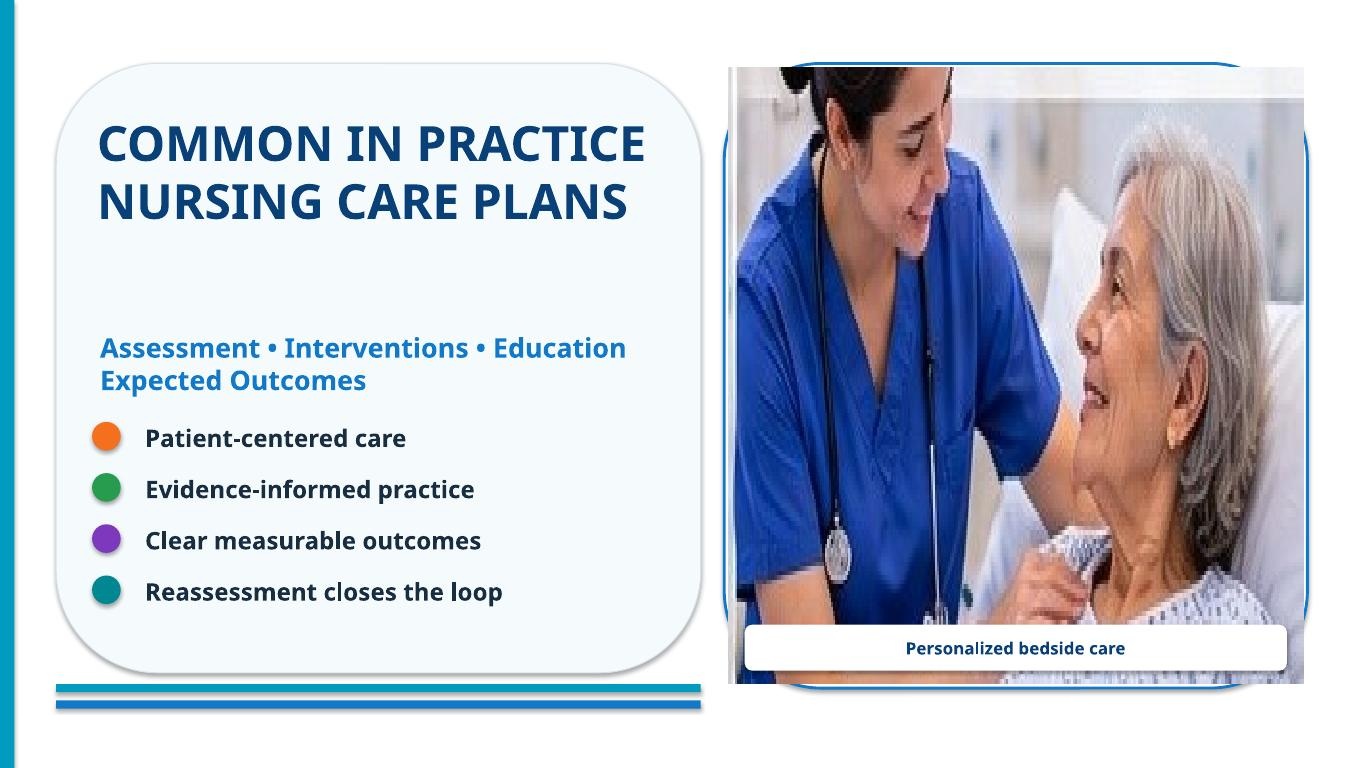
19 scenes · pre & post test
Common Nursing Care Plan Practice
Patient-specific assessment, measurable outcomes, focused interventions, education and reassessment across nine common bedside nursing care plans.
Start free preview →

13 scenes · pre & post test
Communication Skills and Professionalism
Patient communication, teamwork and professional conduct: respectful first contact, active listening, plain language, empathy, supportive teach-back, safe adaptation, speaking up and professional boundaries.
Start free preview →
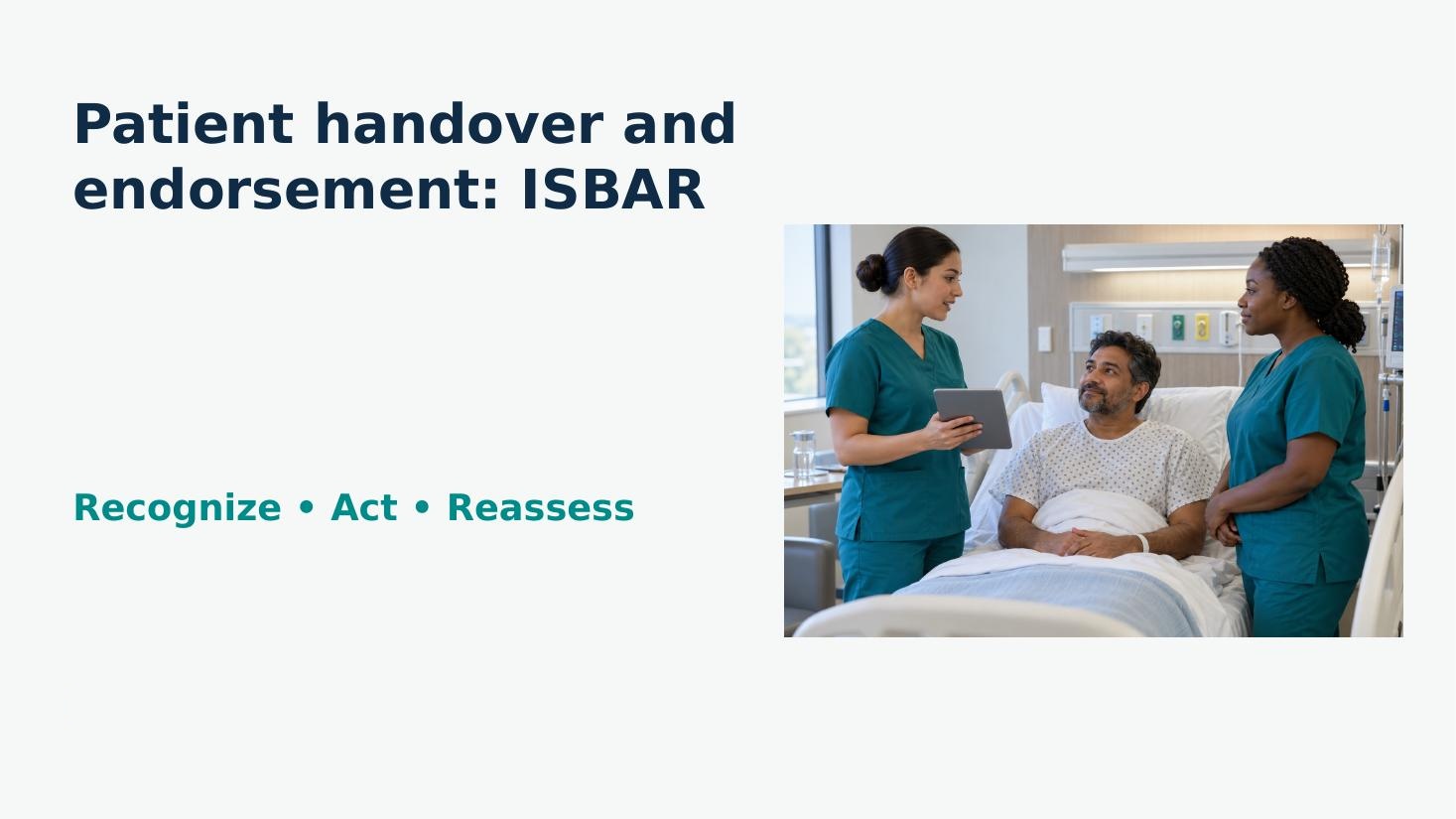
13 scenes · pre & post test
ISBAR Training: Patient Handover and Endorsement
Structured bedside handover and escalation using Identify, Situation, Background, Assessment and Recommendation, with repeat-back and clear transfer of responsibility.
Start free preview →
9 scenes · approximately 4 minutes · pre & post test
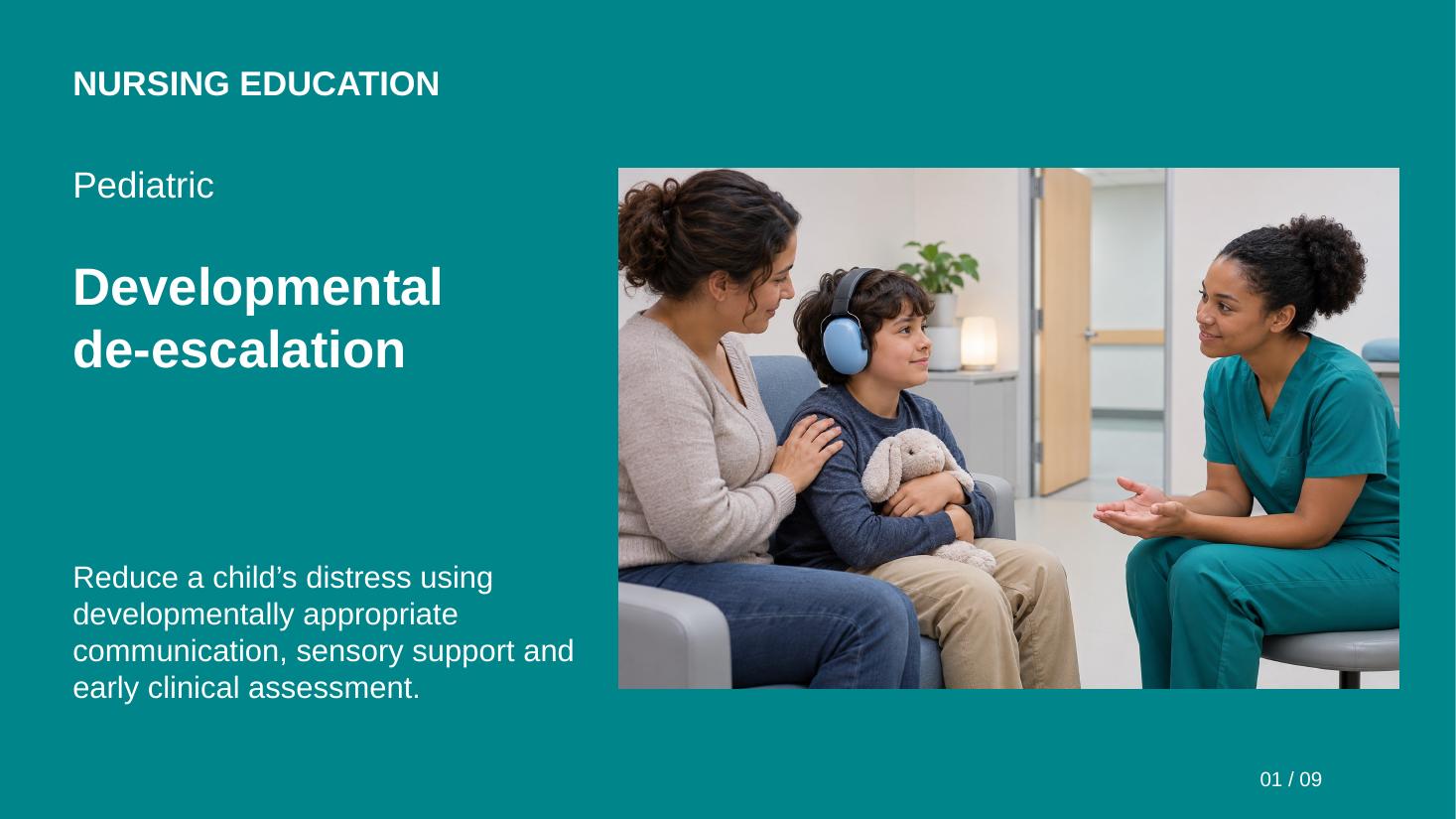
Pediatric developmental de-escalation
Reduce a child’s distress using developmentally appropriate communication, sensory support and early clinical assessment.
Start free preview →

13 scenes · pre & post test
SMART Care Planning
Patient-centred nursing goals built from assessed needs and written to be specific, measurable, achievable, relevant and time-bound, with linked interventions and evaluation.
Start free preview →
Patient & Family Education · 3 courses
9 scenes · approximately 4 minutes · pre & post test
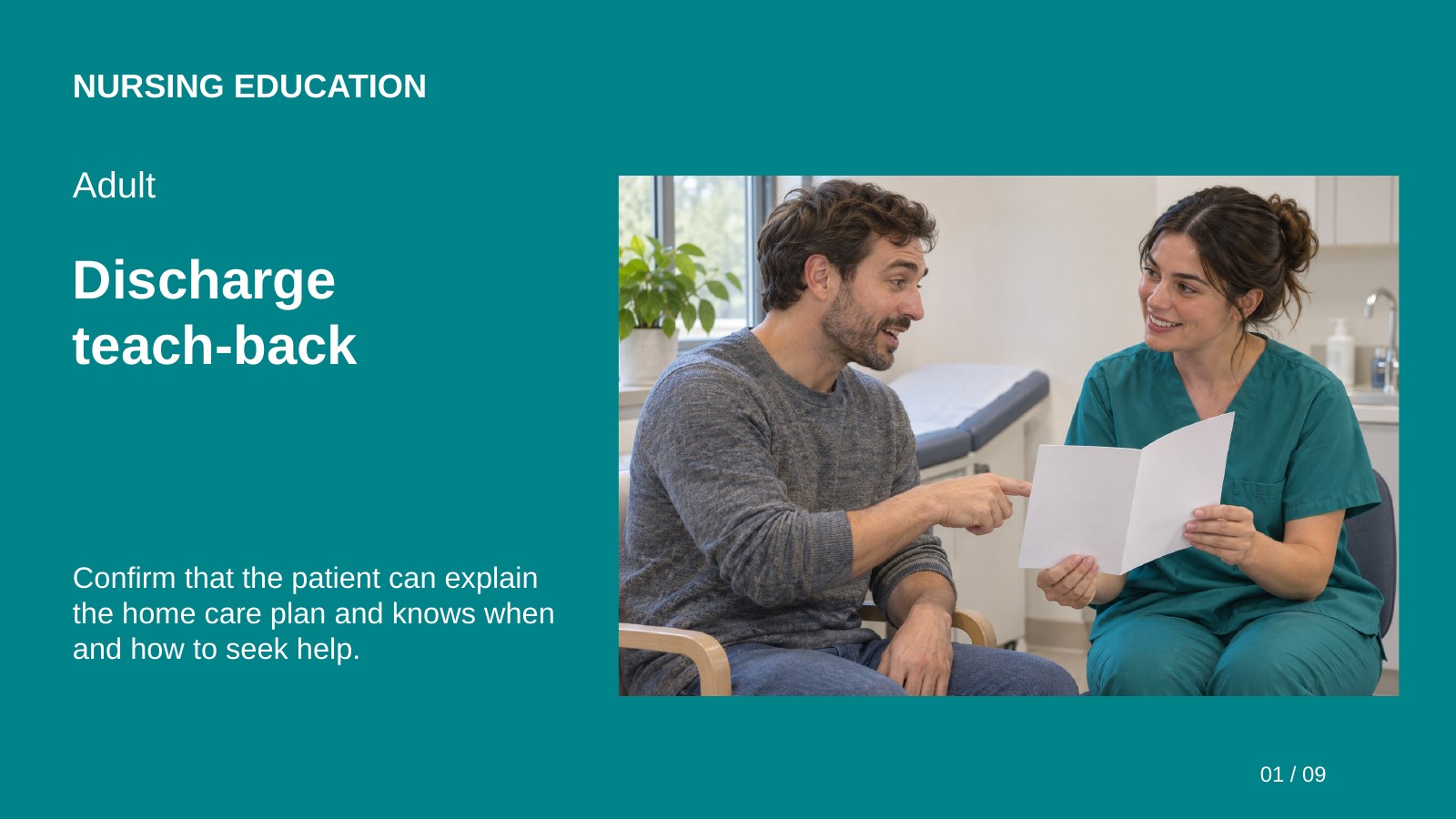
Adult Discharge Teach-back
Discharge teaching begins before the final paperwork. Teach-back checks whether our explanation was clear by asking the patient to describe the plan in their own words. This lesson covers a supportive conversation, practical demonstration and a clear response to uncertainty before the patient goes home.
Start free preview →

9 scenes · approximately 4 minutes · pre & post test
Caregiver Discharge Teach-back
Pediatric discharge education: verify caregiver understanding, demonstrate safe medicine measurement, involve children appropriately, and confirm warning actions and follow-up.
Start free preview →

9 scenes · approximately 4 minutes · pre & post test
Pediatric School and Activity Return Teaching
Returning to learning and everyday activity is part of recovery. The plan depends on the child's illness or injury, current symptoms and clinician instructions. This lesson helps nurses explain a practical plan, arrange needed support and distinguish classroom readiness from clearance for sport.
Start free preview →
Introductory pricing
All-access membership: $10/month, $27/quarter or $99/year
Every module, every test, every downloadable resource.